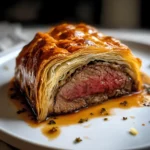
Ingredients
Scale
-
- For the Beef Tenderloin:
-
- 2 lbs Center-cut Beef Tenderloin, trimmed of silverskin and excess fat (look for a uniform thickness for even cooking)
-
- 2 tablespoons Olive Oil
-
- 1 teaspoon Kosher Salt
-
- ½ teaspoon Black Pepper
-
- For the Beef Tenderloin:
-
- For the Duxelles (Mushroom Paste):
-
- 1 tablespoon Olive Oil
-
- 1 lb Cremini Mushrooms, finely chopped (you can also use a mix of cremini and shiitake for deeper flavor)
-
- 2 Shallots, finely minced
-
- 2 cloves Garlic, minced
-
- ¼ cup Dry Sherry or Dry White Wine
-
- 2 tablespoons Fresh Thyme leaves, chopped
-
- 1 tablespoon Fresh Parsley, chopped
-
- 1 tablespoon Unsalted Butter
-
- Salt and Pepper to taste
-
- For the Duxelles (Mushroom Paste):
-
- For the Prosciutto Layer:
-
- 6–8 slices Prosciutto, thinly sliced (Parma or San Daniele prosciutto are excellent choices for their delicate flavor)
-
- For the Prosciutto Layer:
-
- For the Puff Pastry and Egg Wash:
-
- 1 lb All-butter Puff Pastry, thawed according to package directions (ensure it’s cold but pliable)
-
- 1 large Egg, beaten with 1 tablespoon milk or water (for egg wash)
-
- For the Puff Pastry and Egg Wash:
-
- Optional but Recommended:
-
- Dijon Mustard, for brushing on the beef tenderloin (adds a subtle tang and helps the prosciutto adhere)
-
- Flour, for dusting the work surface
-
- Optional but Recommended:
Instructions
Step 1: Prepare the Beef Tenderloin
-
- Sear the Beef: Pat the beef tenderloin completely dry with paper towels. This is crucial for achieving a good sear. Season generously on all sides with kosher salt and black pepper.
-
- Heat Oil in Skillet: Heat olive oil in a large, oven-safe skillet (cast iron is ideal) over high heat until it’s shimmering hot.
-
- Sear All Sides: Carefully place the beef tenderloin in the hot skillet and sear on all sides, including the ends, until deeply browned. This should take about 2-3 minutes per side. The goal is to create a flavorful crust and lock in the juices, not to cook the beef through.
-
- Cool the Beef: Remove the seared beef tenderloin from the skillet and place it on a wire rack set over a baking sheet to cool completely. This prevents condensation from making the bottom soggy. You can speed up the cooling process by placing it in the refrigerator for about 30 minutes.
-
- Optional Mustard Coating: Once the beef is cooled, brush it evenly with Dijon mustard. This step is optional but adds a lovely flavor dimension and helps the prosciutto adhere better.
Step 2: Make the Duxelles (Mushroom Paste)
-
- Sauté Shallots and Garlic: Heat olive oil and butter in the same skillet (no need to wash it) over medium heat. Add minced shallots and sauté until softened and translucent, about 3-4 minutes. Add minced garlic and cook for another minute until fragrant, being careful not to burn it.
-
- Cook the Mushrooms: Add the finely chopped mushrooms to the skillet. Season with salt and pepper. Cook over medium-high heat, stirring frequently, until the mushrooms release their liquid and then reabsorb it, and start to brown and become deeply flavorful. This process can take 15-20 minutes as you want to evaporate all the moisture for a dry duxelles.
-
- Deglaze with Sherry/Wine: Pour in the dry sherry or white wine to deglaze the skillet, scraping up any browned bits from the bottom. Cook until the liquid has almost completely evaporated, about 2-3 minutes.
-
- Incorporate Herbs: Stir in the chopped fresh thyme and parsley. Taste and adjust seasoning with salt and pepper as needed. The duxelles should be richly flavored and relatively dry.
-
- Cool the Duxelles: Transfer the duxelles to a bowl and let it cool completely. Cooling is essential before assembling the Wellington to prevent it from steaming the puff pastry.
Step 3: Assemble the Beef Wellington
-
- Prepare Work Surface: Lightly dust a clean work surface with flour.
-
- Roll Out Puff Pastry: Roll out the thawed puff pastry into a large rectangle, approximately 14×16 inches, and about ⅛-inch thick. You want it large enough to completely encase the beef and duxelles. If using pre-rolled pastry, you might need to gently roll it out further.
-
- Layer with Prosciutto: Lay out a large sheet of plastic wrap on your work surface. Arrange the prosciutto slices on the plastic wrap in a slightly overlapping pattern to create a rectangle large enough to wrap around the beef tenderloin. Aim for a size slightly larger than the beef tenderloin when wrapped.
-
- Spread Duxelles: Evenly spread the cooled duxelles over the prosciutto layer, leaving a small border around the edges.
-
- Place Beef Tenderloin: Place the cooled and seared beef tenderloin in the center of the duxelles-prosciutto layer.
-
- Wrap Tightly: Using the plastic wrap to help, carefully lift and wrap the prosciutto and duxelles layer around the beef tenderloin, forming a tight log. Twist the ends of the plastic wrap to seal it tightly.
-
- Chill the Wellington Log: Refrigerate the wrapped Wellington log for at least 30 minutes, or up to 2 hours. This chilling step is crucial for firming up the Wellington, making it easier to handle and ensuring a neat final shape.
-
- Preheat Oven & Prepare Baking Sheet: Preheat your oven to 400°F (200°C). Line a baking sheet with parchment paper.
-
- Remove Plastic Wrap & Place on Pastry: Remove the chilled Wellington log from the refrigerator and unwrap it from the plastic wrap. Place the puff pastry rectangle on the prepared baking sheet. Place the Wellington log in the center of the puff pastry.
-
- Wrap with Puff Pastry: Bring one side of the puff pastry up and over the Wellington log. Brush the edges of the pastry with egg wash. Bring the other side of the pastry over to meet and overlap, sealing the edges tightly. Trim off any excess pastry, leaving about an inch or two overhang.
-
- Seal and Decorate: Crimp the edges of the pastry with a fork to seal them firmly. You can use the excess pastry to create decorative shapes (leaves, lattice, etc.) to adorn the top of the Wellington. Attach these decorations with a little egg wash.
-
- Egg Wash and Score: Brush the entire surface of the puff pastry Wellington evenly with the egg wash. Using a sharp knife, score the top of the pastry in a decorative pattern (diagonal lines, crosshatch, etc.). Be careful not to cut all the way through the pastry, just score the surface to allow steam to escape.
-
- Bake the Wellington: Bake in the preheated oven for 30-40 minutes, or until the puff pastry is golden brown and puffed up. The internal temperature of the beef should reach 130-135°F (54-57°C) for medium-rare, 135-140°F (57-60°C) for medium. Use a meat thermometer inserted into the center of the Wellington to check the temperature.
-
- Rest Before Slicing: Once baked, remove the Beef Wellington from the oven and let it rest for at least 10-15 minutes before slicing and serving. This allows the juices to redistribute, resulting in a more tender and flavorful beef.
Step 4: Slicing and Serving
-
- Slice Carefully: Use a serrated knife to slice the Beef Wellington into thick slices, about 1-1.5 inches thick. Slice gently and evenly to maintain the layers.
-
- Serve Immediately: Serve immediately while the puff pastry is still crisp and the beef is warm.
Nutrition
- Serving Size: one normal portion
- Calories: 600-800
- Fat: 40-60g
- Carbohydrates: 20-30g
- Protein: 40-50g