

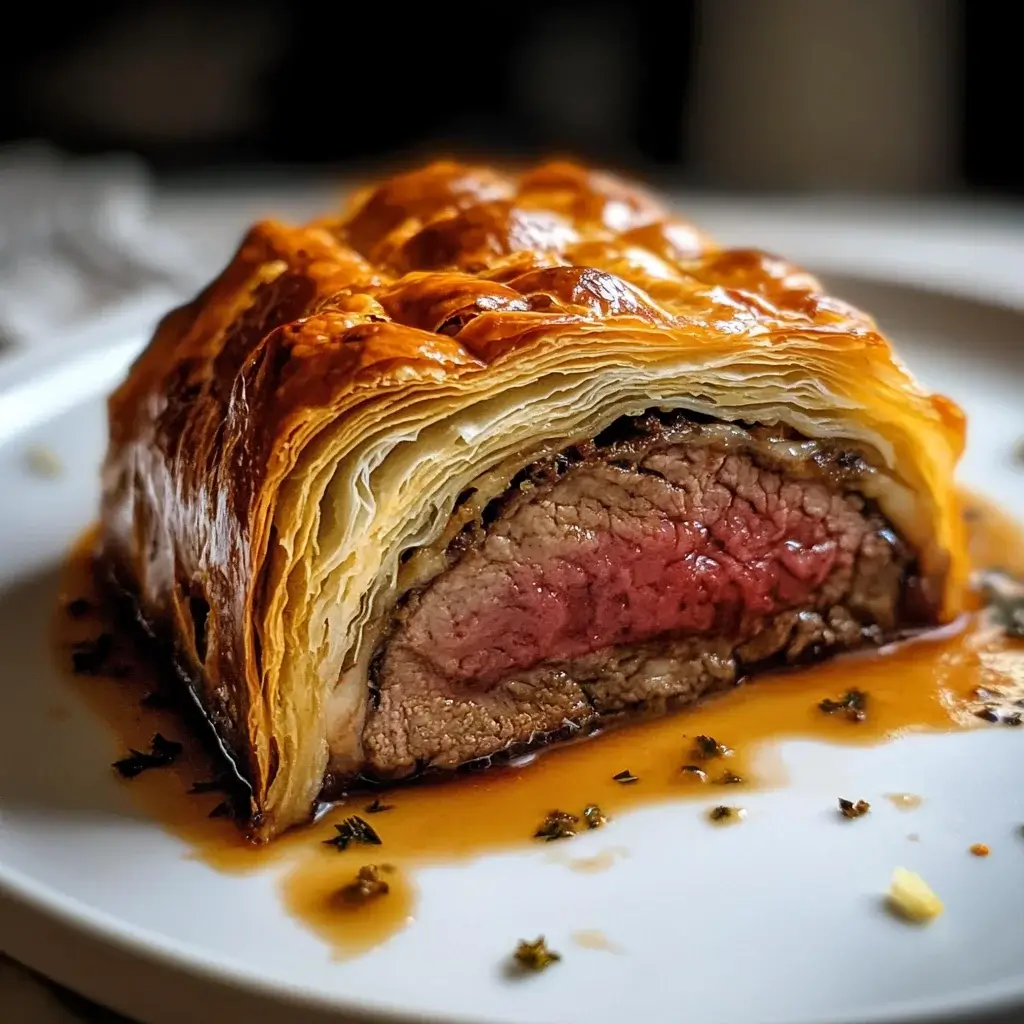
It’s hard to describe the feeling when you first slice into a perfectly cooked Beef Wellington. That moment when the golden, flaky puff pastry yields to your knife, revealing layers of savory prosciutto, earthy duxelles, and a rosy pink, melt-in-your-mouth beef tenderloin… it’s culinary magic. My family, usually a tough crowd to impress at the dinner table, was utterly captivated the first time I made this dish. The silence as they took their first bites spoke volumes – pure, unadulterated food bliss. Since then, Beef Wellington has become our go-to celebration meal, a showstopper that never fails to impress and always leaves us wanting more. If you’re looking to elevate your cooking and create a truly unforgettable dining experience, look no further than this traditional Beef Wellington recipe. It might seem daunting, but with a little patience and attention to detail, you can master this classic and bring a touch of gourmet elegance to your own table.
Ingredients for Traditional Beef Wellington
To create an authentic and delectable Beef Wellington, you’ll need high-quality ingredients. Each component plays a crucial role in the final flavor and texture of this masterpiece. Here’s what you’ll need to gather:
- For the Beef Tenderloin:
- 2 lbs Center-cut Beef Tenderloin, trimmed of silverskin and excess fat (look for a uniform thickness for even cooking)
- 2 tablespoons Olive Oil
- 1 teaspoon Kosher Salt
- ½ teaspoon Black Pepper
- For the Duxelles (Mushroom Paste):
- 1 tablespoon Olive Oil
- 1 lb Cremini Mushrooms, finely chopped (you can also use a mix of cremini and shiitake for deeper flavor)
- 2 Shallots, finely minced
- 2 cloves Garlic, minced
- ¼ cup Dry Sherry or Dry White Wine
- 2 tablespoons Fresh Thyme leaves, chopped
- 1 tablespoon Fresh Parsley, chopped
- 1 tablespoon Unsalted Butter
- Salt and Pepper to taste
- For the Prosciutto Layer:
- 6-8 slices Prosciutto, thinly sliced (Parma or San Daniele prosciutto are excellent choices for their delicate flavor)
- For the Puff Pastry and Egg Wash:
- 1 lb All-butter Puff Pastry, thawed according to package directions (ensure it’s cold but pliable)
- 1 large Egg, beaten with 1 tablespoon milk or water (for egg wash)
- Optional but Recommended:
- Dijon Mustard, for brushing on the beef tenderloin (adds a subtle tang and helps the prosciutto adhere)
- Flour, for dusting the work surface
Ingredient Notes for Optimal Results:
- Beef Tenderloin Quality: Invest in a good quality, center-cut beef tenderloin. This is the star of the dish, and the quality directly impacts the final taste and tenderness. Look for USDA Choice or Prime grade for best results.
- Mushroom Variety: While cremini mushrooms are classic, experimenting with a mix of mushrooms like shiitake, porcini (dried, rehydrated), or oyster mushrooms can add complexity to your duxelles.
- Prosciutto Choice: Thinly sliced prosciutto is essential for creating a seamless layer around the duxelles. Avoid overly thick or salty varieties.
- All-Butter Puff Pastry: All-butter puff pastry provides superior flavor and flakiness compared to pastry made with vegetable shortening. It’s worth the splurge for a truly authentic Wellington.
- Fresh Herbs: Fresh thyme and parsley are crucial for the aromatic depth of the duxelles. Dried herbs can be used in a pinch, but fresh are highly recommended.
Instructions: Crafting Your Traditional Beef Wellington
Creating a Beef Wellington is a multi-step process, but each step is manageable and contributes to the final masterpiece. Follow these detailed instructions carefully to ensure success:
Step 1: Prepare the Beef Tenderloin
- Sear the Beef: Pat the beef tenderloin completely dry with paper towels. This is crucial for achieving a good sear. Season generously on all sides with kosher salt and black pepper.
- Heat Oil in Skillet: Heat olive oil in a large, oven-safe skillet (cast iron is ideal) over high heat until it’s shimmering hot.
- Sear All Sides: Carefully place the beef tenderloin in the hot skillet and sear on all sides, including the ends, until deeply browned. This should take about 2-3 minutes per side. The goal is to create a flavorful crust and lock in the juices, not to cook the beef through.
- Cool the Beef: Remove the seared beef tenderloin from the skillet and place it on a wire rack set over a baking sheet to cool completely. This prevents condensation from making the bottom soggy. You can speed up the cooling process by placing it in the refrigerator for about 30 minutes.
- Optional Mustard Coating: Once the beef is cooled, brush it evenly with Dijon mustard. This step is optional but adds a lovely flavor dimension and helps the prosciutto adhere better.
Step 2: Make the Duxelles (Mushroom Paste)
- Sauté Shallots and Garlic: Heat olive oil and butter in the same skillet (no need to wash it) over medium heat. Add minced shallots and sauté until softened and translucent, about 3-4 minutes. Add minced garlic and cook for another minute until fragrant, being careful not to burn it.
- Cook the Mushrooms: Add the finely chopped mushrooms to the skillet. Season with salt and pepper. Cook over medium-high heat, stirring frequently, until the mushrooms release their liquid and then reabsorb it, and start to brown and become deeply flavorful. This process can take 15-20 minutes as you want to evaporate all the moisture for a dry duxelles.
- Deglaze with Sherry/Wine: Pour in the dry sherry or white wine to deglaze the skillet, scraping up any browned bits from the bottom. Cook until the liquid has almost completely evaporated, about 2-3 minutes.
- Incorporate Herbs: Stir in the chopped fresh thyme and parsley. Taste and adjust seasoning with salt and pepper as needed. The duxelles should be richly flavored and relatively dry.
- Cool the Duxelles: Transfer the duxelles to a bowl and let it cool completely. Cooling is essential before assembling the Wellington to prevent it from steaming the puff pastry.
Step 3: Assemble the Beef Wellington
- Prepare Work Surface: Lightly dust a clean work surface with flour.
- Roll Out Puff Pastry: Roll out the thawed puff pastry into a large rectangle, approximately 14×16 inches, and about ⅛-inch thick. You want it large enough to completely encase the beef and duxelles. If using pre-rolled pastry, you might need to gently roll it out further.
- Layer with Prosciutto: Lay out a large sheet of plastic wrap on your work surface. Arrange the prosciutto slices on the plastic wrap in a slightly overlapping pattern to create a rectangle large enough to wrap around the beef tenderloin. Aim for a size slightly larger than the beef tenderloin when wrapped.
- Spread Duxelles: Evenly spread the cooled duxelles over the prosciutto layer, leaving a small border around the edges.
- Place Beef Tenderloin: Place the cooled and seared beef tenderloin in the center of the duxelles-prosciutto layer.
- Wrap Tightly: Using the plastic wrap to help, carefully lift and wrap the prosciutto and duxelles layer around the beef tenderloin, forming a tight log. Twist the ends of the plastic wrap to seal it tightly.
- Chill the Wellington Log: Refrigerate the wrapped Wellington log for at least 30 minutes, or up to 2 hours. This chilling step is crucial for firming up the Wellington, making it easier to handle and ensuring a neat final shape.
- Preheat Oven & Prepare Baking Sheet: Preheat your oven to 400°F (200°C). Line a baking sheet with parchment paper.
- Remove Plastic Wrap & Place on Pastry: Remove the chilled Wellington log from the refrigerator and unwrap it from the plastic wrap. Place the puff pastry rectangle on the prepared baking sheet. Place the Wellington log in the center of the puff pastry.
- Wrap with Puff Pastry: Bring one side of the puff pastry up and over the Wellington log. Brush the edges of the pastry with egg wash. Bring the other side of the pastry over to meet and overlap, sealing the edges tightly. Trim off any excess pastry, leaving about an inch or two overhang.
- Seal and Decorate: Crimp the edges of the pastry with a fork to seal them firmly. You can use the excess pastry to create decorative shapes (leaves, lattice, etc.) to adorn the top of the Wellington. Attach these decorations with a little egg wash.
- Egg Wash and Score: Brush the entire surface of the puff pastry Wellington evenly with the egg wash. Using a sharp knife, score the top of the pastry in a decorative pattern (diagonal lines, crosshatch, etc.). Be careful not to cut all the way through the pastry, just score the surface to allow steam to escape.
- Bake the Wellington: Bake in the preheated oven for 30-40 minutes, or until the puff pastry is golden brown and puffed up. The internal temperature of the beef should reach 130-135°F (54-57°C) for medium-rare, 135-140°F (57-60°C) for medium. Use a meat thermometer inserted into the center of the Wellington to check the temperature.
- Rest Before Slicing: Once baked, remove the Beef Wellington from the oven and let it rest for at least 10-15 minutes before slicing and serving. This allows the juices to redistribute, resulting in a more tender and flavorful beef.
Step 4: Slicing and Serving
- Slice Carefully: Use a serrated knife to slice the Beef Wellington into thick slices, about 1-1.5 inches thick. Slice gently and evenly to maintain the layers.
- Serve Immediately: Serve immediately while the puff pastry is still crisp and the beef is warm.
Nutrition Facts (per serving, estimated)
- Servings: 6-8 servings (depending on slice thickness)
- Calories per serving (estimated): 600-800 calories (This is an estimate and can vary based on the specific ingredients used, portion sizes, and fat content of the beef and prosciutto. Beef Wellington is a rich and indulgent dish.)
Approximate Nutritional Breakdown (per serving, estimated):
- Protein: 40-50g
- Fat: 40-60g (primarily from beef, prosciutto, butter, and puff pastry)
- Carbohydrates: 20-30g (primarily from puff pastry and mushrooms)
Disclaimer: These are estimations and should not be considered precise nutritional information. For accurate nutritional data, use a nutrition calculator with the specific brands and quantities of ingredients you use.
Preparation Time
- Prep Time: Approximately 1 hour (includes searing beef, making duxelles, and assembly)
- Chilling Time: Minimum 30 minutes (for Wellington log) + 30 minutes (for beef cooling)
- Cook Time: 30-40 minutes
- Total Time (excluding chilling): Approximately 1 hour 30 minutes to 1 hour 40 minutes
Plan Ahead: While the active preparation time isn’t excessive, remember to factor in the chilling time. You can prepare the duxelles and sear the beef tenderloin a day ahead and store them separately in the refrigerator. Assemble and bake the Wellington on the day of serving.
How to Serve Beef Wellington
Beef Wellington is a showstopping main course that deserves elegant accompaniments. Here are some serving suggestions:
Classic Side Dishes:
- Roasted Root Vegetables: Carrots, parsnips, potatoes, and sweet potatoes roasted with herbs like rosemary and thyme complement the richness of the Wellington.
- Creamy Mashed Potatoes or Potato Gratin: A classic and comforting pairing. Consider adding garlic or herbs to your mashed potatoes for extra flavor.
- Asparagus with Lemon Butter: Lightly steamed or roasted asparagus with a drizzle of lemon butter provides a fresh and vibrant contrast.
- Green Beans Almondine: Sautéed green beans with toasted almonds and butter add a touch of elegance and crunch.
- Spinach Salad with Warm Bacon Vinaigrette: A slightly acidic spinach salad helps cut through the richness of the Wellington.
Sauces and Gravies:
- Red Wine Reduction Sauce: A classic pairing. A rich red wine sauce enhances the beef flavor.
- Mushroom Sauce: A creamy mushroom sauce can complement the duxelles within the Wellington.
- Horseradish Cream Sauce: A dollop of horseradish cream provides a tangy and spicy counterpoint to the richness.
- Simple Pan Jus: If you have pan drippings from searing the beef (if using an oven-safe skillet), you can create a simple pan jus by deglazing the pan with red wine or beef broth.
Wine Pairings:
- Classic Red Wines: Beef Wellington pairs beautifully with full-bodied red wines such as Cabernet Sauvignon, Merlot, Bordeaux blends, or Barolo.
- Medium-Bodied Reds: For a slightly lighter pairing, consider Pinot Noir or a Côtes du Rhône.
- Rosé Champagne: For a celebratory and elegant pairing, a Rosé Champagne can also work wonderfully.
Garnishes:
- Fresh Herbs: Sprigs of fresh thyme, rosemary, or parsley add a visual appeal and aromatic touch.
- Edible Flowers: For a truly special occasion, edible flowers can elevate the presentation.
- Lemon Wedges: A squeeze of fresh lemon juice can brighten the flavors.
Additional Tips for Perfect Beef Wellington
Mastering Beef Wellington takes practice, but these tips will help you achieve success:
- Ensure Beef is Dry: Patting the beef tenderloin thoroughly dry before searing is crucial for achieving a good crust. Moisture will inhibit browning.
- Chill, Chill, Chill: Chilling the beef after searing, chilling the duxelles, and chilling the assembled Wellington log are all essential steps. Cold components are easier to handle and prevent the puff pastry from becoming soggy.
- Don’t Overcook the Beef: Remember the beef will continue to cook while resting and baking in the Wellington. Aim for a slightly lower internal temperature than your desired final doneness when you remove it from the oven. Use a reliable meat thermometer.
- Handle Puff Pastry Gently: Work with cold puff pastry and handle it as little as possible to maintain its flakiness. Keep it refrigerated until ready to use and work quickly.
- Score the Pastry Properly: Scoring the puff pastry allows steam to escape during baking, preventing it from bursting and ensuring even cooking. Don’t cut too deeply, just score the surface.
FAQ: Your Beef Wellington Questions Answered
Q1: Is Beef Wellington difficult to make?
A: Beef Wellington is considered an intermediate to advanced recipe due to its multiple steps and techniques. However, with careful planning, attention to detail, and by following a reliable recipe like this one, it is absolutely achievable for a home cook. Don’t be intimidated! Break down the steps and take your time.
Q2: Can I make Beef Wellington ahead of time?
A: Yes, you can prepare components in advance. You can sear the beef tenderloin and make the duxelles a day ahead and store them separately in the refrigerator. You can also assemble the Wellington log (beef wrapped in prosciutto and duxelles) up to 24 hours in advance and keep it chilled. However, it’s best to bake the Wellington just before serving for the crispiest puff pastry. Avoid fully assembling and baking ahead, as the pastry can become soggy upon reheating.
Q3: What’s the best way to ensure the puff pastry is cooked through and not soggy on the bottom?
A: Several factors contribute to a crispy bottom:
* Dry Duxelles: Make sure the duxelles is cooked down until it’s relatively dry. Excess moisture will steam the pastry.
* Chilling: Chilling the Wellington log before wrapping in pastry and chilling the assembled Wellington before baking helps the pastry stay cold and prevents premature softening.
* Hot Oven: Bake at a sufficiently high temperature (400°F/200°C) to ensure the pastry cooks through quickly.
* Bottom Heat: If your oven has uneven bottom heat, you can place a pizza stone or baking steel on the lower rack to help distribute heat evenly.
Q4: How do I know when the Beef Wellington is cooked to the right temperature?
A: The most reliable way is to use a meat thermometer. Insert the thermometer into the center of the Wellington through the side, aiming for the thickest part of the beef tenderloin.
* Medium-Rare: 130-135°F (54-57°C)
* Medium: 135-140°F (57-60°C)
* Medium-Well: 140-145°F (60-63°C) (not recommended for tenderloin as it can become dry)
Remember to account for carryover cooking – the internal temperature will rise slightly as it rests.
Q5: Can I use different types of puff pastry or fillings?
A: For a truly traditional Beef Wellington, all-butter puff pastry is highly recommended for its superior flavor and flakiness. While you can experiment with other types of puff pastry, the results may vary. For fillings, while duxelles is classic, you could potentially incorporate other finely chopped cooked vegetables or even a thin layer of pâté de foie gras for a more decadent version (though this deviates from the traditional recipe). However, for your first attempt, sticking to the classic ingredients and recipe is best to understand the fundamentals.
By following this comprehensive guide and taking your time, you can confidently create a stunning Traditional Beef Wellington that will impress your guests and become a cherished dish in your culinary repertoire. Enjoy the process and savor the delicious results!
Print
Traditional Beef Wellington recipe
Ingredients
-
- For the Beef Tenderloin:
-
- 2 lbs Center-cut Beef Tenderloin, trimmed of silverskin and excess fat (look for a uniform thickness for even cooking)
-
- 2 tablespoons Olive Oil
-
- 1 teaspoon Kosher Salt
-
- ½ teaspoon Black Pepper
-
- For the Beef Tenderloin:
-
- For the Duxelles (Mushroom Paste):
-
- 1 tablespoon Olive Oil
-
- 1 lb Cremini Mushrooms, finely chopped (you can also use a mix of cremini and shiitake for deeper flavor)
-
- 2 Shallots, finely minced
-
- 2 cloves Garlic, minced
-
- ¼ cup Dry Sherry or Dry White Wine
-
- 2 tablespoons Fresh Thyme leaves, chopped
-
- 1 tablespoon Fresh Parsley, chopped
-
- 1 tablespoon Unsalted Butter
-
- Salt and Pepper to taste
-
- For the Duxelles (Mushroom Paste):
-
- For the Prosciutto Layer:
-
- 6–8 slices Prosciutto, thinly sliced (Parma or San Daniele prosciutto are excellent choices for their delicate flavor)
-
- For the Prosciutto Layer:
-
- For the Puff Pastry and Egg Wash:
-
- 1 lb All-butter Puff Pastry, thawed according to package directions (ensure it’s cold but pliable)
-
- 1 large Egg, beaten with 1 tablespoon milk or water (for egg wash)
-
- For the Puff Pastry and Egg Wash:
-
- Optional but Recommended:
-
- Dijon Mustard, for brushing on the beef tenderloin (adds a subtle tang and helps the prosciutto adhere)
-
- Flour, for dusting the work surface
-
- Optional but Recommended:
Instructions
Step 1: Prepare the Beef Tenderloin
-
- Sear the Beef: Pat the beef tenderloin completely dry with paper towels. This is crucial for achieving a good sear. Season generously on all sides with kosher salt and black pepper.
-
- Heat Oil in Skillet: Heat olive oil in a large, oven-safe skillet (cast iron is ideal) over high heat until it’s shimmering hot.
-
- Sear All Sides: Carefully place the beef tenderloin in the hot skillet and sear on all sides, including the ends, until deeply browned. This should take about 2-3 minutes per side. The goal is to create a flavorful crust and lock in the juices, not to cook the beef through.
-
- Cool the Beef: Remove the seared beef tenderloin from the skillet and place it on a wire rack set over a baking sheet to cool completely. This prevents condensation from making the bottom soggy. You can speed up the cooling process by placing it in the refrigerator for about 30 minutes.
-
- Optional Mustard Coating: Once the beef is cooled, brush it evenly with Dijon mustard. This step is optional but adds a lovely flavor dimension and helps the prosciutto adhere better.
Step 2: Make the Duxelles (Mushroom Paste)
-
- Sauté Shallots and Garlic: Heat olive oil and butter in the same skillet (no need to wash it) over medium heat. Add minced shallots and sauté until softened and translucent, about 3-4 minutes. Add minced garlic and cook for another minute until fragrant, being careful not to burn it.
-
- Cook the Mushrooms: Add the finely chopped mushrooms to the skillet. Season with salt and pepper. Cook over medium-high heat, stirring frequently, until the mushrooms release their liquid and then reabsorb it, and start to brown and become deeply flavorful. This process can take 15-20 minutes as you want to evaporate all the moisture for a dry duxelles.
-
- Deglaze with Sherry/Wine: Pour in the dry sherry or white wine to deglaze the skillet, scraping up any browned bits from the bottom. Cook until the liquid has almost completely evaporated, about 2-3 minutes.
-
- Incorporate Herbs: Stir in the chopped fresh thyme and parsley. Taste and adjust seasoning with salt and pepper as needed. The duxelles should be richly flavored and relatively dry.
-
- Cool the Duxelles: Transfer the duxelles to a bowl and let it cool completely. Cooling is essential before assembling the Wellington to prevent it from steaming the puff pastry.
Step 3: Assemble the Beef Wellington
-
- Prepare Work Surface: Lightly dust a clean work surface with flour.
-
- Roll Out Puff Pastry: Roll out the thawed puff pastry into a large rectangle, approximately 14×16 inches, and about ⅛-inch thick. You want it large enough to completely encase the beef and duxelles. If using pre-rolled pastry, you might need to gently roll it out further.
-
- Layer with Prosciutto: Lay out a large sheet of plastic wrap on your work surface. Arrange the prosciutto slices on the plastic wrap in a slightly overlapping pattern to create a rectangle large enough to wrap around the beef tenderloin. Aim for a size slightly larger than the beef tenderloin when wrapped.
-
- Spread Duxelles: Evenly spread the cooled duxelles over the prosciutto layer, leaving a small border around the edges.
-
- Place Beef Tenderloin: Place the cooled and seared beef tenderloin in the center of the duxelles-prosciutto layer.
-
- Wrap Tightly: Using the plastic wrap to help, carefully lift and wrap the prosciutto and duxelles layer around the beef tenderloin, forming a tight log. Twist the ends of the plastic wrap to seal it tightly.
-
- Chill the Wellington Log: Refrigerate the wrapped Wellington log for at least 30 minutes, or up to 2 hours. This chilling step is crucial for firming up the Wellington, making it easier to handle and ensuring a neat final shape.
-
- Preheat Oven & Prepare Baking Sheet: Preheat your oven to 400°F (200°C). Line a baking sheet with parchment paper.
-
- Remove Plastic Wrap & Place on Pastry: Remove the chilled Wellington log from the refrigerator and unwrap it from the plastic wrap. Place the puff pastry rectangle on the prepared baking sheet. Place the Wellington log in the center of the puff pastry.
-
- Wrap with Puff Pastry: Bring one side of the puff pastry up and over the Wellington log. Brush the edges of the pastry with egg wash. Bring the other side of the pastry over to meet and overlap, sealing the edges tightly. Trim off any excess pastry, leaving about an inch or two overhang.
-
- Seal and Decorate: Crimp the edges of the pastry with a fork to seal them firmly. You can use the excess pastry to create decorative shapes (leaves, lattice, etc.) to adorn the top of the Wellington. Attach these decorations with a little egg wash.
-
- Egg Wash and Score: Brush the entire surface of the puff pastry Wellington evenly with the egg wash. Using a sharp knife, score the top of the pastry in a decorative pattern (diagonal lines, crosshatch, etc.). Be careful not to cut all the way through the pastry, just score the surface to allow steam to escape.
-
- Bake the Wellington: Bake in the preheated oven for 30-40 minutes, or until the puff pastry is golden brown and puffed up. The internal temperature of the beef should reach 130-135°F (54-57°C) for medium-rare, 135-140°F (57-60°C) for medium. Use a meat thermometer inserted into the center of the Wellington to check the temperature.
-
- Rest Before Slicing: Once baked, remove the Beef Wellington from the oven and let it rest for at least 10-15 minutes before slicing and serving. This allows the juices to redistribute, resulting in a more tender and flavorful beef.
Step 4: Slicing and Serving
-
- Slice Carefully: Use a serrated knife to slice the Beef Wellington into thick slices, about 1-1.5 inches thick. Slice gently and evenly to maintain the layers.
-
- Serve Immediately: Serve immediately while the puff pastry is still crisp and the beef is warm.
Nutrition
- Serving Size: one normal portion
- Calories: 600-800
- Fat: 40-60g
- Carbohydrates: 20-30g
- Protein: 40-50g