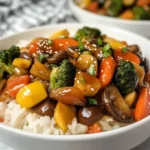
Ingredients
- Soy Sauce (or Tamari for Gluten-Free): ½ cup (120 ml) – This is the savoury, umami backbone of the sauce. Use a good quality naturally brewed soy sauce. For a gluten-free option, tamari is an excellent substitute, offering a slightly richer, less salty flavour.
- Water: ¼ cup (60 ml) – Helps to balance the saltiness and create the right consistency.
- Mirin: ¼ cup (60 ml) – A sweet Japanese rice wine essential for authentic teriyaki flavour. It adds a subtle sweetness and glossiness. If you can’t find mirin, you can substitute dry sherry or marsala wine with an extra teaspoon of sugar, though the flavour profile will differ slightly.
- Brown Sugar (Light or Dark): ¼ cup (50g), packed – Provides the characteristic sweetness that balances the salty soy sauce. You can adjust the amount slightly based on your preference. Maple syrup or honey can be substituted, but they will alter the flavour. Coconut sugar also works well.
- Fresh Ginger: 1 tablespoon, finely minced or grated (about a 1-inch piece) – Adds a warm, pungent spice that cuts through the richness. Fresh ginger is highly recommended over powdered for its vibrant flavour.
- Fresh Garlic: 2-3 cloves, finely minced or pressed – Provides an aromatic, savoury depth. Adjust the amount based on your love for garlic!
- Cornstarch (or Arrowroot Powder): 1 tablespoon – This is our thickening agent. It creates that beautiful glossy glaze that coats the vegetables. Arrowroot powder is a good gluten-free alternative.
- Cold Water: 2 tablespoons – Used to create a slurry with the cornstarch, preventing lumps when added to the hot sauce.
- Toasted Sesame Oil: 1 teaspoon (Optional, but recommended) – Added at the end for a nutty aroma and flavour boost. A little goes a long way.
For the Vegetables & Stir-Fry:
- Cooking Oil: 2 tablespoons – Choose a neutral oil with a high smoke point suitable for stir-frying, such as avocado oil, canola oil, grapeseed oil, or peanut oil.
- Broccoli Florets: 2 cups – Cut into bite-sized pieces. Broccoli holds up well to stir-frying and soaks up the sauce beautifully.
- Carrots: 1 large, peeled and thinly sliced on the diagonal – Adds sweetness, colour, and a pleasant crunch. Slicing diagonally increases the surface area for quicker cooking.
- Bell Peppers: 1 large (any colour – red, yellow, or orange recommended for vibrancy), deseeded and cut into 1-inch chunks – Adds sweetness and a lovely visual appeal.
- Snow Peas or Sugar Snap Peas: 1 cup, trimmed – Provide a delightful crispness and fresh, green flavour.
- Mushrooms: 8 oz (225g), sliced (Cremini, shiitake, or button mushrooms work well) – Offer a meaty texture and earthy flavour. Shiitake mushrooms, in particular, add a wonderful umami depth.
- Onion: ½ large, cut into wedges or thick slices – Adds a foundational savoury flavour. Red onion can also be used for a milder taste and pop of colour.
- Zucchini or Yellow Squash: 1 medium, halved lengthwise and sliced into ½-inch thick half-moons (Optional) – Adds bulk and absorbs the sauce well.
- Green Onions: 2-3, sliced (greens and whites separated) – The white parts can be added during cooking for flavour, while the green parts are perfect for garnish.
Optional Garnishes:
- Toasted Sesame Seeds: For crunch and nutty flavour.
- Reserved Sliced Green Onion Tops: For freshness and colour.
- Red Pepper Flakes: For a touch of heat.
Instructions
Step 1: Prepare the Homemade Teriyaki Sauce
- Combine Base Ingredients: In a small saucepan, combine the soy sauce (or tamari), ¼ cup water, mirin, brown sugar, minced ginger, and minced garlic.
- Heat Gently: Place the saucepan over medium heat. Stir the mixture constantly until the brown sugar has completely dissolved. Don’t let it come to a rapid boil at this stage; you just want to meld the flavours and dissolve the sugar. This usually takes about 2-3 minutes.
- Prepare the Slurry: While the sauce base is heating, whisk together the cornstarch and 2 tablespoons of cold water in a small bowl until smooth. This mixture is called a slurry, and using cold water prevents the cornstarch from clumping when added to the hot liquid.
- Thicken the Sauce: Once the sugar is dissolved, slowly pour the cornstarch slurry into the saucepan while whisking continuously. Bring the mixture to a gentle simmer. Continue to cook and whisk for another 1-2 minutes, or until the sauce thickens to a syrupy, glaze-like consistency – it should coat the back of a spoon.
- Finish and Set Aside: Remove the saucepan from the heat. If using, stir in the toasted sesame oil for extra flavour and aroma. Set the teriyaki sauce aside while you prepare the vegetables. The sauce will thicken slightly more as it cools.
Step 2: Prepare the Vegetables (Mise en Place)
- Wash and Chop: Thoroughly wash all your vegetables. Pat them dry, as excess water can cause splattering in the hot oil and prevent proper searing.
- Uniform Cutting: Chop all the vegetables into relatively uniform, bite-sized pieces as specified in the ingredients list (broccoli florets, sliced carrots, chunked bell peppers, trimmed snow peas, sliced mushrooms, onion wedges, sliced zucchini if using). Uniformity ensures even cooking, so harder vegetables like carrots aren’t still raw when softer ones like mushrooms are overcooked.
- Separate Ingredients: Keep the prepared vegetables separate or grouped by cooking time. Harder vegetables like carrots and broccoli will need a slightly longer cooking time than softer ones like bell peppers, snow peas, and mushrooms. Slice the green onions, keeping the white/light green parts separate from the dark green tops (which are used for garnish).
- Have Everything Ready: Ensure your prepared vegetables, minced garlic/ginger (if adding extra to the stir-fry itself), cooking oil, and the prepared teriyaki sauce are all within easy reach of your stovetop. Stir-frying moves quickly!
Step 3: Stir-Fry the Vegetables
- Heat the Wok/Pan: Place a large wok or a large, heavy-bottomed skillet over high heat. Allow it to get really hot – you should feel the heat radiating from it when you hold your hand a few inches above the surface. A properly heated pan is crucial for achieving that characteristic stir-fry sear (wok hei) rather than just steaming the vegetables.
- Add Oil: Add the cooking oil to the hot wok. Swirl it around to coat the bottom and sides. The oil should shimmer slightly when it’s hot enough.
- Stir-Fry Harder Vegetables: Carefully add the harder vegetables first – typically the broccoli florets and sliced carrots. Stir-fry them constantly, tossing them around the wok for 2-3 minutes. They should start to become tender-crisp and slightly browned in spots. If you like your broccoli softer, you can add a tablespoon of water and briefly cover the wok to steam it slightly before proceeding.
- Add Remaining Vegetables: Add the remaining vegetables – bell peppers, snow peas (or snap peas), mushrooms, onion wedges, and zucchini (if using). Also, add the white/light green parts of the sliced green onions now if desired. Continue to stir-fry vigorously, keeping everything moving, for another 3-5 minutes. The goal is “tender-crisp” – the vegetables should be cooked through but still retain some bite and vibrant colour. Avoid overcrowding the pan; if necessary, cook the vegetables in batches to ensure they sear rather than steam. Overcrowding lowers the pan temperature significantly.
- Check for Doneness: Test a piece of carrot or broccoli – it should be tender but still have a slight firmness. The bell peppers should be slightly softened but still bright, and the snow peas should be bright green and crisp.
Step 4: Sauce and Finish
- Create a Well (Optional but helpful): Push the vegetables to the sides of the wok, creating a well in the centre. If adding extra garlic or ginger directly to the stir-fry for more intense flavour, add it to the well now with a tiny bit more oil and stir-fry for about 30 seconds until fragrant before mixing it back in with the vegetables.
- Add Teriyaki Sauce: Give your prepared teriyaki sauce a quick stir (as the cornstarch might settle) and pour it over the vegetables in the wok.
- Toss to Coat: Immediately start tossing the vegetables continuously to ensure they are evenly coated with the glossy sauce. The heat from the pan will help the sauce cling to the vegetables and bubble slightly. Cook for just another 1-2 minutes, allowing the sauce to heat through and perfectly glaze everything. Be careful not to cook too long at this stage, especially if your sauce is already quite thick, as it can become too sticky or burn due to the sugar content.
- Remove from Heat: Once the vegetables are beautifully glazed and the sauce is hot, remove the wok from the heat immediately.
Step 5: Serve
- Plate: Transfer the hot Teriyaki Vegetables to a serving platter or individual bowls.
- Garnish: Sprinkle generously with toasted sesame seeds and the reserved sliced green onion tops. Add a pinch of red pepper flakes if you desire a little heat.
- Serve Immediately: Teriyaki Vegetables are best enjoyed fresh and hot, while the vegetables are still vibrant and tender-crisp. See the “How to Serve” section for pairing suggestions.
Nutrition
- Serving Size: one normal portion
- Calories: 250-350