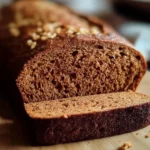
Ingredients
-
- Warm Water (105-115°F / 40-46°C): 1 ½ cups (360 ml) – crucial for activating the yeast.
-
- Active Dry Yeast: 2 ¼ teaspoons (1 standard packet, or 7g)
-
- Unsulphured Molasses: ½ cup (120 ml) – for that classic color and deep flavor.
-
- Brown Sugar, packed: ¼ cup (50g) – adds a touch more sweetness and moisture.
-
- Vegetable Oil (or melted unsalted butter): ¼ cup (60 ml) – for tenderness.
-
- Salt: 1 ½ teaspoons (9g) – enhances flavor and controls yeast activity.
-
- Whole Wheat Flour: 2 ½ cups (300g) – provides structure, fiber, and nutty flavor.
-
- All-Purpose Flour (Unbleached recommended): 2 to 2 ½ cups (240-300g), plus more for dusting – for a softer crumb. The exact amount may vary based on humidity.
-
- Optional: Rolled Oats or Coarse Cornmeal: For dusting the pan and topping the loaf for a rustic finish.
Instructions
1. Activate the Yeast (Proofing):
* In your large mixing bowl, combine the warm water and brown sugar. Sprinkle the active dry yeast over the top.
* Let it sit for 5-10 minutes, or until the mixture becomes foamy and bubbly. This indicates the yeast is active and ready. If it doesn’t foam, your yeast may be old, or the water might have been too hot or too cold; you’ll need to start over with fresh yeast.
2. Combine Wet Ingredients:
* Once the yeast is proofed, stir in the molasses, vegetable oil (or melted butter), and salt. Mix until well combined.
3. Add the Flours:
* Gradually add the whole wheat flour to the wet ingredients, mixing with a sturdy spoon or dough whisk until just combined.
* Begin adding the all-purpose flour, ½ cup at a time, mixing after each addition. Continue adding flour until a shaggy dough forms that pulls away from the sides of the bowl. You may not need all 2 ½ cups of all-purpose flour, or you might need a little more. The dough should be slightly sticky but manageable.
4. Knead the Dough:
* Turn the dough out onto a lightly floured surface.
* Knead for 8-10 minutes. To knead, fold the dough over itself, then push it away from you with the heel of your hand. Rotate the dough a quarter turn and repeat.
* The dough should become smooth, elastic, and less sticky. If it’s too sticky, add a tablespoon of all-purpose flour at a time. If it’s too dry, wet your hands slightly. A well-kneaded dough will spring back slowly when poked.
5. First Rise (Bulk Fermentation):
* Lightly oil the large mixing bowl (you can use the same one, just give it a quick wipe if needed).
* Place the kneaded dough into the bowl, turning it once to coat the entire surface with oil. This prevents a crust from forming.
* Cover the bowl tightly with plastic wrap or a clean, damp kitchen towel.
* Let the dough rise in a warm, draft-free place for 1 to 1 ½ hours, or until it has doubled in size. The ideal temperature is around 75-80°F (24-27°C).
6. Shape the Loaf:
* Gently punch down the risen dough to release the air.
* Turn the dough out onto a lightly floured surface.
* Gently press the dough into a rectangle, roughly the length of your loaf pan.
* Roll the rectangle up tightly, starting from one of the shorter ends, to form a log. Pinch the seam and the ends to seal.
7. Second Rise (Proofing in Pan):
* Grease your 9×5 inch loaf pan thoroughly with butter, shortening, or cooking spray. You can also dust it with rolled oats or coarse cornmeal for a rustic touch and to prevent sticking.
* Place the shaped loaf, seam-side down, into the prepared pan.
* Cover the pan loosely with lightly greased plastic wrap or a clean kitchen towel.
* Let the dough rise again in a warm, draft-free place for 45-60 minutes, or until it has risen about 1 inch above the rim of the pan.
8. Preheat Oven and Bake:
* About 20 minutes before the second rise is complete, preheat your oven to 375°F (190°C). Position an oven rack in the center.
* Once the dough has completed its second rise, you can optionally brush the top lightly with an egg wash (1 egg beaten with 1 tablespoon of water) for a shinier crust, or simply leave it plain. You can also sprinkle some rolled oats on top.
* Place the loaf pan in the preheated oven.
* Bake for 35-45 minutes. The bread is done when it’s a deep golden brown (or rich mahogany due to the molasses) and sounds hollow when tapped on the bottom. An instant-read thermometer inserted into the center should register 190-200°F (88-93°C).
* If the top of the bread starts to brown too quickly, you can loosely tent it with aluminum foil for the last 10-15 minutes of baking.
9. Cool the Bread:
* Immediately remove the bread from the loaf pan and transfer it to a wire cooling rack.
* Allow the bread to cool completely (at least 1-2 hours) before slicing. This is a crucial step! Slicing warm bread can result in a gummy texture as the structure hasn’t fully set.
Nutrition
- Serving Size: one normal portion
- Calories: 180-220
- Sugar: 8-10g
- Sodium: 200-250mg
- Fat: 3-5g
- Saturated Fat: 1g
- Carbohydrates: 35-40g
- Fiber: 35-40g
- Protein: 4-5g
- Cholesterol: 5mg