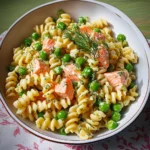
Ingredients
Scale
- For the Pasta:
- 1 pound Pasta: Linguine, fettuccine, or penne work exceptionally well. Their shapes hold the creamy sauce beautifully. You can use regular pasta or opt for whole wheat pasta for added fiber.
- Salt: For seasoning the pasta water and enhancing the overall flavors of the dish.
- For the Salmon:
- 1.5 pounds Salmon Fillets: Skinless, boneless salmon fillets are easiest to work with. Look for fresh, bright pink salmon. Sockeye or Coho salmon are excellent choices for their rich flavor and firm texture.
- 1 tablespoon Olive Oil: For searing the salmon. Extra virgin olive oil is preferred for its flavor and health benefits.
- 1 Lemon: You’ll need both the zest and juice. Fresh lemon is crucial for the bright, citrusy notes that complement the salmon and dill.
- Salt and Black Pepper: To season the salmon fillets. Freshly ground black pepper is always recommended for the best flavor.
- For the Sauce and Vegetables:
- 2 tablespoons Butter: Unsalted butter adds richness and a smooth texture to the sauce.
- 2 cloves Garlic: Minced garlic adds a savory depth of flavor. Use fresh garlic for the best aroma and taste.
- 1 cup Heavy Cream: Heavy cream creates a luxuriously creamy sauce. You can substitute with half-and-half for a lighter sauce, but the texture will be less rich.
- 1 cup Frozen Peas: Frozen peas are convenient and readily available. They add a touch of sweetness and vibrant green color to the dish. No need to thaw them before adding.
- ½ cup Fresh Dill: Fresh dill is the star herb in this recipe, providing a bright, herbaceous, and slightly lemony flavor that perfectly complements the salmon and peas. Make sure to use fresh dill for the best results; dried dill won’t provide the same vibrant flavor.
- ½ cup Grated Parmesan Cheese: Freshly grated Parmesan cheese adds a salty, nutty, and umami-rich flavor to the sauce, helping to bind it together and enhance the overall taste. Use good quality Parmesan for the best flavor.
- Salt and Black Pepper: To season the sauce to taste.
- Optional: Red Pepper Flakes: A pinch of red pepper flakes can add a subtle warmth and depth of flavor to the dish, if desired.
Why These Ingredients Shine in Spring Pasta:
- Salmon: Salmon is a spring staple, known for its delicate flavor and healthy fats. It cooks quickly and pairs beautifully with lighter, fresher flavors.
- Peas: Fresh peas are a quintessential spring vegetable, bursting with sweetness and vibrant green color. Frozen peas are a fantastic and convenient alternative, ensuring you can enjoy this dish even when fresh peas are not in season.
- Dill: Dill is a fragrant spring herb with a bright, slightly lemony flavor that perfectly complements both salmon and peas. It adds a fresh, herbaceous note that elevates the entire dish.
- Lemon: Lemon zest and juice provide a crucial element of brightness and acidity, cutting through the richness of the cream and butter and enhancing the other flavors.
- Cream and Butter: While seemingly richer ingredients, in moderation, they create a luscious sauce that perfectly coats the pasta and brings all the flavors together without being heavy. They provide a comforting and satisfying element to the spring dish.
Instructions
- Cook the Pasta: Bring a large pot of salted water to a rolling boil. Add the pasta and cook according to package directions until al dente. “Al dente” means cooked through but still slightly firm to the bite. This texture is ideal for pasta dishes as it holds its shape and provides a pleasant chewiness. While the pasta is cooking, proceed with the next steps.
- Prepare the Salmon: While the pasta cooks, prepare the salmon. Pat the salmon fillets dry with paper towels. This helps them sear properly and develop a nice crust. Season both sides of the salmon fillets generously with salt and freshly ground black pepper. Zest the lemon, being careful to only zest the yellow part and avoid the bitter white pith. Juice half of the lemon (reserve the other half for serving).
- Sear the Salmon: Heat olive oil in a large skillet over medium-high heat. Once the oil is hot and shimmering, carefully place the seasoned salmon fillets in the skillet, skin-side down if they have skin (though skinless is recommended for this recipe for ease). Sear the salmon for 3-4 minutes per side, or until it is cooked through and flakes easily with a fork. Avoid overcooking the salmon, as it will become dry. The goal is to achieve a nicely browned exterior and a moist, tender interior. Remove the cooked salmon from the skillet and set aside on a plate. Flake the salmon into bite-sized pieces using a fork. Set aside.
- Sauté Garlic in Butter: In the same skillet you used for the salmon (no need to wipe it out, the salmon flavors will enhance the sauce), melt the butter over medium heat. Add the minced garlic and sauté for about 1 minute, or until fragrant. Be careful not to burn the garlic, as it will become bitter. Sautéing the garlic in butter infuses the butter with flavor and creates a flavorful base for the sauce.
- Create the Creamy Sauce: Pour the heavy cream into the skillet with the sautéed garlic. Bring the cream to a gentle simmer, stirring occasionally. Reduce the heat to low and let it simmer for 2-3 minutes, allowing it to slightly thicken. Simmering the cream helps to concentrate its flavor and create a richer sauce.
- Add Peas, Dill, Lemon, and Parmesan: Add the frozen peas, fresh dill, lemon zest, and lemon juice to the creamy sauce. Stir to combine and cook for another 2-3 minutes, or until the peas are heated through and bright green. The heat from the sauce will quickly cook the frozen peas. Stir in the grated Parmesan cheese and continue stirring until the cheese is melted and the sauce is smooth and creamy. Taste the sauce and season with salt and black pepper to taste. Add a pinch of red pepper flakes if desired for a touch of heat.
- Combine Pasta and Sauce: Drain the cooked pasta and add it directly to the skillet with the creamy sauce. Toss to coat the pasta evenly with the sauce. Ensure every strand of pasta is coated in the delicious creamy mixture.
- Gently Fold in Salmon: Gently fold in the flaked salmon into the pasta and sauce. Be careful not to break the salmon pieces too much. You want to distribute the salmon evenly throughout the pasta while keeping it in recognizable pieces.
- Serve Immediately: Serve the Spring Pasta with Salmon, Peas, and Dill immediately while it’s hot and creamy. Garnish with extra fresh dill sprigs and a lemon wedge for squeezing over just before serving. A sprinkle of extra Parmesan cheese is also a welcome addition.
Tips for Perfect Instructions:
- Don’t Overcook Pasta: Al dente pasta is crucial for texture. Overcooked pasta will become mushy and won’t hold the sauce well.
- Sear Salmon Properly: High heat and patting the salmon dry are key for a good sear. Don’t overcrowd the pan; sear in batches if necessary.
- Don’t Burn Garlic: Sauté garlic over medium heat and watch it closely to prevent burning.
- Fresh Dill is Key: Fresh dill is essential for the distinct flavor of this dish. Dried dill is not a suitable substitute.
- Taste and Adjust Seasoning: Always taste the sauce before adding the pasta and adjust seasoning with salt, pepper, and lemon juice as needed to achieve your desired flavor profile.
Nutrition
- Serving Size: one normal portion
- Calories: 600-700 calories