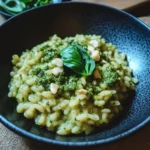
Ingredients
- Arborio Rice: 1.5 cups (approx. 300g) – This is crucial. Arborio, Carnaroli, or Vialone Nano are Italian short-grain rice varieties high in amylopectin starch, which releases during cooking to create the creamy texture. Do not substitute long-grain rice.
- Vegetable or Chicken Broth: 4-6 cups (approx. 1 – 1.5 litres) – Use a good quality, low-sodium broth. You need it warm, so keep it simmering gently in a separate saucepan. The exact amount can vary depending on the rice and heat.
- Dry White Wine: 1/2 cup (approx. 120ml) – Such as Pinot Grigio, Sauvignon Blanc, or Vermentino. This adds a layer of acidity and complexity. If avoiding alcohol, substitute with an equal amount of extra broth and a tiny splash (1 tsp) of white wine vinegar or lemon juice added with the first ladle of broth.
- Yellow Onion or Shallots: 1 medium onion or 2 large shallots, finely chopped – Provides a subtle aromatic base. Shallots offer a slightly milder, more refined flavour.
- Garlic: 2-3 cloves, minced – Adds depth to the aromatic base. Adjust to your preference.
- Olive Oil: 2 tablespoons – For sautéing the aromatics. Use a decent quality extra virgin olive oil if possible.
- Unsalted Butter: 2 tablespoons, divided (optional, but recommended for richness) – 1 tbsp for sautéing (can use all olive oil if preferred) and 1 tbsp for finishing (mantecatura).
- Basil Pesto: 1/2 to 3/4 cup (approx. 120-180ml) – Use high-quality store-bought pesto or, ideally, homemade pesto for the best flavour. The amount depends on how intense you like the pesto flavour.
- Parmesan Cheese (Parmigiano-Reggiano): 1/2 cup (approx. 50g), freshly grated, plus extra for serving – Essential for flavour and creaminess. Use real Parmigiano-Reggiano or a good quality Grana Padano. Avoid pre-grated cheese, as it often contains anti-caking agents that prevent smooth melting.
- Salt: To taste – Add towards the end, as the broth and Parmesan are already salty.
- Freshly Cracked Black Pepper: To taste.
- Optional additi
- Green Peas: 1/2 cup frozen peas, added during the last 5 minutes of cooking.
- Asparagus: 1 bunch, trimmed and cut into 1-inch pieces, blanched or sautéed separately and stirred in at the end.
- Cooked Chicken or Shrimp: Add cooked shredded chicken or sautéed shrimp when stirring in the pesto.
- Toasted Pine Nuts: For garnish.
- Fresh Basil Leaves: For garnish.
Instructions
- Prepare the Broth: Pour your vegetable or chicken broth into a medium saucepan and bring it to a gentle simmer over medium-low heat. Keep it warm throughout the risotto cooking process. Adding cold broth to the hot rice can shock the grains and hinder the creamy texture development.
- Sauté Aromatics: In a large, heavy-bottomed saucepan or Dutch oven (wide pans work best for evaporation), heat the olive oil and 1 tablespoon of butter (if using) over medium heat. Add the finely chopped onion or shallots and sauté gently for 5-7 minutes, until softened and translucent but not browned. Stir occasionally.
- Add Garlic: Stir in the minced garlic and cook for another minute until fragrant. Be careful not to burn the garlic, as it will become bitter.
- Toast the Rice (Tostatura): Add the Arborio rice to the pot. Stir constantly for about 1-2 minutes, ensuring every grain is coated with the oil/butter mixture. The rice should become slightly translucent around the edges, and you might hear a slight crackling sound. This step helps the rice absorb liquid evenly and maintain its shape.
- Deglaze with Wine: Pour in the white wine. Stir continuously, scraping up any browned bits from the bottom of the pan. Let the wine bubble and cook until it has almost completely evaporated and the smell of alcohol has dissipated, about 1-2 minutes. This infuses the rice with flavour and acidity.
- Begin Adding Broth: Add one ladleful (about 1/2 cup) of the warm broth to the rice. Stir gently but constantly. The motion helps the rice grains rub against each other, releasing their starch. Keep the heat at a medium simmer – the risotto should be bubbling gently, not boiling vigorously or sitting stagnant.
- The Stirring Process: Continue stirring until the broth is almost completely absorbed by the rice. Don’t let the rice dry out completely, but you should be able to draw a spoon across the bottom of the pan and leave a trail for a second or two before the risotto fills it back in.
- Continue Adding Broth: Once the liquid is absorbed, add another ladleful of warm broth and repeat the process: stir gently but consistently until the broth is absorbed before adding the next ladleful. This gradual addition is crucial for developing the creamy texture.
- Cook Until Al Dente: Continue this process of adding broth and stirring for approximately 18-25 minutes. The exact time will depend on your rice, stove, and pan. Start tasting the rice after about 15 minutes. You’re looking for a texture that is creamy and tender but still has a slight bite or firmness in the center – al dente. The overall consistency should be fluid and slightly soupy, like a thick porridge; it should gently spread when spooned onto a plate, not stand stiffly or be watery. If you run out of broth and the rice isn’t cooked yet, you can add a little hot water.
- Finish Off the Heat (Mantecatura): Once the rice reaches the desired al dente texture and creamy consistency, remove the pan from the heat. This is important to prevent the pesto and cheese from becoming oily or splitting.
- Add Flavourings: Stir in the remaining 1 tablespoon of butter (if using), the freshly grated Parmesan cheese, and the basil pesto. Stir vigorously for about 30 seconds to a minute. This final step, called mantecatura, emulsifies the fats and starches, creating an exceptionally creamy and cohesive risotto.
- Season and Rest: Taste the risotto and season with salt and freshly cracked black pepper as needed. Remember that the broth and Parmesan add saltiness, so taste first. Let the risotto rest off the heat for 1-2 minutes, covered. This allows the flavours to meld and the texture to settle.
- Serve Immediately: Risotto is best served immediately while it’s hot, creamy, and fluid. Spoon it into warm shallow bowls. Garnish generously with extra grated Parmesan cheese, a drizzle of good olive oil, fresh basil leaves, or toasted pine nuts, if desired.
Nutrition
- Serving Size: one normal portion
- Calories: 550-700
- Sodium: 800-1200mg
- Fat: 25-35g
- Carbohydrates: 60-75g
- Fiber: 3-5g
- Protein: 15-20g