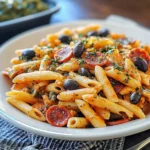
Ingredients
-
- Penne Pasta: 1 pound (approximately 450 grams) of penne pasta. Penne is the classic choice for this dish and its tubular shape with angled ends is perfect for capturing the sauce and ingredients. You can use regular penne or opt for whole wheat penne for a healthier twist and a nuttier flavor. Gluten-free penne is also a great option for those with dietary restrictions, ensuring everyone can enjoy this delicious meal. Consider using a high-quality brand of pasta for the best texture and cooking results.
-
- Olive Oil: ¼ cup of extra virgin olive oil. Olive oil forms the base of the sauce and adds richness and flavor to the dish. Extra virgin olive oil is preferred for its superior taste and health benefits. It will be used to sauté the garlic, pepperoni, and olives, infusing them with its aromatic essence. If you prefer a lighter flavor, you can use regular olive oil or even a neutral cooking oil like canola oil, but extra virgin olive oil truly elevates the taste profile of this pasta.
-
- Garlic: 3-4 cloves of garlic, minced. Garlic is a cornerstone of Italian cooking and provides a pungent and savory base flavor for this pasta dish. Freshly minced garlic is always recommended for the best flavor. You can adjust the amount of garlic to your preference – if you are a garlic lover, feel free to add a clove or two more! Minced garlic will be sautéed in olive oil to release its aroma and create a flavorful foundation for the sauce.
-
- Pepperoni: 4 ounces (approximately 115 grams) of pepperoni, sliced or diced. Pepperoni is the star ingredient, bringing a spicy, savory, and slightly smoky flavor to the pasta. You can use your favorite type of pepperoni – regular, turkey pepperoni for a leaner option, or even spicy pepperoni for an extra kick. Pre-sliced pepperoni is convenient, but you can also purchase a pepperoni stick and slice or dice it yourself. The size of the pepperoni pieces is up to you, depending on your preference for texture and how you want it distributed throughout the pasta.
-
- Olives: 1 cup of olives, pitted and halved or sliced. A mix of olives adds complexity and a briny, salty counterpoint to the richness of the pepperoni. You can use a combination of black olives and green olives for visual appeal and a varied flavor profile. Kalamata olives, with their meaty texture and intense flavor, are also a fantastic addition. Make sure to use pitted olives for convenience and safety. Halving or slicing the olives ensures they are well distributed and easy to eat with the pasta.
-
- Canned Crushed Tomatoes: 1 (28-ounce) can of crushed tomatoes. Crushed tomatoes form the base of the simple yet flavorful sauce. Canned crushed tomatoes are convenient and readily available. Choose good quality crushed tomatoes for the best flavor. You can also use diced tomatoes if you prefer a chunkier sauce, or tomato puree for a smoother sauce. If you desire a richer, more intense tomato flavor, you could consider using San Marzano tomatoes, known for their sweetness and low acidity.
-
- Dried Oregano: 1 teaspoon of dried oregano. Oregano is a classic Italian herb that adds a warm, slightly peppery, and aromatic note to the pasta sauce. Dried oregano is convenient and has a concentrated flavor. If you prefer fresh oregano, you can use about 1 tablespoon of fresh, chopped oregano, added towards the end of cooking to preserve its fresh flavor.
-
- Dried Basil: 1 teaspoon of dried basil. Basil is another essential Italian herb, contributing a sweet, slightly peppery, and fragrant aroma to the dish. Dried basil is a pantry staple and provides a good base flavor. Similar to oregano, if you prefer fresh basil, use about 1 tablespoon of chopped fresh basil, added towards the end of cooking for the best flavor and aroma.
-
- Red Pepper Flakes (Optional): ¼ teaspoon of red pepper flakes, or more to taste. Red pepper flakes add a touch of heat and spice to the pasta, complementing the savory flavors of the pepperoni and olives. This is optional, but highly recommended if you enjoy a little kick in your pasta. Adjust the amount to your spice preference. If you are sensitive to spice, you can omit them altogether.
-
- Salt and Black Pepper: To taste. Salt and black pepper are essential seasonings to enhance and balance the flavors of all the ingredients. Season generously throughout the cooking process, starting with salting the pasta water and then adjusting the seasoning of the sauce to your liking. Freshly ground black pepper is always preferred for its brighter and more aromatic flavor.
-
- Fresh Parsley (Optional, for garnish): Chopped fresh parsley, for garnish. Fresh parsley adds a vibrant green color and a fresh, herbaceous note to the finished dish. It’s primarily used as a garnish to enhance the visual appeal and add a final touch of freshness. You can also use other fresh herbs like basil or oregano for garnish, if desired.
-
- Grated Parmesan Cheese (Optional, for serving): Grated Parmesan cheese, for serving. Parmesan cheese is a classic Italian cheese that adds a salty, umami-rich, and nutty flavor to pasta dishes. It’s traditionally served as a topping for pasta and is a perfect complement to the Pepperoni and Olive Penne Pasta. Freshly grated Parmesan is always best, but pre-grated Parmesan is also convenient. Pecorino Romano cheese is a sharper, saltier alternative to Parmesan if you prefer a more intense cheese flavor.
Instructions
-
- Cook the Penne Pasta: Begin by bringing a large pot of salted water to a rolling boil. Generously salting the water is crucial as it seasons the pasta from the inside out, enhancing its flavor. Once boiling, add the penne pasta to the pot. Cook according to the package directions until the pasta is al dente. “Al dente” means “to the tooth” in Italian, and it refers to pasta that is cooked through but still firm to the bite, not mushy. This usually takes around 8-10 minutes, depending on the brand and type of pasta. Stir the pasta occasionally while it cooks to prevent it from sticking together. Once cooked, drain the pasta in a colander, reserving about ½ cup of the pasta cooking water. The pasta water is starchy and can be used to help create a smoother and more emulsified sauce. Set the drained pasta aside.
-
- Sauté Garlic and Pepperoni: While the pasta is cooking, prepare the sauce. Place a large skillet or Dutch oven over medium heat. Add the olive oil to the skillet and let it heat up for a few seconds until it shimmers. Add the minced garlic to the hot olive oil and sauté for about 30 seconds to 1 minute, or until fragrant. Be careful not to burn the garlic, as it can become bitter. The aroma of sautéing garlic is a wonderful indicator that it’s ready. Next, add the sliced or diced pepperoni to the skillet. Cook the pepperoni for about 2-3 minutes, stirring occasionally, until it starts to crisp up slightly and release its flavorful oils. The pepperoni will become slightly browned and its edges may curl up a bit. This step enhances the pepperoni’s flavor and adds depth to the sauce.
-
- Add Olives, Tomatoes, and Seasonings: Once the pepperoni is cooked, add the halved or sliced olives to the skillet. Stir them in with the pepperoni and garlic and cook for another minute or two, allowing the olives to warm through and their flavors to meld with the other ingredients. Next, pour in the canned crushed tomatoes into the skillet. Stir to combine everything well. Add the dried oregano, dried basil, and red pepper flakes (if using) to the sauce. Season with salt and black pepper to taste. Start with a teaspoon of salt and ¼ teaspoon of black pepper, and then adjust to your preference after tasting. Remember that pepperoni and olives are already salty, so season cautiously.
-
- Simmer the Sauce: Bring the sauce to a simmer over medium heat. Once simmering, reduce the heat to low and let the sauce gently simmer for about 10-15 minutes, stirring occasionally. Simmering allows the flavors to meld together and deepen, creating a richer and more complex sauce. If the sauce becomes too thick, you can add a splash or two of the reserved pasta cooking water to thin it out to your desired consistency. Taste the sauce again after simmering and adjust the seasonings as needed. You may want to add a little more salt, pepper, oregano, basil, or red pepper flakes to achieve the perfect flavor balance.
-
- Combine Pasta and Sauce: After the sauce has simmered, add the drained cooked penne pasta to the skillet with the sauce. Toss everything together gently but thoroughly to ensure that the pasta is evenly coated with the sauce and that the pepperoni and olives are well distributed throughout. If the pasta seems a bit dry, add a little more of the reserved pasta cooking water, a tablespoon at a time, until the sauce reaches your desired consistency – it should be nicely coating the pasta without being watery.
-
- Serve and Garnish: Serve the Pepperoni and Olive Penne Pasta immediately while it’s hot. Portion the pasta into bowls. If desired, garnish each serving with freshly chopped parsley for a pop of color and freshness. Offer grated Parmesan cheese on the side for those who want to add a cheesy topping to their pasta. A sprinkle of extra red pepper flakes can also be offered for those who prefer more heat. Enjoy your delicious and easy Pepperoni and Olive Penne Pasta!
Nutrition
- Serving Size: one normal portion
- Calories: 450-550
- Sugar: 8-10 grams
- Sodium: 800-1000 mg
- Fat: 20-25 grams
- Saturated Fat: 6-8 grams
- Carbohydrates: 50-60 grams
- Fiber: 4-6 grams
- Protein: 20-25 grams
- Cholesterol: 40-50 mg