Ingredients
- 3 cups (360g) Cake Flour: Cake flour has a lower protein content than all-purpose flour, resulting in a finer, more tender crumb. Spoon the flour into your measuring cup and level it off, rather than scooping directly from the bag, to avoid compaction and ensure accuracy. Sifting is highly recommended for maximum lightness.
- 1 tablespoon Baking Powder: This is our primary leavening agent, responsible for the cake’s rise and fluffy texture. Ensure your baking powder is fresh for optimal results (test by dropping a pinch into hot water – it should fizz vigorously).
- 1/2 teaspoon Salt: Salt doesn’t just add salinity; it enhances all the other flavours, balancing the sweetness and brightening the citrus and floral notes. Fine sea salt or regular table salt works well.
- 1 cup (226g) Unsalted Butter: Use good quality unsalted butter, softened to room temperature. This is crucial for the creaming process, which incorporates air into the batter for a light texture. Softened means it should yield slightly to gentle pressure but not be melted or greasy.
- 2 cups (400g) Granulated Sugar: Provides sweetness, moisture, and contributes to the tender structure and browning of the cake.
- 4 Large Eggs: Eggs add richness, structure, binding, and leavening. They should be at room temperature to incorporate more easily and fully into the batter, creating a better emulsion.
- 1 cup (240ml) Whole Milk: Provides moisture and richness. Buttermilk can also be substituted for a slightly tangier flavour and even more tender crumb. Ensure it’s at room temperature.
- 1/4 cup (60ml) Fresh Orange Juice: Adds a natural citrus tang and moisture, complementing the orange zest and blossom water. Freshly squeezed is always best for flavour.
- 2 tablespoons Orange Zest: Finely grated zest from about 2 large oranges. This packs a significant orange flavour punch without adding extra liquid. Zest only the outer orange layer, avoiding the bitter white pith.
- 1 teaspoon Vanilla Extract: Pure vanilla extract enhances the overall flavour profile, adding warmth and depth that complements both the orange and floral notes.
- 1 to 1.5 teaspoons Orange Blossom Water: This is the signature flavour. Start with 1 teaspoon and taste the batter if you’re unsure. Quality varies, and it can be potent. Add more cautiously if you desire a stronger floral presence. Ensure you are using food-grade orange blossom water (also known as orange flower water).
For the Orange Blossom Buttercream Frosting:
- 2 cups (452g) Unsalted Butter: Again, softened to room temperature for smooth, fluffy frosting.
- 4–5 cups (480-600g) Powdered Sugar: Also known as confectioners’ sugar or icing sugar. Sift it to remove any lumps for the smoothest possible frosting. The amount can be adjusted based on your desired sweetness and consistency.
- 1/4 cup (60ml) Heavy Cream or Whole Milk: Adds richness and helps achieve the right spreading consistency. Start with a smaller amount and add more as needed. Room temperature liquid incorporates better.
- 1 to 2 teaspoons Orange Blossom Water: Adjust based on preference and the potency of your specific brand. Remember, you can always add more, but you can’t take it out.
- 1 teaspoon Vanilla Extract: Complements the orange blossom and adds depth to the frosting flavour.
- Pinch of Salt: Crucial for balancing the intense sweetness of the powdered sugar.
- Optional: 1-2 tablespoons Orange Zest: For an extra layer of orange flavour and visual appeal within the frosting itself.
Instructions
1. Preparation is Key:
* Preheat your oven to 350°F (175°C).
* Grease and flour three 8-inch round cake pans. Alternatively, grease the pans, line the bottoms with parchment paper rounds, grease the parchment paper, and then flour the sides. This double-assurance helps guarantee the cakes release cleanly. Set the prepared pans aside.
2. Combine Dry Ingredients:
* In a medium bowl, whisk together the cake flour, baking powder, and salt. Whisking helps aerate the flour and distribute the leavening agent and salt evenly. Sifting these ingredients together is even better for a guaranteed light and airy crumb. Set aside.
3. Cream Butter and Sugar:
* In the large bowl of a stand mixer fitted with the paddle attachment, or using a hand mixer and a large bowl, beat the softened unsalted butter on medium-high speed until it’s smooth and creamy (about 1-2 minutes).
* Gradually add the granulated sugar while the mixer is on medium speed. Once all the sugar is added, increase the speed to medium-high and beat for a full 3-5 minutes. The mixture should become very pale, light, and fluffy. Don’t rush this step – creaming incorporates air, which is essential for the cake’s texture. Scrape down the sides and bottom of the bowl periodically to ensure even mixing.
4. Incorporate Eggs:
* Add the room temperature eggs one at a time, beating well (about 30 seconds) after each addition. Wait until each egg is fully incorporated before adding the next. If the mixture looks slightly curdled, don’t worry; it will come together when the dry ingredients are added. Scrape down the bowl again.
5. Add Flavourings:
* Beat in the vanilla extract, orange zest, and 1 teaspoon of orange blossom water until just combined. Give the batter a quick taste here if you’re considering adding the extra 1/2 teaspoon of orange blossom water – do it now if desired.
6. Combine Wet Ingredients:
* In a separate small bowl or liquid measuring cup, whisk together the room temperature whole milk and fresh orange juice.
7. Alternate Wet and Dry Ingredients:
* With the mixer on low speed, begin adding the dry ingredient mixture and the milk/orange juice mixture to the butter/sugar/egg mixture. Alternate between the two, starting and ending with the dry ingredients. A common sequence is: add one-third of the dry ingredients, mix until just combined. Add half of the wet ingredients, mix until just combined. Add another third of the dry ingredients, mix until just combined. Add the remaining half of the wet ingredients, mix until just combined. Finally, add the last third of the dry ingredients.
* Crucially: Mix only until each addition is just barely combined. Overmixing develops the gluten in the flour, which can lead to a tough or dense cake. Stop mixing as soon as you no longer see streaks of flour. A few final folds with a rubber spatula can ensure everything at the bottom is incorporated without overworking the batter.
8. Divide and Bake:
* Divide the batter evenly among the three prepared cake pans. Smooth the tops gently with an offset spatula or the back of a spoon.
* Bake in the preheated oven for 25-30 minutes, or until a wooden skewer or toothpick inserted into the center of the cakes comes out clean, or with a few moist crumbs attached (but no wet batter). The tops should spring back lightly when gently pressed. Baking times can vary slightly depending on your oven, so start checking around the 25-minute mark. If possible, rotate the pans halfway through baking for even browning.
9. Cool the Cakes:
* Once baked, carefully remove the pans from the oven and place them on a wire cooling rack. Let the cakes cool in their pans for 10-15 minutes. This allows them to set slightly, making them less likely to break when unmolded.
* After 10-15 minutes, run a thin knife or offset spatula around the edges of each pan to loosen the cakes. Invert the cakes carefully onto the wire rack, peel off the parchment paper (if used), and let them cool completely to room temperature. This can take 1-2 hours. Attempting to frost warm cakes will result in melted, messy frosting.
10. Make the Orange Blossom Buttercream:
* While the cakes are cooling, prepare the frosting. In the clean bowl of your stand mixer (or using a hand mixer), beat the softened unsalted butter on medium-high speed until very pale and fluffy (about 3-5 minutes).
* Turn the mixer speed down to low and gradually add the sifted powdered sugar, about one cup at a time, mixing until incorporated before adding the next. Once all the sugar seems mostly mixed in, scrape down the bowl.
* Add the vanilla extract, a pinch of salt, and 1 teaspoon of the orange blossom water. If using orange zest in the frosting, add it now.
* With the mixer on low, gradually drizzle in the heavy cream or milk, adding just enough until the frosting reaches your desired spreading consistency. You might not need the full 1/4 cup, or you may need slightly more.
* Once the liquid is incorporated, increase the mixer speed to medium-high and beat for another 2-3 minutes until the frosting is very light, smooth, and airy.
* Taste the frosting. Add more orange blossom water, 1/4 teaspoon at a time, if you want a more pronounced floral flavour. If it’s too thin, add a bit more sifted powdered sugar. If it’s too thick, add a tiny splash more cream or milk.
11. Assemble the Layer Cake:
* Ensure your cakes are completely cool. If the tops are domed, you may want to level them using a long serrated knife or a cake leveler for a more stable and professional-looking cake. (Save the scraps for snacking!)
* Place one cake layer, cut-side up (if leveled), onto your serving plate or cake stand. A dab of frosting underneath can help anchor it.
* Spread about 1 cup of frosting evenly over the first layer, right to the edges.
* Carefully place the second cake layer on top, cut-side down (or top-side up if not leveled). Gently press down to secure it.
* Spread another cup of frosting evenly over the second layer.
* Place the third cake layer on top, ideally cut-side down for a flat top surface.
* Crumb Coat (Highly Recommended): Apply a thin, even layer of frosting over the entire cake (top and sides). This layer traps any loose crumbs. Don’t worry about it looking perfect. Chill the cake in the refrigerator for 20-30 minutes to allow the crumb coat to firm up. This step makes applying the final layer of frosting much cleaner and easier.
12. Final Frosting and Decoration:
* Once the crumb coat is chilled and firm, apply the remaining frosting generously over the top and sides of the cake. Use an offset spatula or a bench scraper for a smooth finish, or create decorative swirls and textures with the back of a spoon or the tip of your spatula.
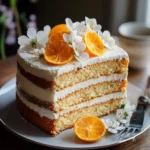
* Garnish as desired with fresh orange slices, candied peel, edible flowers, or mint sprigs just before serving.
13. Chill (Optional) & Serve:
* You can serve the cake immediately, or chill it for about 30 minutes to help the frosting set completely, making slicing cleaner. Let it sit at room temperature for about 15-20 minutes before serving if chilled for longer, as the flavour and texture are best when not ice-cold.
Nutrition
- Serving Size: one normal portion
- Calories: 650-750