Ingredients
Scale
-
- 4 cups All-Purpose Flour: The foundation of our bread. All-purpose flour provides the structure and gluten necessary for a satisfying crumb. For a slightly nuttier flavor and added texture, you can substitute 1 cup of all-purpose flour with whole wheat flour. However, for a truly traditional Irish Soda Bread, stick with all-purpose. Make sure to measure your flour correctly. The best way is to spoon it into your measuring cup and level it off with a knife. Scooping directly from the bag can pack the flour, resulting in too much flour and a drier bread.
-
- 1 teaspoon Baking Soda: The magic ingredient that gives soda bread its name and its rise! Baking soda, when combined with an acid (in this case, buttermilk), creates carbon dioxide, which leavens the bread and makes it light and airy (well, airy for a dense soda bread!). Ensure your baking soda is fresh for optimal leavening power. Old baking soda may have lost its potency.
-
- 1 teaspoon Salt: Salt is essential for flavor development in all breads, and Irish Soda Bread is no exception. It enhances the taste of the flour and buttermilk and balances the slight tanginess. Use regular table salt or fine sea salt.
-
- 1 ¾ cups Buttermilk: Buttermilk is the key to the characteristic tang and tenderness of Irish Soda Bread. The acidity in buttermilk reacts with the baking soda to create the leavening action. It also contributes to a moist and flavorful crumb. If you don’t have buttermilk, you can easily make a substitute by adding 1 ¾ tablespoons of white vinegar or lemon juice to regular milk. Let it sit for 5–10 minutes until it thickens and slightly curdles – this is your homemade buttermilk! While a substitute works in a pinch, real buttermilk will provide the most authentic flavor and texture.
-
- ¼ cup (½ stick) Cold Unsalted Butter, cut into small cubes: Cold butter adds richness, flavor, and tenderness to the bread. Cutting cold butter into the flour creates small pockets of fat that melt during baking, resulting in a slightly flaky and more tender crumb. Make sure the butter is indeed cold; warm butter will incorporate too easily and not create the desired texture. Unsalted butter is preferred so you can control the amount of salt in the recipe.
-
- (Optional) ½ cup Raisins or Currants: While traditional Irish Soda Bread is often plain, adding raisins or currants is a popular and delicious variation, especially for a sweeter loaf. If using, soak the raisins or currants in hot water for about 10 minutes to plump them up before adding them to the dough. This prevents them from drawing moisture out of the bread during baking. You can also use other dried fruits like cranberries or chopped dried apricots for different flavor profiles.
-
- (Optional) 1 tablespoon Caraway Seeds: For a more savory and distinctly Irish flavor, consider adding caraway seeds. They add a warm, slightly peppery, and aromatic note that complements the tang of the buttermilk beautifully. If you’re not a fan of caraway, feel free to omit them or experiment with other herbs like rosemary or thyme for a different twist.
Instructions: Baking Your Irish Soda Bread Step-by-Step
Making Irish Soda Bread is incredibly straightforward and quick, perfect for even beginner bakers. Follow these simple steps to bake your own delicious loaf:
-
- Preheat Your Oven and Prepare Baking Sheet: Preheat your oven to 450°F (232°C). This high temperature is crucial for creating a good crust and a quick rise. Lightly grease a baking sheet or line it with parchment paper. Parchment paper is recommended for easy cleanup and prevents the bread from sticking.
-
- Combine Dry Ingredients: In a large mixing bowl, whisk together the flour, baking soda, and salt. Whisking ensures that the baking soda and salt are evenly distributed throughout the flour, which is important for consistent leavening and flavor.
-
- Cut in the Cold Butter: Add the cold, cubed butter to the flour mixture. Using your fingertips or a pastry blender, cut the butter into the flour until the mixture resembles coarse crumbs. You should still see small pieces of butter, about the size of peas. This step is key to creating a tender crumb. Don’t overwork the mixture; you want to keep the butter cold.
-
- Add Raisins/Currants and Caraway Seeds (Optional): If using raisins or currants and/or caraway seeds, gently stir them into the flour mixture at this stage. Distribute them evenly throughout the dry ingredients.
-
- Make a Well and Add Buttermilk: Make a well in the center of the dry ingredients. Pour in the buttermilk all at once.
-
- Mix to Form a Shaggy Dough: Using a wooden spoon or your hands, quickly mix the buttermilk into the dry ingredients until just combined. The dough will be shaggy and slightly sticky. Do not overmix! Overmixing will develop the gluten too much, resulting in a tough bread. Mix just until the dry ingredients are moistened and a dough starts to come together.
-
- Turn Dough Out and Knead Briefly: Turn the dough out onto a lightly floured surface. Very gently knead the dough for just 1-2 minutes, just enough to bring it together into a slightly smoother ball. Again, avoid over-kneading. Soda bread is meant to be rustic and slightly crumbly, not smooth and elastic like yeast bread.
-
- Shape into a Round: Shape the dough into a round, flattened disc about 1 ½ – 2 inches thick. Place the round on the prepared baking sheet.
-
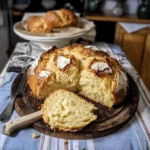
- Score the Top: Using a sharp knife, score a deep cross (X) on the top of the dough. This is a traditional step for Irish Soda Bread and is said to ward off evil spirits, but practically, it helps the bread bake evenly and allows for expansion during baking. Make sure the score is deep, about halfway through the dough.
-
- Bake: Bake in the preheated oven for 30-35 minutes, or until the bread is golden brown and sounds hollow when tapped on the bottom. The internal temperature should reach around 200-210°F (93-99°C). Keep an eye on the bread towards the end of baking time to prevent it from over-browning.
-
- Cool Slightly and Serve: Remove the bread from the oven and let it cool on the baking sheet for a few minutes before transferring it to a wire rack to cool slightly further. Irish Soda Bread is best served warm, but it can also be enjoyed at room temperature.
Instructions
-
- Preheat Your Oven and Prepare Baking Sheet: Preheat your oven to 450°F (232°C). This high temperature is crucial for creating a good crust and a quick rise. Lightly grease a baking sheet or line it with parchment paper. Parchment paper is recommended for easy cleanup and prevents the bread from sticking.
-
- Combine Dry Ingredients: In a large mixing bowl, whisk together the flour, baking soda, and salt. Whisking ensures that the baking soda and salt are evenly distributed throughout the flour, which is important for consistent leavening and flavor.
-
- Cut in the Cold Butter: Add the cold, cubed butter to the flour mixture. Using your fingertips or a pastry blender, cut the butter into the flour until the mixture resembles coarse crumbs. You should still see small pieces of butter, about the size of peas. This step is key to creating a tender crumb. Don’t overwork the mixture; you want to keep the butter cold.
-
- Add Raisins/Currants and Caraway Seeds (Optional): If using raisins or currants and/or caraway seeds, gently stir them into the flour mixture at this stage. Distribute them evenly throughout the dry ingredients.
-
- Make a Well and Add Buttermilk: Make a well in the center of the dry ingredients. Pour in the buttermilk all at once.
-
- Mix to Form a Shaggy Dough: Using a wooden spoon or your hands, quickly mix the buttermilk into the dry ingredients until just combined. The dough will be shaggy and slightly sticky. Do not overmix! Overmixing will develop the gluten too much, resulting in a tough bread. Mix just until the dry ingredients are moistened and a dough starts to come together.
-
- Turn Dough Out and Knead Briefly: Turn the dough out onto a lightly floured surface. Very gently knead the dough for just 1-2 minutes, just enough to bring it together into a slightly smoother ball. Again, avoid over-kneading. Soda bread is meant to be rustic and slightly crumbly, not smooth and elastic like yeast bread.
-
- Shape into a Round: Shape the dough into a round, flattened disc about 1 ½ – 2 inches thick. Place the round on the prepared baking sheet.
-
- Score the Top: Using a sharp knife, score a deep cross (X) on the top of the dough. This is a traditional step for Irish Soda Bread and is said to ward off evil spirits, but practically, it helps the bread bake evenly and allows for expansion during baking. Make sure the score is deep, about halfway through the dough.
-
- Bake: Bake in the preheated oven for 30-35 minutes, or until the bread is golden brown and sounds hollow when tapped on the bottom. The internal temperature should reach around 200-210°F (93-99°C). Keep an eye on the bread towards the end of baking time to prevent it from over-browning.
-
- Cool Slightly and Serve: Remove the bread from the oven and let it cool on the baking sheet for a few minutes before transferring it to a wire rack to cool slightly further. Irish Soda Bread is best served warm, but it can also be enjoyed at room temperature.
Nutrition
- Serving Size: one normal portion
- Calories: 250-300 calories
- Sugar: 2-3g
- Sodium: 300-400mg
- Fat: 8-10g
- Carbohydrates: 40-45g
- Fiber: 2-3g
- Protein: 6-8g
- Cholesterol: 25-30mg