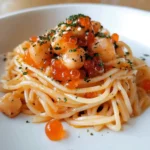
Ingredients
Scale
-
- 100–150g Mentaiko (Spicy Cod Roe): This is the heart and soul of the dish. Mentaiko is salted and marinated pollock or cod roe, often seasoned with chili pepper. It has a unique briny, slightly spicy, and umami-rich flavour. You can find mentaiko at Japanese grocery stores, some well-stocked Asian supermarkets, or online. Look for it in the refrigerated or frozen section. For this recipe, we’ll be using the sacs of roe, not the pre-mixed pasta sauce.
Pasta Perfection:
-
- 200g Spaghetti: Spaghetti is the classic choice for Mentaiko pasta, but you can also use other long pasta shapes like linguine or fettuccine. Choose a good quality pasta for the best texture.
Flavor Enhancers:
-
- 2 tablespoons Olive Oil: For sautéing and adding richness to the sauce. Extra virgin olive oil is preferred for its flavour.
-
- 2 cloves Garlic, minced: Essential for adding aromatic depth and savoury notes.
-
- 30g Unsalted Butter: Butter adds richness, creaminess, and helps emulsify the sauce, creating a velvety texture.
-
- 50ml Heavy Cream (or Milk for a lighter version): Heavy cream adds luxuriousness and helps bind the sauce. Milk can be used for a lighter, less rich sauce, but cream is recommended for the authentic creamy texture.
-
- 1 tablespoon Soy Sauce: Soy sauce is crucial for adding umami and saltiness, enhancing the overall savoury flavour profile. Use regular soy sauce or low-sodium soy sauce to control salt levels.
-
- 1 tablespoon Sake (or White Wine): Sake (Japanese rice wine) or dry white wine adds depth and complexity to the sauce, helping to balance the richness. If you don’t have sake or white wine, you can omit it, but it does contribute to the flavour.
-
- 1/2 teaspoon Black Pepper: Freshly ground black pepper adds a subtle spice and enhances the other flavours.
Garnishes for the Final Flourish:
-
- 2 sheets Nori Seaweed, cut into thin strips: Nori seaweed adds a distinct Japanese flavour, a subtle salty and sea-like aroma, and a visual appeal. Toasted nori is preferable for enhanced flavour and crispness.
-
- Chopped Scallions (Green Onions): Scallions add freshness, a mild oniony flavour, and a pop of colour.
-
- Shredded Red Pepper Flakes (optional): For an extra kick of heat, especially if your mentaiko isn’t very spicy, red pepper flakes are a great addition.
-
- Lemon Wedges (optional): A squeeze of fresh lemon juice at the end brightens the dish and adds a touch of acidity to balance the richness.
Ingredient Notes and Substitutions:
-
- Mentaiko: If you can’t find mentaiko, you might be able to find Tarako, which is non-spicy cod roe. You can add a pinch of red pepper flakes or chili oil to Tarako to mimic the spiciness of mentaiko. Caviar is a very high-end (and flavour-different) substitution, but not recommended for budget or flavour authenticity. There’s truly no perfect substitute for the unique flavour of mentaiko.
-
- Sake: Dry sherry or even chicken broth can be used in a pinch if you don’t have sake or white wine.
-
- Heavy Cream/Milk: For a vegan version, you could try using cashew cream or full-fat coconut milk, though these will alter the flavour profile slightly.
-
- Nori Seaweed: If you cannot find nori, you can omit it, but it does add a significant element to the authentic flavour. Furikake (Japanese rice seasoning) can be a very loose substitute, adding some seaweed flavour and other savory elements.
Sourcing Quality Ingredients:
The quality of your ingredients will directly impact the final dish. Seek out fresh, good quality mentaiko. It should have a vibrant colour and a fresh, sea-like aroma. Use good quality olive oil and butter for the best flavour base. Fresh garlic and scallions will also enhance the overall taste.
Instructions
Step 1: Prepare the Mentaiko
-
- Remove Mentaiko from Sac: Gently cut open the mentaiko sac lengthwise with a sharp knife. Using a spoon or your finger, scoop out the roe from the sac and place it in a small bowl. Discard the sacs. You should have a loose, paste-like consistency of mentaiko roe.
-
- Set Aside: Set the bowl of mentaiko roe aside while you prepare the rest of the dish.
Step 2: Cook the Spaghetti
-
- Boil Water: Fill a large pot with salted water (about 1 tablespoon of salt per 4 quarts of water) and bring it to a rolling boil.
-
- Cook Spaghetti: Add the spaghetti to the boiling water and cook according to package directions for al dente. Al dente means “to the tooth” in Italian, meaning the pasta should be firm to the bite, not mushy. Usually, this is about 8-10 minutes.
-
- Reserve Pasta Water: Before draining the pasta, reserve about ½ cup of the starchy pasta water. This water will be used to help create a creamy sauce.
-
- Drain Spaghetti: Drain the spaghetti in a colander and set aside. Do not rinse the pasta, as the starch on the surface helps the sauce adhere.
Step 3: Create the Mentaiko Sauce
-
- Sauté Garlic: While the pasta is cooking, heat olive oil in a large skillet or pan over medium-low heat. Add the minced garlic and sauté for about 1 minute, until fragrant but not browned. Be careful not to burn the garlic, as it will become bitter.
-
- Add Butter: Add the butter to the skillet and let it melt completely, swirling the pan to combine it with the olive oil and garlic.
-
- Add Mentaiko Roe: Add the scooped-out mentaiko roe to the skillet. Cook for just about 30 seconds to 1 minute, gently stirring to break it up and heat it through. Avoid overcooking the mentaiko, as it can become grainy and lose its creamy texture.
-
- Deglaze with Sake (or White Wine): Pour in the sake (or white wine) and let it simmer for about 30 seconds, allowing the alcohol to evaporate slightly. This step adds depth of flavour and helps to incorporate the mentaiko into the sauce.
-
- Add Cream (or Milk): Pour in the heavy cream (or milk) and stir to combine with the mentaiko mixture. Heat through gently, but do not boil.
-
- Season with Soy Sauce and Pepper: Stir in the soy sauce and black pepper. Taste the sauce and adjust seasoning if needed. Be mindful that mentaiko itself is already salty, so add soy sauce cautiously at first.
Step 4: Combine Pasta and Sauce
-
- Add Spaghetti to Sauce: Add the drained spaghetti to the skillet with the mentaiko sauce.
-
- Toss to Coat: Toss the spaghetti and sauce together gently but thoroughly, ensuring that every strand of pasta is coated in the flavourful sauce.
-
- Add Pasta Water (if needed): If the sauce seems too thick, add a tablespoon or two of the reserved pasta water at a time, tossing to combine, until the sauce reaches your desired consistency. The starchy pasta water helps to emulsify the sauce and create a silky texture.
Step 5: Serve and Garnish
-
- Plate the Spaghetti: Divide the Mentaiko Spaghetti among serving plates or bowls.
-
- Garnish: Garnish each serving generously with strips of nori seaweed and chopped scallions. Optionally, sprinkle with red pepper flakes for extra heat and serve with lemon wedges on the side.
-
- Serve Immediately: Serve your Easy Japanese Mentaiko Spaghetti immediately while it’s hot and the pasta is perfectly al dente. Enjoy the symphony of umami flavours!
Tips for Perfect Mentaiko Spaghetti:
-
- Don’t Overcook Mentaiko: Overcooking mentaiko will make it dry and grainy. Cook it just briefly to heat it through and release its flavour.
-
- Al Dente Pasta is Key: Cooking the spaghetti al dente is crucial for the best texture. Overcooked pasta will become mushy and detract from the dish.
-
- Taste and Adjust Seasoning: Mentaiko can vary in saltiness, so taste the sauce and adjust the soy sauce and pepper accordingly to your preference.
-
- Reserve Pasta Water: Don’t skip reserving pasta water! It’s a secret ingredient that helps create a creamy and emulsified sauce.
-
- Serve Immediately: Mentaiko Spaghetti is best enjoyed fresh and hot. The sauce can thicken as it cools, so serve it right away for the optimal texture and flavour.
Nutrition
- Serving Size: one normal portion
- Calories: 450-550 kcal
- Sugar: 2-3 grams
- Sodium: 800-1200 mg
- Fat: 25-35 grams
- Carbohydrates: 45-55 grams
- Fiber: 2-3 grams
- Protein: 20-25 grams
- Cholesterol: 100-150 mg