Ingredients
Scale
- For the Fragrant Laksa Paste (The Heart of the Flavor):
- 4 tablespoons Laksa Paste: This is your shortcut to authentic Laksa flavor! You can find Laksa paste in most Asian grocery stores or even the international aisle of well-stocked supermarkets. Look for brands like Ayam, Valcom, or Dancing Chef. If you’re feeling adventurous, you can also make your own Laksa paste from scratch, but for this easy recipe, we’re embracing convenience!
- 2 tablespoons Vegetable Oil: Any neutral oil like canola, sunflower, or peanut oil works perfectly for sautéing the paste and aromatics.
- 2 cloves Garlic, minced: Garlic is a foundational aromatic, adding pungent depth to the Laksa base. Freshly minced is always best for maximum flavor.
- 1 inch Ginger, grated: Ginger brings a warm, slightly spicy, and zesty note that complements the other spices beautifully. Fresh ginger is preferred, but in a pinch, you can use ½ teaspoon of ground ginger.
- 1 stalk Lemongrass, bruised: Lemongrass imparts a unique citrusy and herbaceous fragrance that is quintessential to Laksa. Bruising it (gently crushing it with the back of a knife) releases its aromatic oils. If you can’t find fresh lemongrass, you can use 2 tablespoons of lemongrass paste, but fresh is always superior.
- 1–2 Red Chillies, finely chopped (optional): For those who love a bit of heat! Adjust the amount of chilli based on your spice preference. You can use milder chillies like red jalapeños or hotter ones like bird’s eye chillies. For a milder flavor, you can also deseed the chillies before chopping.
- For the Rich and Creamy Broth (The Soul of the Laksa):
- 1 pound Boneless, Skinless Chicken Thighs, cut into bite-sized pieces: Chicken thighs are ideal for Laksa as they remain tender and juicy even after simmering. You can also use chicken breast, but be careful not to overcook it. Cutting them into bite-sized pieces ensures even cooking and easy eating.
- 4 cups Chicken Broth: Good quality chicken broth forms the base of our Laksa soup. Low-sodium broth is recommended so you can control the salt level yourself.
- 2 cans (13.5 oz each) Coconut Milk: Full-fat coconut milk is essential for the creamy richness and signature Laksa flavor. Don’t skimp on the fat content – it’s what makes this dish so luxurious!
- 1 cup Water: Water helps to balance the richness of the coconut milk and broth, creating a perfect soup consistency.
- 2 tablespoons Fish Sauce (Nam Pla): Fish sauce adds a salty, umami depth that is characteristic of Southeast Asian cuisine. Don’t be afraid of the smell; it mellows out beautifully as it cooks and adds incredible flavor. If you are vegetarian or vegan, you can substitute with soy sauce or tamari for a salty and umami note, though the flavor profile will be slightly different.
- 1 tablespoon Brown Sugar or Palm Sugar: A touch of sweetness balances the savory and spicy elements and enhances the overall flavor complexity. Palm sugar is more traditional, but brown sugar works just as well and is more readily available.
- 1 teaspoon Turmeric Powder: Turmeric not only adds a beautiful golden hue to the broth but also contributes a warm, earthy flavor and potential health benefits.
- Salt and Pepper to taste: Seasoning is crucial! Adjust salt and pepper at the end to perfectly balance the flavors to your liking.
- For the Noodles and Vegetables (The Body of the Laksa):
- 8 oz Rice Noodles (Laksa Noodles or Rice Vermicelli): Laksa noodles are thicker rice noodles specifically designed for Laksa. If you can’t find them, rice vermicelli (thin rice noodles) or even egg noodles can be used as substitutes. Follow package instructions for cooking the noodles.
- 1 cup Bean Sprouts: Bean sprouts add a refreshing crunch and subtle sweetness. They are best added fresh just before serving to retain their crispness.
- 1 cup Firm Tofu, cubed (optional): Tofu adds a vegetarian protein option and absorbs the delicious Laksa broth beautifully. Firm or extra-firm tofu is recommended to hold its shape during cooking.
- 1 cup Vegetables of your choice (e.g., sliced bell peppers, bok choy, snap peas, eggplant): Feel free to customize your Laksa with your favorite vegetables! Sliced bell peppers, bok choy, snap peas, and eggplant all work wonderfully. Consider vegetables that cook quickly in the simmering broth.
- For the Garnishes (The Finishing Touches):
- Fresh Cilantro, chopped: Fresh cilantro adds a bright, herbaceous, and slightly citrusy note that complements the richness of the Laksa.
- Lime Wedges: A squeeze of fresh lime juice at the end brightens the flavors and adds a tangy zest that cuts through the richness.
- Crispy Fried Shallots or Onions: Crispy fried shallots or onions add a delightful crunch and savory-sweetness as a topping. You can find these pre-made in Asian grocery stores or online.
- Sliced Green Onions (Scallions): Sliced green onions add a mild oniony flavor and fresh green color as a garnish.
- Hard-boiled Eggs, halved (optional): Hard-boiled eggs are a classic Laksa topping, adding protein and a creamy texture.
Instructions
- Sauté the Aromatic Paste: Heat the vegetable oil in a large pot or Dutch oven over medium heat. Once the oil is shimmering, add the Laksa paste, minced garlic, grated ginger, bruised lemongrass, and chopped chillies (if using). Sauté for 2-3 minutes, stirring constantly, until fragrant and the paste deepens in color. This step is crucial for releasing the aromatic oils and building the flavor base of your Laksa. Don’t rush this step – the aroma will tell you when it’s ready!
- Bloom the Spices and Add Chicken: Add the turmeric powder to the pot and sauté for another minute, stirring constantly. This “blooming” process helps to release the full flavor of the turmeric. Next, add the bite-sized pieces of chicken thighs to the pot and cook, stirring occasionally, until they are lightly browned on all sides. Browning the chicken adds another layer of flavor to the dish.
- Build the Broth: Pour in the chicken broth, coconut milk, and water into the pot. Stir well to combine all the ingredients. Add the fish sauce and brown sugar (or palm sugar). Bring the mixture to a simmer, then reduce the heat to low and gently simmer for 15-20 minutes, or until the chicken is cooked through and tender. Simmering allows the flavors to meld and deepen, creating a richer and more complex broth.
- Add Tofu and Vegetables (Optional): If using tofu and vegetables, add them to the pot during the last 5-7 minutes of simmering. The cooking time will depend on the vegetables you choose. Leafy greens like bok choy will wilt quickly, while denser vegetables like bell peppers may need a bit longer. Cook until the vegetables are tender-crisp and the tofu is heated through.
- Cook the Noodles: While the Laksa broth is simmering, prepare the rice noodles according to package instructions. Usually, this involves soaking them in hot water or briefly boiling them until they are tender but still slightly firm (al dente). Drain the noodles well and set aside. It’s best to cook the noodles just before serving to prevent them from becoming soggy.
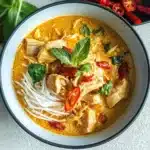
- Assemble and Serve: To serve, divide the cooked rice noodles into bowls. Ladle the hot Laksa soup over the noodles, ensuring each bowl gets a generous portion of chicken, tofu, and vegetables. Garnish generously with fresh cilantro, lime wedges, crispy fried shallots or onions, and sliced green onions. You can also add hard-boiled egg halves if desired. Serve immediately and enjoy the explosion of flavors!
Nutrition
- Serving Size: one normal portion
- Calories: 450-550
- Fat: 25-35 grams
- Carbohydrates: 40-50 grams
- Fiber: 3-5 grams
- Protein: 25-30 grams