Ingredients
-
- All-Purpose Flour (3 cups): The foundation of our cake, providing structure. Make sure to measure it correctly using the spoon and level method to avoid dry cake.
-
- Cake Flour (1 cup): This is the secret weapon for incredibly tender cake layers. Cake flour has a lower protein content than all-purpose flour, resulting in a softer crumb. If you don’t have cake flour, you can substitute by removing 2 tablespoons of all-purpose flour per cup and replacing it with 2 tablespoons of cornstarch.
-
- Granulated Sugar (2 cups): Sweetness is key, and granulated sugar provides the perfect level of sweetness and also contributes to the cake’s moisture.
-
- Baking Powder (4 teaspoons): Our leavening agent, ensuring the cake rises beautifully and becomes light and airy. Use fresh baking powder for the best results.
-
- Salt (1 teaspoon): Salt enhances the flavors of all the other ingredients, balancing the sweetness and bringing out the coconut essence.
-
- Unsalted Butter, softened (1 cup, 2 sticks): Butter adds richness, flavor, and moisture to the cake. Using unsalted butter allows you to control the salt level in the recipe. Ensure it’s softened but not melted for proper creaming.
-
- Vegetable Oil (½ cup): Oil contributes to the cake’s moistness and keeps it tender for days. Vegetable oil is neutral in flavor, allowing the coconut flavor to shine through.
-
- Eggs (4 large): Eggs provide structure, richness, and moisture. They also help to bind the ingredients together. Use large eggs at room temperature for better emulsification.
-
- Egg Whites (2 large): Adding extra egg whites contributes to a lighter, airier texture in the cake layers. Again, use room temperature egg whites.
-
- Coconut Milk, full-fat, canned (1 cup): The star ingredient! Full-fat coconut milk is crucial for that intense coconut flavor and adds moisture and richness. Do not use “light” coconut milk, as it will lack the necessary fat and flavor. Shake the can well before measuring.
-
- Coconut Extract (2 teaspoons): To amplify the coconut flavor even further, we use coconut extract. A little goes a long way, so don’t overdo it.
-
- Vanilla Extract (1 teaspoon): Vanilla extract complements the coconut flavor and adds a touch of warmth and complexity.
For the Dreamy Coconut Cream Cheese Frosting:
-
- Cream Cheese, full-fat, softened (1 cup, 8 ounces): Cream cheese provides tanginess and richness to the frosting, balancing the sweetness and creating a delightful creamy texture. Use full-fat cream cheese for the best flavor and consistency. Ensure it’s properly softened to avoid lumps in your frosting.
-
- Unsalted Butter, softened (1 cup, 2 sticks): Butter adds richness and helps create a smooth, spreadable frosting. Use unsalted butter and soften it to the right consistency.
-
- Powdered Sugar (6 cups, approximately): Powdered sugar sweetens and thickens the frosting. Start with 6 cups and add more if needed to reach your desired consistency. Sift the powdered sugar to remove any lumps for a smoother frosting.
-
- Vanilla Extract (1 teaspoon): A touch of vanilla enhances the frosting’s flavor.
-
- Coconut Extract (½ teaspoon): A hint of coconut extract in the frosting complements the cake layers beautifully without being overpowering.
-
- Shredded Coconut, unsweetened (for decoration, about 2 cups): We’ll use unsweetened shredded coconut to toast and generously coat the cake, adding texture and intensifying the coconut flavor.
Instructions
Part 1: Preparing the Coconut Cake Layers
-
- Preheat Oven and Prepare Pans: Preheat your oven to 350°F (175°C). Grease and flour three 9-inch round cake pans. You can also line the bottoms with parchment paper circles for easy removal. Tip: For extra insurance against sticking, grease the pans, line with parchment, then grease the parchment.
-
- Combine Dry Ingredients: In a large bowl, whisk together the all-purpose flour, cake flour, granulated sugar, baking powder, and salt. Whisk for at least 30 seconds to ensure the baking powder is evenly distributed.
-
- Cream Butter and Oil: In a separate large bowl or the bowl of a stand mixer fitted with the paddle attachment, cream together the softened butter and vegetable oil until light and fluffy. This should take about 2-3 minutes.
-
- Incorporate Eggs and Egg Whites: Add the eggs one at a time, mixing well after each addition. Then, add the egg whites and mix until just combined. Don’t overmix at this stage.
-
- Alternate Wet and Dry Ingredients: Gradually add the dry ingredients to the wet ingredients in three additions, alternating with the coconut milk in two additions. Begin and end with the dry ingredients. Mix on low speed until just combined after each addition. Tip: Overmixing develops gluten and can lead to a tough cake. Mix until just incorporated.
-
- Add Extracts: Stir in the coconut extract and vanilla extract until evenly distributed throughout the batter.
-
- Divide Batter and Bake: Divide the batter evenly among the prepared cake pans. Use a kitchen scale for precise division if desired. Bake for 25-30 minutes, or until a toothpick inserted into the center comes out clean. The cakes should be golden brown and spring back lightly when touched.
-
- Cool in Pans: Let the cakes cool in the pans for 10-15 minutes before inverting them onto wire racks to cool completely. Cooling in the pans prevents the cakes from breaking apart while still warm. Ensure the cakes are completely cool before frosting. Tip: Level the cake layers if necessary using a serrated knife to create a flat surface for frosting.
Part 2: Making the Coconut Cream Cheese Frosting
-
- Beat Cream Cheese and Butter: In a large bowl or the bowl of a stand mixer fitted with the paddle attachment, beat the softened cream cheese and butter together until smooth and creamy. Ensure there are no lumps of cream cheese remaining.
-
- Add Powdered Sugar Gradually: Gradually add the powdered sugar, one cup at a time, beating on low speed until incorporated. Once all the powdered sugar is added, increase the speed to medium and beat until the frosting is light and fluffy. This should take about 2-3 minutes.
-
- Incorporate Extracts: Stir in the vanilla extract and coconut extract. Mix until well combined.
-
- Adjust Consistency (If Needed): If the frosting is too thick, add a tablespoon of milk or coconut milk at a time until you reach your desired spreading consistency. If it’s too thin, add a bit more powdered sugar.
Part 3: Toasting the Coconut and Assembling the Cake
-
- Toast Coconut: Preheat your oven to 325°F (160°C). Spread the unsweetened shredded coconut in a thin, even layer on a baking sheet. Bake for 5-10 minutes, stirring occasionally, until golden brown and fragrant. Watch it closely as it can burn quickly. Let the toasted coconut cool completely. Tip: Toasted coconut adds a nutty flavor and crispy texture that elevates the cake.
-
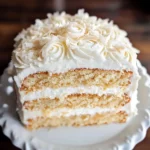
- Frost the Cake: Place one cake layer on a serving plate or cake stand. Spread a generous layer of frosting over the top. Gently place the second cake layer on top and frost again. Repeat with the final cake layer and remaining frosting. Frost the top and sides of the cake evenly.
-
- Decorate with Toasted Coconut: Generously press the toasted coconut onto the sides and top of the frosted cake. You can create a mound of coconut on top for a dramatic effect or distribute it evenly.
-
- Chill (Optional but Recommended): Refrigerate the cake for at least 30 minutes before serving. This allows the frosting to set and the flavors to meld together beautifully.
Nutrition
- Serving Size: one normal portion
- Calories: 650-750 calories
- Sugar: 60-70g
- Sodium: 300-350mg
- Fat: 35-40g
- Saturated Fat: 20-25g
- Carbohydrates: 80-90g
- Fiber: 1-2g
- Protein: 5-7g
- Cholesterol: 120-150mg