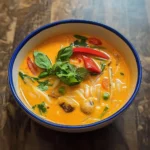
Ingredients
-
- Aromatics & Fat:
-
- Coconut Oil or Vegetable Oil: 1-2 Tablespoons (Coconut oil enhances the coconut flavour, but any neutral vegetable oil works)
-
- Yellow Onion: 1 medium, finely chopped (Provides a sweet, foundational flavour base)
-
- Garlic: 3-4 cloves, minced (Essential pungent aroma and flavour; adjust to your preference)
-
- Fresh Ginger: 1 Tablespoon, grated or finely minced (Adds warmth, spice, and a zesty kick)
-
- Aromatics & Fat:
-
- The Heart of the Curry:
-
- Red Curry Paste: 2-4 Tablespoons (Use a good quality store-bought paste or homemade. Adjust amount based on your spice preference and the paste’s intensity. Thai Kitchen, Mae Ploy, or Maesri are common brands. Start with less, you can always add more!) Note: Green or Yellow curry paste can also be used for different flavour profiles.
-
- The Heart of the Curry:
-
- The Creamy Liquid Base:
-
- Full-Fat Coconut Milk: 2 cans (13.5 oz or 400ml each) (Crucial for creaminess and richness. Do not use ‘light’ coconut milk – the soup won’t be as satisfying. Shake the cans well before opening.)
-
- Vegetable Broth or Chicken Broth: 4 cups (Low sodium preferred, so you can control the salt level. Use vegetable broth for a vegetarian/vegan version.)
-
- The Creamy Liquid Base:
-
- Vegetables (Choose your favorites! Aim for about 4-5 cups total, chopped):
-
- Bell Peppers: 1-2, any colour (red, yellow, orange), deseeded and sliced or chopped (Adds sweetness and colour)
-
- Broccoli or Broccolini: 1 small head, cut into small florets (Adds green goodness and texture)
-
- Carrots: 1-2 medium, peeled and sliced into rounds or half-moons (Adds sweetness and bite)
-
- Mushrooms: 8 oz (Cremini, shiitake, or white button), sliced (Adds umami depth and meaty texture)
-
- Zucchini or Yellow Squash: 1 medium, sliced into half-moons (Adds bulk and absorbs flavour well)
-
- Snow Peas or Snap Peas: 1 cup, trimmed (Add at the end for a crisp texture)
-
- Baby Spinach or Kale: 2-3 large handfuls (Stir in at the very end until just wilted)
-
- Bamboo Shoots: 1 small can, drained (Optional, adds traditional texture)
-
- Water Chestnuts: 1 small can, drained and sliced (Optional, adds a nice crunch)
-
- Vegetables (Choose your favorites! Aim for about 4-5 cups total, chopped):
-
- Optional Protein (Choose one, about 1 lb or 450g):
-
- Chicken: Boneless, skinless breasts or thighs, cut into bite-sized pieces
-
- Shrimp: Peeled and deveined
-
- Firm or Extra-Firm Tofu: Pressed and cut into cubes
-
- Chickpeas: 1 can (15 oz), drained and rinsed (for a quick vegetarian/vegan option)
-
- White Fish: Firm fish like cod or halibut, cut into chunks (add near the end)
-
- Optional Protein (Choose one, about 1 lb or 450g):
-
- Flavor Enhancers & Finishers:
-
- Soy Sauce or Tamari: 1-2 Tablespoons (Adds saltiness and umami. Use Tamari for gluten-free.)
-
- Fish Sauce: 1 Tablespoon (Optional, but adds authentic Southeast Asian umami depth. Omit or use vegan fish sauce for vegan.)
-
- Lime Juice: Juice of 1-2 limes (Absolutely essential for brightness to cut through the richness)
-
- Brown Sugar or Coconut Sugar: 1-2 teaspoons (Optional, balances the flavours, especially if your curry paste is very savoury/spicy)
-
- Fresh Cilantro: ½ cup, chopped (For stirring in and garnish)
-
- Fresh Basil: ½ cup, chopped (Thai basil is ideal, but sweet Italian basil works too. For stirring in and garnish)
-
- Flavor Enhancers & Finishers:
-
- Optional Garnishes (Highly Recommended!):
-
- Extra fresh cilantro and basil leaves
-
- Lime wedges
-
- Sliced red chilies or red pepper flakes
-
- Chopped peanuts or cashews
-
- Toasted sesame seeds
-
- Crispy fried shallots or onions
-
- A swirl of coconut cream (from the top of the can before shaking)
-
- Optional Garnishes (Highly Recommended!):
Instructions
-
- Sauté the Aromatics: Heat the coconut oil (or vegetable oil) in a large pot or Dutch oven over medium heat. Once shimmering, add the chopped onion and cook, stirring occasionally, until softened and translucent, about 5-7 minutes. Add the minced garlic and grated ginger, and cook for another 1-2 minutes until fragrant. Be careful not to burn the garlic. This step builds the foundational flavour layer of your soup.
-
- Bloom the Curry Paste: Add the red curry paste to the pot with the aromatics. Stir constantly and cook for 1-2 minutes. This process, called “blooming,” helps to release the paste’s complex aromas and deepens its flavour. It should become very fragrant. Adjust the amount of paste based on your desired spice level – you can always add more later if needed.
-
- Add Liquids: Pour in the vegetable or chicken broth, scraping up any browned bits from the bottom of the pot (this is called deglazing and adds flavour). Bring the mixture to a simmer. Once simmering, pour in the two cans of full-fat coconut milk. Stir well to combine. Ensure the coconut milk is well incorporated and the mixture is smooth.
-
- Simmer with Hardy Vegetables (and Chicken/Tofu if using): Add the firmer vegetables that require longer cooking times, such as carrots and broccoli florets. If using chicken or cubed tofu, add it now as well. Bring the soup back to a gentle simmer (do not bring to a rolling boil, as high heat can sometimes cause coconut milk to separate). Reduce the heat to low, cover the pot, and let it simmer gently for 10-15 minutes, or until the vegetables are becoming tender-crisp and the chicken/tofu is cooked through.
-
- Add Softer Vegetables (and Shrimp/Fish if using): Stir in the quicker-cooking vegetables like bell peppers, mushrooms, zucchini, snow peas, bamboo shoots, and water chestnuts (if using). If using shrimp or fish, add them during this stage. Continue to simmer for another 5-7 minutes, or until the vegetables are tender to your liking and the shrimp is pink and opaque, or the fish is cooked through and flakes easily. Avoid overcooking the vegetables; they should retain some bite.
-
- Add Final Flavours & Greens: Turn off the heat. Stir in the soy sauce (or Tamari), fish sauce (if using), and brown sugar (if using). Start with the lower amounts and taste. Add more soy sauce/tamari for saltiness, more curry paste for heat, or a bit more sugar to balance, if needed. Squeeze in the fresh lime juice – this brightens everything up significantly. Finally, stir in the fresh cilantro and basil, reserving some for garnish. If using spinach or kale, add it now and stir until it just wilts into the hot soup.
-
- Taste and Adjust: This is the most crucial step! Taste the soup one last time. Does it need more salt? More spice? More tang? More sweetness? Adjust seasonings accordingly. Perhaps a touch more lime juice, a pinch more salt, or a little more curry paste (stirred into a small amount of broth first to avoid clumps).
-
- Serve: Ladle the hot, fragrant Coconut Curry Soup into bowls. Garnish generously with your chosen toppings (see “How to Serve” section below for ideas). Serve immediately and enjoy the warmth and flavour!
Nutrition
- Serving Size: one normal portion
- Calories: 350-550