Ingredients
Scale
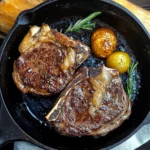
- 1 Ribeye Steak (1.5–2 inches thick), about 1-1.5 pounds: The star of the show! Look for a well-marbled ribeye. Marbling refers to the streaks of fat within the muscle, which melt during cooking, adding flavor and tenderness. A thicker steak is crucial for achieving a good sear without overcooking the inside. Dry-aged ribeyes will offer an even richer, more intense beef flavor if you’re looking to splurge. Bring the steak to room temperature for at least 30 minutes, and ideally up to an hour, before cooking. This helps it cook more evenly.
- 2 tablespoons High-Heat Cooking Oil: You need an oil with a high smoke point to withstand the intense heat of cast iron cooking. Good options include:
- Avocado Oil: Excellent high smoke point and neutral flavor.
- Grapeseed Oil: Another great high smoke point oil with a light, clean taste.
- Canola Oil: A readily available and affordable high smoke point option.
- Vegetable Oil: Also works well due to its high smoke point and neutral flavor.
- Avoid Olive Oil: Regular olive oil has a lower smoke point and can burn and become bitter at high temperatures. Extra virgin olive oil is definitely not recommended for searing.
- 2 tablespoons Unsalted Butter: Butter adds richness, flavor, and helps create a beautiful brown crust. Unsalted butter gives you better control over the saltiness of the dish.
- 2–3 cloves Garlic, smashed: Smashed garlic cloves infuse the butter and steak with aromatic flavor. Smashing releases more flavor than simply mincing.
- 2 sprigs Fresh Rosemary or Thyme: Fresh herbs add another layer of complexity and fragrance. Rosemary and thyme pair particularly well with beef. You can use either or a combination of both.
- Kosher Salt: Kosher salt is preferred over table salt due to its larger crystals, which distribute more evenly and season the steak more effectively.
- Freshly Ground Black Pepper: Freshly ground pepper offers a more robust and aromatic flavor than pre-ground pepper.
Optional Ingredients (for finishing and flavor enhancement):
- Flaky Sea Salt (such as Maldon or Fleur de Sel): For finishing the steak and adding a delicate crunch and burst of saltiness.
- Fresh Parsley, chopped: For garnish and a touch of freshness.
- Lemon wedges: A squeeze of lemon juice can brighten the richness of the steak.
- Compound Butter (Garlic Herb, Herb Butter, etc.): Elevate your steak further by topping it with a flavorful compound butter as it rests.
Instructions
Step 1: Prepare the Steak
- Bring the Steak to Room Temperature: Remove the ribeye steak from the refrigerator at least 30 minutes, and ideally up to an hour, before cooking. This is crucial for even cooking. A cold steak will cook unevenly, resulting in a well-done exterior and a raw center. Pat the steak dry with paper towels. Removing excess moisture helps achieve a better sear.
- Season Generously: Season the ribeye steak liberally on all sides with kosher salt and freshly ground black pepper. Don’t be shy with the seasoning! This is the primary flavor enhancer for your steak. Seasoning well in advance (even up to an hour before cooking) allows the salt to penetrate the meat and further tenderize it – this process is sometimes called dry brining.
Step 2: Prepare Your Cast Iron Skillet
- Choose the Right Skillet: Use a heavy-bottomed cast iron skillet, preferably 12 inches or larger, to comfortably accommodate your ribeye without overcrowding. A well-seasoned cast iron skillet is ideal for searing and developing a beautiful crust.
- Heat the Skillet: Place the cast iron skillet over medium-high heat on your stovetop. Allow the skillet to heat up gradually. This is essential for even heat distribution and preventing hot spots. The skillet is ready when it’s smoking lightly. This process can take 5-7 minutes. Caution: Be careful not to overheat the skillet excessively, as this can cause the oil to smoke and burn, leading to a bitter taste and potential fire hazard.
Step 3: Sear the Ribeye
- Add Oil to the Hot Skillet: Once the skillet is smoking lightly, add the high-heat cooking oil. Swirl the oil to coat the bottom of the skillet evenly. The oil should shimmer almost immediately when it hits the hot pan.
- Sear the First Side: Carefully place the seasoned ribeye steak into the hot skillet. You should hear a loud, satisfying sizzle. Do not overcrowd the pan if cooking multiple steaks. Sear them in batches to maintain high heat and proper searing. Sear the steak for 3-4 minutes per side for a medium-rare finish, adjusting time based on your desired doneness and steak thickness. For a thicker steak or for a more well-done steak, you will need to adjust the searing time and potentially finish it in the oven (see Step 4 for oven finishing).
- Flip and Sear the Second Side: Using tongs (not a fork, as piercing the steak will release juices), flip the steak and sear the other side for another 3-4 minutes. Maintain high heat throughout the searing process.
Step 4: Add Butter, Aromatics, and Baste
- Reduce Heat Slightly: After searing both sides, reduce the heat to medium.
- Add Butter, Garlic, and Herbs: Add the butter, smashed garlic cloves, and fresh rosemary or thyme sprigs to the skillet. As the butter melts, it will foam and sizzle, creating a flavorful bath for the steak.
- Baste the Steak: Tilt the skillet slightly and use a spoon to continuously baste the steak with the melted butter, garlic, and herb mixture. Basting helps to further develop flavor, create a beautiful brown crust, and ensure even cooking by distributing heat over the top of the steak. Baste for 2-3 minutes, continuing to spoon the hot butter mixture over the steak.
Step 5: Check for Doneness and Finish (Optional Oven Finish)
- Check Internal Temperature: The most accurate way to determine steak doneness is to use a meat thermometer. Insert the thermometer into the thickest part of the steak, avoiding the bone. Here are the target internal temperatures for different levels of doneness:
- Rare: 125-130°F (52-54°C)
- Medium-Rare: 130-135°F (54-57°C) (Recommended for ribeye)
- Medium: 135-145°F (57-63°C)
- Medium-Well: 145-155°F (63-68°C)
- Well-Done: 155°F+ (68°C+) (Not recommended for ribeye as it will be dry)
- Oven Finish (Optional for Thicker Steaks or More Done Steak): If your steak is very thick (over 2 inches) or if you prefer it more cooked than medium-rare, you may need to finish it in the oven. After searing and basting, transfer the entire cast iron skillet to a preheated oven at 400°F (200°C). Cook for an additional 3-7 minutes, or until the desired internal temperature is reached. Check the temperature frequently to avoid overcooking.
- Rest the Steak: Once the steak reaches your desired internal temperature, remove the skillet from the heat (or oven). Transfer the steak to a cutting board. Tent loosely with foil and let it rest for at least 10 minutes, and ideally 15 minutes. Resting is absolutely crucial! During resting, the juices redistribute throughout the steak, resulting in a more tender and flavorful final product. Do not skip this step.
Step 6: Slice and Serve
- Slice Against the Grain: After resting, slice the ribeye steak against the grain. You’ll notice the muscle fibers running in a certain direction. Cutting perpendicular to these fibers makes the steak more tender and easier to chew.
- Serve Immediately: Serve the cast iron ribeye immediately while it’s still hot and juicy. Garnish with flaky sea salt, fresh parsley, or a pat of compound butter, if desired. Lemon wedges can be served on the side.
Nutrition
- Serving Size: one normal portion
- Calories: 650-800 calories
- Sodium: 300-500mg
- Fat: 50-65g
- Protein: 50-60g
- Cholesterol: 200-250mg