

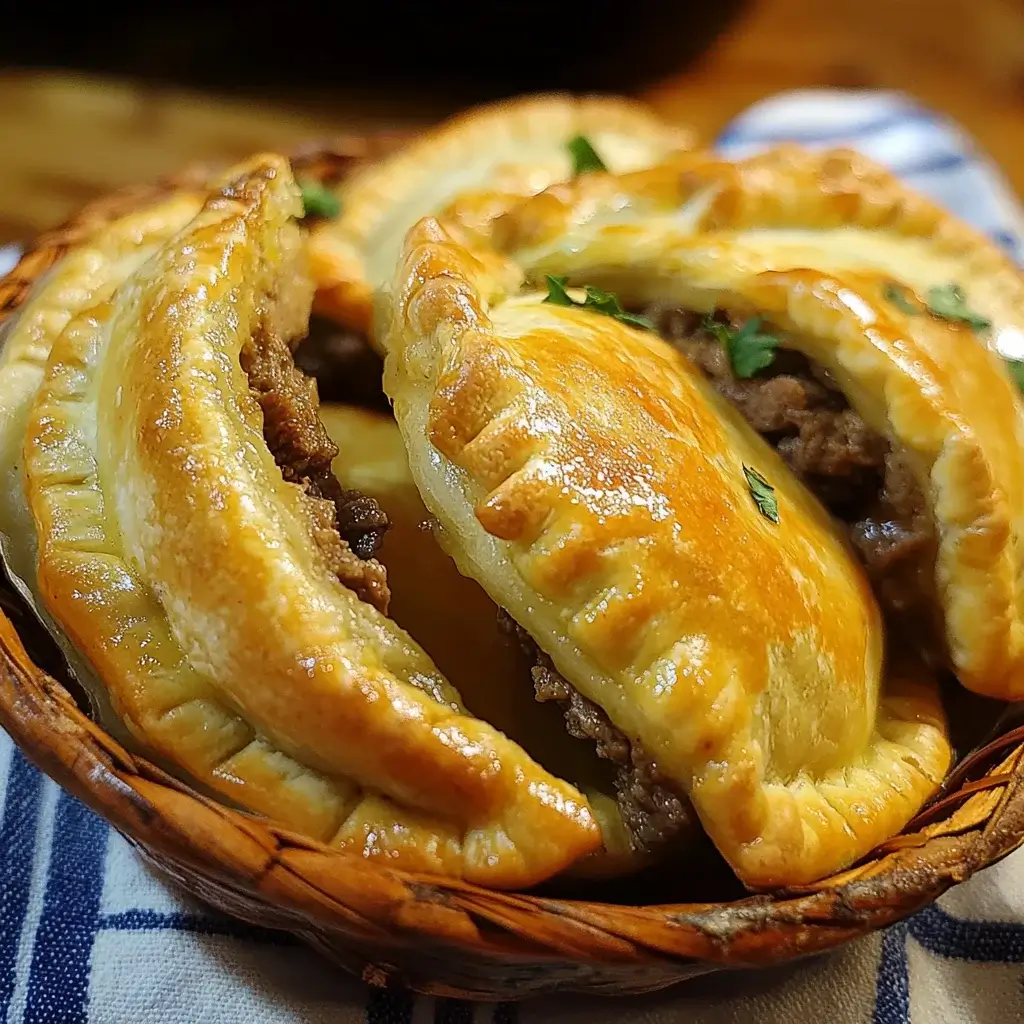
The first time I decided to tackle homemade beef empanadas, I was admittedly a little intimidated. I’d always loved those savory little pockets of joy from local Latin bakeries, but assumed they were too complex for a home cook like me. My family, initially skeptical (“Are they really going to be as good as the ones from the corner store?”), gathered around the kitchen, drawn in by the incredible aroma wafting from the oven. The moment of truth arrived when my notoriously picky youngest child took a bite, eyes widening, and declared, “Mom, these are AMAZING! Can we have them every week?” Success! Seeing the golden, flaky pastries disappear from the platter in minutes, accompanied by happy munches and requests for more, was incredibly rewarding. Since then, this beef empanada recipe has become a staple in our house – perfect for parties, easy weeknight dinners (especially using leftover filling), or even packed lunches. They freeze beautifully, making them a fantastic make-ahead option. The combination of the rich, perfectly spiced beef filling encased in a tender, flaky crust (whether you make your own dough or use store-bought) is simply irresistible. It’s a recipe that brings warmth, flavor, and a touch of celebration to any occasion, and I’m thrilled to share it with you so you can create your own delicious empanada memories.
The Ultimate Beef Empanadas Recipe: Ingredients You’ll Need
Creating truly spectacular beef empanadas starts with quality ingredients. This recipe balances rich flavors with aromatic spices for a filling that’s both comforting and exciting. Below are the components you’ll need for both the savory filling and the essential dough (with options for homemade or store-bought).
For the Savory Beef Filling (Picadillo):
- Olive Oil: 2 tablespoons (for sautéing)
- Ground Beef: 1.5 lbs (80/20 or 85/15 blend recommended for flavor and moisture)
- Yellow Onion: 1 large, finely chopped (about 1.5 cups)
- Red Bell Pepper: 1 medium, finely chopped (about 1 cup)
- Green Bell Pepper: 1 medium, finely chopped (about 1 cup)
- Garlic: 4-5 cloves, minced (about 1.5 tablespoons)
- Beef Broth: 1/2 cup (low sodium preferred)
- Tomato Paste: 2 tablespoons
- Spices:
- Ground Cumin: 1 tablespoon
- Smoked Paprika: 1 tablespoon (adds a lovely depth)
- Dried Oregano: 1 teaspoon (preferably Mexican oregano if available)
- Cayenne Pepper: 1/4 – 1/2 teaspoon (adjust to your heat preference)
- Ground Cinnamon: 1/4 teaspoon (optional, but adds a traditional warmth)
- Salt: 1.5 teaspoons (adjust to taste)
- Black Pepper: 1 teaspoon, freshly ground
- Green Olives: 1/2 cup, pitted and roughly chopped (pimento-stuffed olives work well)
- Raisins: 1/4 cup (optional, for a touch of sweetness – golden or regular)
- Hard-Boiled Eggs: 2 large, peeled and chopped (optional, a classic addition)
- Fresh Cilantro or Parsley: 1/4 cup, chopped (for finishing)
For the Empanada Dough:
- Option 1: Store-Bought Empanada Discs: 2 packages (usually 10 discs per package, look for the ‘para hornear’ for baking or ‘para freir’ for frying type, typically found in the frozen international foods section). This is the quickest option.
- Option 2: Homemade Flaky Pastry Dough:
- All-Purpose Flour: 3 cups (plus more for dusting)
- Salt: 1 teaspoon
- Unsalted Butter: 1 cup (2 sticks), very cold and cut into small cubes
- Ice Water: 1/2 cup (you might need slightly more or less)
- Large Egg: 1 (for binding)
- White Vinegar or Lemon Juice: 1 teaspoon (helps tenderize the dough)
For Assembly and Baking/Frying:
- Egg Wash: 1 large egg beaten with 1 tablespoon of water or milk (for sealing and achieving a golden-brown crust when baking)
- Oil for Frying (Optional): Vegetable, canola, or peanut oil (about 3-4 cups, enough for deep frying)
Having all your ingredients prepped and measured (mise en place) before you start cooking makes the process much smoother and more enjoyable.
Step-by-Step Instructions for Perfect Beef Empanadas
Making beef empanadas involves a few key stages: preparing the flavorful filling, assembling the pastries, and finally, cooking them to perfection either by baking or frying. Follow these detailed steps for guaranteed delicious results.
Phase 1: Preparing the Flavorful Beef Filling (Picadillo)
- Brown the Beef: Heat the olive oil in a large skillet or Dutch oven over medium-high heat. Once shimmering, add the ground beef. Break it apart with a spoon and cook until nicely browned, about 5-7 minutes. Drain off any excess fat, leaving about a tablespoon in the pan for flavor.
- Sauté the Aromatics: Add the chopped yellow onion, red bell pepper, and green bell pepper to the skillet with the beef. Cook, stirring frequently, until the vegetables soften, about 6-8 minutes.
- Incorporate Garlic and Spices: Add the minced garlic, ground cumin, smoked paprika, dried oregano, cayenne pepper (if using), ground cinnamon (if using), salt, and black pepper. Stir constantly for about 1-2 minutes until the spices are fragrant. Toasting the spices briefly enhances their flavor.
- Add Liquids and Tomato Paste: Stir in the tomato paste until it coats the meat and vegetables. Cook for another minute. Pour in the beef broth, scraping the bottom of the pan to lift any browned bits (deglazing). Bring the mixture to a simmer.
- Simmer and Reduce: Reduce the heat to low, cover the skillet partially, and let the filling simmer gently for about 15-20 minutes. The goal is for the flavors to meld and the liquid to reduce, resulting in a thick, not watery, filling. Stir occasionally.
- Stir in Finishings: Remove the skillet from the heat. Stir in the chopped green olives, raisins (if using), and chopped hard-boiled eggs (if using).
- Cool Completely: This is a CRUCIAL step. Transfer the beef filling to a bowl and let it cool completely at room temperature. Then, cover and refrigerate for at least 1 hour, or preferably longer (even overnight). A cold filling is much easier to handle and prevents the empanada dough from becoming greasy or tearing during assembly. Stir in the chopped fresh cilantro or parsley just before assembling. Taste and adjust seasoning if necessary.
Phase 2: Preparing the Empanada Dough (If Making from Scratch)
(Skip this phase if using store-bought discs)
- Combine Dry Ingredients: In a large bowl, whisk together the 3 cups of all-purpose flour and 1 teaspoon of salt.
- Cut in the Butter: Add the cold, cubed butter to the flour mixture. Using a pastry blender, your fingertips, or a food processor (pulse gently), cut the butter into the flour until the mixture resembles coarse crumbs with some pea-sized pieces of butter remaining. Working quickly prevents the butter from melting.
- Add Wet Ingredients: In a small bowl, whisk together the 1/2 cup of ice water, 1 large egg, and 1 teaspoon of vinegar or lemon juice.
- Form the Dough: Gradually pour the wet ingredients into the flour-butter mixture, mixing with a fork or your hands until the dough just starts to come together. Be careful not to overmix. If the dough seems too dry, add more ice water, one teaspoon at a time.
- Knead Briefly and Chill: Turn the dough out onto a lightly floured surface and gently knead it just a few times until it forms a cohesive ball. Over-kneading will develop the gluten too much, resulting in tough pastry. Divide the dough in half, flatten each half into a disc, wrap tightly in plastic wrap, and refrigerate for at least 30-60 minutes (or up to 2 days) before rolling out. Chilling allows the gluten to relax and the butter to firm up again, crucial for a flaky crust.
Phase 3: Assembling the Beef Empanadas
- Prepare Workspace: Lightly flour your work surface. If using homemade dough, roll out one disc of chilled dough to about 1/8-inch thickness. If using store-bought discs, simply lay them out on the floured surface or parchment paper.
- Cut Dough Circles (Homemade Dough): Using a 4-to-6-inch round cutter (or the rim of a bowl or large glass), cut out circles from the rolled dough. Gather the scraps, re-roll gently once (avoid overworking), and cut more circles. Repeat with the second disc of dough. Aim for about 16-20 circles, depending on the size.
- Fill the Empanadas: Place about 2-3 tablespoons of the chilled beef filling onto one half of each dough circle, leaving a 1/2-inch border around the edge. Be careful not to overfill, as this makes sealing difficult and can lead to leaks during cooking.
- Seal the Edges: Brush the edge of the dough circle lightly with the egg wash (or just water). Fold the empty half of the dough over the filling to create a half-moon shape. Press the edges firmly together to seal.
- Crimp the Edges (Repulgue): This is key to prevent leaking and adds a decorative touch. You can crimp the sealed edges using the tines of a fork. Alternatively, create a traditional rope edge (‘repulgue’) by folding small sections of the edge over themselves repeatedly. Ensure the seal is secure.
- Chill Assembled Empanadas (Optional but Recommended): Place the assembled empanadas on a baking sheet lined with parchment paper. If time allows, cover loosely and chill them in the refrigerator for 15-30 minutes before cooking. This helps them hold their shape and prevents the filling from bursting out.
Phase 4: Cooking the Beef Empanadas
You have two primary cooking methods: baking (healthier, less mess) or frying (classic, arguably crispier crust).
Method 1: Baking
- Preheat Oven: Preheat your oven to 400°F (200°C). Line one or two large baking sheets with parchment paper.
- Arrange Empanadas: Place the chilled, assembled empanadas on the prepared baking sheets, leaving some space between them.
- Apply Egg Wash: Brush the tops of the empanadas evenly with the prepared egg wash. This gives them a beautiful golden-brown color and shine.
- Vent (Optional): You can poke a small steam vent in the top of each empanada with a fork or knife tip, although the crimping usually allows enough steam to escape.
- Bake: Bake for 20-25 minutes, or until the crust is golden brown and puffed. Rotate the baking sheets halfway through for even cooking.
- Cool Slightly: Let the baked empanadas cool on the baking sheet for a few minutes before transferring them to a wire rack. Serve warm.
Method 2: Frying
- Heat Oil: Pour about 2-3 inches of frying oil into a heavy-bottomed pot or deep skillet. Heat the oil over medium-high heat until it reaches 350-360°F (175-180°C). Use a thermometer for accuracy. If the oil is too cool, the empanadas will be greasy; if too hot, the crust will burn before the inside is heated through.
- Fry in Batches: Carefully lower 3-4 empanadas into the hot oil using a slotted spoon or spider strainer. Do not overcrowd the pot, as this will lower the oil temperature.
- Cook Until Golden: Fry the empanadas for about 3-5 minutes per side, turning gently, until they are deep golden brown and crispy.
- Drain: Use the slotted spoon to remove the fried empanadas from the oil, allowing excess oil to drip off. Transfer them to a wire rack set over a baking sheet lined with paper towels to drain further.
- Maintain Oil Temperature: Check the oil temperature between batches and allow it to return to 350-360°F before adding more empanadas.
- Serve: Serve the fried empanadas hot or warm.
Whichever method you choose, the result will be delicious, savory pastries ready to be enjoyed!
Nutritional Information (Approximate)
Understanding the nutritional value can be helpful, especially when incorporating empanadas into your meal planning. Please note that these values are estimates and can vary significantly based on specific ingredients used (like the fat content of the beef), the size of the empanadas, whether you make homemade dough or use store-bought, and the cooking method (baking vs. frying). Frying will add considerable fat and calories compared to baking.
- Serving Size: 1 Medium Beef Empanada (assuming approx. 18 empanadas per recipe)
- Calories per Serving (Baked): Approximately 300-380 kcal
- Calories per Serving (Fried): Approximately 380-480 kcal
Disclaimer: These are rough estimates. For precise nutritional information, it’s recommended to use an online recipe calculator and input your exact ingredients and quantities. Factors like dough thickness, filling amount per empanada, and oil absorption during frying heavily influence the final count.
Preparation and Cooking Time
Planning your cooking session helps ensure everything runs smoothly. Here’s a breakdown of the estimated time investment for making these beef empanadas:
- Filling Preparation Time: 35-45 minutes (includes chopping, sautéing, simmering)
- Filling Cooling Time: Minimum 1 hour (crucial step, can be done ahead)
- Dough Preparation Time (Homemade): 20 minutes active time + 30-60 minutes chilling time
- Assembly Time: 30-45 minutes (depending on your speed and whether using homemade or store-bought dough)
- Cooking Time (Baking): 20-25 minutes
- Cooking Time (Frying): 5-8 minutes per batch (total time depends on batch size)
Total Estimated Time (Using Store-Bought Dough & Baking): Approximately 2 hours 30 minutes (including filling cooling time)
Total Estimated Time (Homemade Dough & Baking): Approximately 3 hours 30 minutes (including dough chilling and filling cooling)
Time-Saving Tip: The beef filling can be made 1-2 days in advance and stored in an airtight container in the refrigerator. Homemade dough can also be made a day or two ahead. This breaks down the process, making assembly and cooking much quicker on the day you plan to serve them.
How to Serve Your Delicious Beef Empanadas
Beef empanadas are incredibly versatile and can be served in numerous ways, fitting various occasions and meal types. Here are some ideas to make the most of your homemade delights:
- Temperature: Empanadas are best served warm or hot, straight from the oven or fryer, allowing the crust to be at its flakiest and the filling warm and savory. They are also palatable at room temperature, making them great for picnics or packed lunches.
- As an Appetizer:
- Serve them on a platter as finger food for parties, gatherings, or game days.
- Pair with a variety of dipping sauces (see below) for guests to choose from.
- Consider making slightly smaller empanadas (using a smaller cutter) for bite-sized appetizers.
- As a Main Course:
- Serve 2-3 larger empanadas per person.
- Accompany with a fresh, vibrant side salad with a light vinaigrette to balance the richness. A simple mix of greens, tomatoes, cucumber, and red onion works well.
- Pair with a side of seasoned rice (like yellow rice or cilantro-lime rice) or black beans.
- Roasted vegetables, like sweet potatoes or bell peppers, also complement the flavors.
- Dipping Sauces (Essential!): Sauces elevate the empanada experience. Offer one or more options:
- Chimichurri Sauce: A classic Argentinian sauce made with parsley, garlic, oregano, olive oil, and vinegar. Its bright, herby, tangy flavor cuts through the richness of the beef perfectly. This is arguably the most traditional and highly recommended pairing.
- Salsa: A simple tomato salsa, salsa verde, or a spicier roasted chili salsa adds freshness and acidity.
- Lime Crema or Sour Cream: A cooling counterpoint, especially if your filling has a bit of spice. Mix sour cream or Mexican crema with a squeeze of lime juice and a pinch of salt.
- Aji Amarillo Sauce: A Peruvian creamy, spicy sauce made with yellow chili peppers – offers a unique, fruity heat.
- Garlic Aioli: A creamy, garlicky dip that pairs well with the savory filling.
- Hot Sauce: For those who like an extra kick!
- For Lunch or Picnics:
- Pack cooled empanadas in lunchboxes. They hold up well.
- Include a small container of dipping sauce.
- Presentation:
- Arrange them attractively on a wooden board or large platter.
- Garnish with fresh cilantro or parsley sprigs.
- Place small bowls of dipping sauces alongside.
No matter how you serve them, these homemade beef empanadas are sure to be a hit!
Pro Tips for Empanada Excellence
Take your beef empanadas from great to absolutely unforgettable with these five professional tips:
- Chill Everything (Seriously!): We mentioned chilling the filling, but keeping the dough cold is equally vital, especially if homemade. Cold butter in the dough creates steam pockets during baking, leading to that desirable flaky texture. Even if using store-bought discs, keep them refrigerated until just before use. Chilling the assembled empanadas before baking or frying helps them maintain their shape and prevents the filling from leaking out. Don’t skip these chilling steps!
- Don’t Overfill: It’s tempting to stuff as much delicious filling as possible into each empanada, but resist the urge! Overfilling makes sealing difficult and significantly increases the chance of bursting during cooking, creating a mess and a less appealing final product. Aim for about 2-3 tablespoons for a standard 5-6 inch disc, leaving a clear 1/2-inch border for sealing.
- Master the Seal and Crimp: A secure seal is non-negotiable. Simply pressing the edges together isn’t always enough. Brushing the edge with egg wash or water creates a better ‘glue’. After pressing, reinforce the seal by either pressing firmly with the tines of a fork or learning the traditional ‘repulgue’ (rope edge) technique. Practice makes perfect, but even a simple fork crimp, if done firmly, works wonders in keeping the savory goodness inside.
- Achieve the Perfect Golden Crust (Baked): For baked empanadas, the egg wash (one egg beaten with a tablespoon of water or milk) is key. Brush it evenly over the surface just before baking. This not only helps with browning but also gives a lovely sheen. Ensure your oven is fully preheated to the correct temperature (usually 400°F/200°C) – placing them in a hot oven helps the crust set quickly and become crisp. Rotate pans halfway through for even color.
- Make Ahead & Freeze Like a Pro: Empanadas are fantastic for prepping in advance. You can freeze them either unbaked or baked.
- Freezing Unbaked: Assemble the empanadas completely but do not apply egg wash. Place them in a single layer on a parchment-lined baking sheet and freeze until solid (about 1-2 hours). Once solid, transfer them to a freezer-safe bag or container, separating layers with parchment paper. They can be stored for up to 3 months. Bake directly from frozen (do not thaw), adding about 5-10 minutes to the baking time. Apply egg wash just before baking. Frying from frozen is also possible, but may require slightly lower oil temperature and longer cooking time – be cautious of splattering.
- Freezing Baked: Let the baked empanadas cool completely. Wrap them individually or store them in an airtight container/freezer bag. Reheat in a 350°F (175°C) oven for 10-15 minutes, or until heated through and crisp again. Avoid reheating in the microwave, as it makes the crust soggy.
Frequently Asked Questions (FAQ) About Beef Empanadas
Here are answers to some common questions about making and enjoying beef empanadas:
- Q: Can I bake these empanadas instead of frying them?
- A: Absolutely! Baking is a very popular and slightly healthier method for cooking empanadas. Follow the baking instructions provided in the recipe (preheat oven to 400°F/200°C, use egg wash, bake for 20-25 minutes until golden). Baked empanadas have a slightly different texture – more pastry-like and less blistered than fried – but are equally delicious. Ensure you use empanada discs labeled “para hornear” (for baking) if using store-bought, as they are formulated to bake well.
- Q: What’s the best kind of dough to use for beef empanadas? Can I use puff pastry?
- A: The “best” dough depends on preference! Traditional empanada dough (like the homemade recipe provided or store-bought discs) is sturdy yet tender, designed specifically to hold the filling well whether baked or fried. Store-bought pie crust can work in a pinch, but might be more delicate. Puff pastry creates a very different result – much lighter, airier, and extremely flaky. While delicious, it’s not traditional for this type of empanada and might become soggy more easily from the filling. If using puff pastry, ensure the filling is very well drained and cool, and bake according to puff pastry directions (often at a high initial temperature).
- Q: Can I use a different type of meat or make a vegetarian version?
- A: Yes, empanada fillings are highly adaptable! You can easily substitute ground turkey, ground chicken, or even finely chopped steak for the ground beef. Adjust cooking times as needed. For a vegetarian version, popular fillings include:
- Lentil Picadillo: Use cooked lentils instead of beef, keeping the same spices and vegetables.
- Mushroom and Spinach: Sautéed mushrooms, onions, garlic, spinach, and perhaps some cheese (like feta or mozzarella).
- Corn and Cheese (Humita): A creamy filling made with fresh corn, onions, bell peppers, cheese, and sometimes a béchamel sauce.
- Black Bean and Sweet Potato: Roasted sweet potatoes mashed with black beans, corn, and spices.
Ensure any vegetarian filling is not too wet before assembling.
- A: Yes, empanada fillings are highly adaptable! You can easily substitute ground turkey, ground chicken, or even finely chopped steak for the ground beef. Adjust cooking times as needed. For a vegetarian version, popular fillings include:
- Q: How do I store leftover beef empanadas, and how long do they last?
- A: Let the empanadas cool completely before storing. Place them in an airtight container or wrap them well. Store them in the refrigerator for up to 3-4 days. For longer storage, freezing is recommended (see Pro Tip #5). To reheat refrigerated empanadas, the best method is in an oven or toaster oven at around 350°F (175°C) for 10-15 minutes, or until heated through and the crust is crisp again. Air fryers also work well for reheating. Avoid the microwave if possible, as it tends to make the crust soft and chewy.
- Q: My empanadas leaked while cooking! What did I do wrong?
- A: Leaking is usually caused by a few common issues:
- Overfilling: Too much filling puts pressure on the seal.
- Insecure Seal: The edges weren’t pressed together firmly enough, or the crimping wasn’t tight. Using egg wash or water on the edges helps create a stronger bond.
- Filling Too Wet: If the picadillo has too much liquid, it can seep through the dough or create steam that bursts the seal. Ensure the filling is simmered down properly and cooled completely.
- Dough Too Warm/Thin: Warm dough is weaker. Rolling the dough too thin can also make it prone to tearing.
- No Steam Vent (Less Common): While often not necessary with proper sealing, a tiny prick on top can allow excess steam to escape.
Double-check your filling consistency, don’t overfill, ensure a tight crimp, and consider chilling the assembled empanadas before cooking next time.
- A: Leaking is usually caused by a few common issues:
This comprehensive guide provides everything you need to create exceptionally delicious homemade beef empanadas. From the detailed ingredients and step-by-step instructions to serving suggestions, pro tips, and answers to common questions, you’re well-equipped for empanada success. Enjoy the process and the delightful results!
Print
Beef Empanadas recipe
Ingredients
-
- Olive Oil: 2 tablespoons (for sautéing)
-
- Ground Beef: 1.5 lbs (80/20 or 85/15 blend recommended for flavor and moisture)
-
- Yellow Onion: 1 large, finely chopped (about 1.5 cups)
-
- Red Bell Pepper: 1 medium, finely chopped (about 1 cup)
-
- Green Bell Pepper: 1 medium, finely chopped (about 1 cup)
-
- Garlic: 4-5 cloves, minced (about 1.5 tablespoons)
-
- Beef Broth: 1/2 cup (low sodium preferred)
-
- Tomato Paste: 2 tablespoons
-
- Spices:
-
- Ground Cumin: 1 tablespoon
-
- Smoked Paprika: 1 tablespoon (adds a lovely depth)
-
- Dried Oregano: 1 teaspoon (preferably Mexican oregano if available)
-
- Cayenne Pepper: 1/4 – 1/2 teaspoon (adjust to your heat preference)
-
- Ground Cinnamon: 1/4 teaspoon (optional, but adds a traditional warmth)
-
- Salt: 1.5 teaspoons (adjust to taste)
-
- Black Pepper: 1 teaspoon, freshly ground
-
- Spices:
-
- Green Olives: 1/2 cup, pitted and roughly chopped (pimento-stuffed olives work well)
-
- Raisins: 1/4 cup (optional, for a touch of sweetness – golden or regular)
-
- Hard-Boiled Eggs: 2 large, peeled and chopped (optional, a classic addition)
-
- Fresh Cilantro or Parsley: 1/4 cup, chopped (for finishing)
For the Empanada Dough:
-
- Option 1: Store-Bought Empanada Discs: 2 packages (usually 10 discs per package, look for the ‘para hornear’ for baking or ‘para freir’ for frying type, typically found in the frozen international foods section). This is the quickest option.
-
- Option 2: Homemade Flaky Pastry Dough:
-
- All-Purpose Flour: 3 cups (plus more for dusting)
-
- Salt: 1 teaspoon
-
- Unsalted Butter: 1 cup (2 sticks), very cold and cut into small cubes
-
- Ice Water: 1/2 cup (you might need slightly more or less)
-
- Large Egg: 1 (for binding)
-
- White Vinegar or Lemon Juice: 1 teaspoon (helps tenderize the dough)
-
- Option 2: Homemade Flaky Pastry Dough:
For Assembly and Baking/Frying:
-
- Egg Wash: 1 large egg beaten with 1 tablespoon of water or milk (for sealing and achieving a golden-brown crust when baking)
-
- Oil for Frying (Optional): Vegetable, canola, or peanut oil (about 3-4 cups, enough for deep frying)
Having all your ingredients prepped and measured (mise en place) before you start cooking makes the process much smoother and more enjoyable.
Instructions
-
- Brown the Beef: Heat the olive oil in a large skillet or Dutch oven over medium-high heat. Once shimmering, add the ground beef. Break it apart with a spoon and cook until nicely browned, about 5-7 minutes. Drain off any excess fat, leaving about a tablespoon in the pan for flavor.
-
- Sauté the Aromatics: Add the chopped yellow onion, red bell pepper, and green bell pepper to the skillet with the beef. Cook, stirring frequently, until the vegetables soften, about 6-8 minutes.
-
- Incorporate Garlic and Spices: Add the minced garlic, ground cumin, smoked paprika, dried oregano, cayenne pepper (if using), ground cinnamon (if using), salt, and black pepper. Stir constantly for about 1-2 minutes until the spices are fragrant. Toasting the spices briefly enhances their flavor.
-
- Add Liquids and Tomato Paste: Stir in the tomato paste until it coats the meat and vegetables. Cook for another minute. Pour in the beef broth, scraping the bottom of the pan to lift any browned bits (deglazing). Bring the mixture to a simmer.
-
- Simmer and Reduce: Reduce the heat to low, cover the skillet partially, and let the filling simmer gently for about 15-20 minutes. The goal is for the flavors to meld and the liquid to reduce, resulting in a thick, not watery, filling. Stir occasionally.
-
- Stir in Finishings: Remove the skillet from the heat. Stir in the chopped green olives, raisins (if using), and chopped hard-boiled eggs (if using).
-
- Cool Completely: This is a CRUCIAL step. Transfer the beef filling to a bowl and let it cool completely at room temperature. Then, cover and refrigerate for at least 1 hour, or preferably longer (even overnight). A cold filling is much easier to handle and prevents the empanada dough from becoming greasy or tearing during assembly. Stir in the chopped fresh cilantro or parsley just before assembling. Taste and adjust seasoning if necessary.
Phase 2: Preparing the Empanada Dough (If Making from Scratch)
(Skip this phase if using store-bought discs)
-
- Combine Dry Ingredients: In a large bowl, whisk together the 3 cups of all-purpose flour and 1 teaspoon of salt.
-
- Cut in the Butter: Add the cold, cubed butter to the flour mixture. Using a pastry blender, your fingertips, or a food processor (pulse gently), cut the butter into the flour until the mixture resembles coarse crumbs with some pea-sized pieces of butter remaining. Working quickly prevents the butter from melting.
-
- Add Wet Ingredients: In a small bowl, whisk together the 1/2 cup of ice water, 1 large egg, and 1 teaspoon of vinegar or lemon juice.
-
- Form the Dough: Gradually pour the wet ingredients into the flour-butter mixture, mixing with a fork or your hands until the dough just starts to come together. Be careful not to overmix. If the dough seems too dry, add more ice water, one teaspoon at a time.
-
- Knead Briefly and Chill: Turn the dough out onto a lightly floured surface and gently knead it just a few times until it forms a cohesive ball. Over-kneading will develop the gluten too much, resulting in tough pastry. Divide the dough in half, flatten each half into a disc, wrap tightly in plastic wrap, and refrigerate for at least 30-60 minutes (or up to 2 days) before rolling out. Chilling allows the gluten to relax and the butter to firm up again, crucial for a flaky crust.
Phase 3: Assembling the Beef Empanadas
-
- Prepare Workspace: Lightly flour your work surface. If using homemade dough, roll out one disc of chilled dough to about 1/8-inch thickness. If using store-bought discs, simply lay them out on the floured surface or parchment paper.
-
- Cut Dough Circles (Homemade Dough): Using a 4-to-6-inch round cutter (or the rim of a bowl or large glass), cut out circles from the rolled dough. Gather the scraps, re-roll gently once (avoid overworking), and cut more circles. Repeat with the second disc of dough. Aim for about 16-20 circles, depending on the size.
-
- Fill the Empanadas: Place about 2-3 tablespoons of the chilled beef filling onto one half of each dough circle, leaving a 1/2-inch border around the edge. Be careful not to overfill, as this makes sealing difficult and can lead to leaks during cooking.
-
- Seal the Edges: Brush the edge of the dough circle lightly with the egg wash (or just water). Fold the empty half of the dough over the filling to create a half-moon shape. Press the edges firmly together to seal.
-
- Crimp the Edges (Repulgue): This is key to prevent leaking and adds a decorative touch. You can crimp the sealed edges using the tines of a fork. Alternatively, create a traditional rope edge (‘repulgue’) by folding small sections of the edge over themselves repeatedly. Ensure the seal is secure.
-
- Chill Assembled Empanadas (Optional but Recommended): Place the assembled empanadas on a baking sheet lined with parchment paper. If time allows, cover loosely and chill them in the refrigerator for 15-30 minutes before cooking. This helps them hold their shape and prevents the filling from bursting out.
Phase 4: Cooking the Beef Empanadas
You have two primary cooking methods: baking (healthier, less mess) or frying (classic, arguably crispier crust).
Method 1: Baking
-
- Preheat Oven: Preheat your oven to 400°F (200°C). Line one or two large baking sheets with parchment paper.
-
- Arrange Empanadas: Place the chilled, assembled empanadas on the prepared baking sheets, leaving some space between them.
-
- Apply Egg Wash: Brush the tops of the empanadas evenly with the prepared egg wash. This gives them a beautiful golden-brown color and shine.
-
- Vent (Optional): You can poke a small steam vent in the top of each empanada with a fork or knife tip, although the crimping usually allows enough steam to escape.
-
- Bake: Bake for 20-25 minutes, or until the crust is golden brown and puffed. Rotate the baking sheets halfway through for even cooking.
-
- Cool Slightly: Let the baked empanadas cool on the baking sheet for a few minutes before transferring them to a wire rack. Serve warm.
Method 2: Frying
-
- Heat Oil: Pour about 2-3 inches of frying oil into a heavy-bottomed pot or deep skillet. Heat the oil over medium-high heat until it reaches 350-360°F (175-180°C). Use a thermometer for accuracy. If the oil is too cool, the empanadas will be greasy; if too hot, the crust will burn before the inside is heated through.
-
- Fry in Batches: Carefully lower 3-4 empanadas into the hot oil using a slotted spoon or spider strainer. Do not overcrowd the pot, as this will lower the oil temperature.
-
- Cook Until Golden: Fry the empanadas for about 3-5 minutes per side, turning gently, until they are deep golden brown and crispy.
-
- Drain: Use the slotted spoon to remove the fried empanadas from the oil, allowing excess oil to drip off. Transfer them to a wire rack set over a baking sheet lined with paper towels to drain further.
-
- Maintain Oil Temperature: Check the oil temperature between batches and allow it to return to 350-360°F before adding more empanadas.
-
- Serve: Serve the fried empanadas hot or warm.
Nutrition
- Serving Size: one normal portion
- Calories: 380-480 kcal