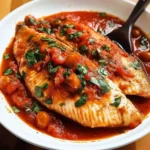
Ingredients
Ingredients for Baked Tilapia with Tomato Basil Sauce
Crafting this delectable Baked Tilapia with Tomato Basil Sauce begins with gathering a selection of fresh, high-quality ingredients. The simplicity of the recipe allows each component to truly shine, contributing to a dish that is both flavorful and wholesome. Here’s a detailed list of what you’ll need, along with notes on ingredient selection and potential substitutions:
-
- Tilapia Fillets: 4 (6-8 ounce) tilapia fillets, skinless and boneless. Tilapia is the star of the show, chosen for its mild flavor, flaky texture, and quick cooking time. Look for fillets that are firm, moist, and have a pearly white or slightly pinkish color. Avoid fillets that appear dull, dry, or have a fishy odor, as these are signs of less-fresh fish. Frozen tilapia fillets are also perfectly acceptable and often more budget-friendly. If using frozen tilapia, ensure they are fully thawed before cooking. Patting the fillets dry with paper towels before baking is crucial for achieving a nice sear and preventing them from becoming soggy. For those who prefer other white fish, cod, haddock, or snapper fillets can be substituted, although cooking times may need slight adjustments depending on the thickness of the fillets.
-
- Fresh Tomatoes: 1 pint (about 2 cups) cherry or grape tomatoes, halved or quartered if large. Fresh tomatoes form the base of the vibrant sauce, providing sweetness, acidity, and juiciness. Cherry or grape tomatoes are ideal because they are consistently sweet and flavorful throughout the year. Halving or quartering them allows them to cook down quickly and release their juices, creating a luscious sauce. For a richer, deeper tomato flavor, you can also use Roma tomatoes, diced. In a pinch, canned diced tomatoes (drained) can be used as a substitute, but fresh tomatoes will provide a brighter, more vibrant taste. If using canned tomatoes, consider adding a pinch of sugar to balance the acidity.
-
- Fresh Basil: ½ cup fresh basil leaves, roughly chopped. Fresh basil is the aromatic heart of the sauce, infusing it with its signature sweet, slightly peppery, and minty flavor. Use fresh basil leaves for the most intense and authentic basil flavor. Roughly chopping the basil just before adding it to the sauce helps to release its essential oils and maximize its aroma. Dried basil can be used as a substitute if fresh basil is unavailable, but the flavor will be less vibrant. If using dried basil, use about 1-2 teaspoons and add it earlier in the cooking process to allow it to rehydrate and release its flavor.
-
- Garlic: 2-3 cloves garlic, minced. Garlic is a flavor powerhouse that adds pungency and depth to the tomato basil sauce. Freshly minced garlic is highly recommended for its robust flavor. Mince the garlic finely to ensure it cooks evenly and disperses its flavor throughout the sauce. Pre-minced garlic from a jar can be used in a pinch, but fresh garlic will provide a more pronounced and aromatic garlic flavor. For a milder garlic flavor, you can roast the garlic cloves before mincing them and adding them to the sauce.
-
- Olive Oil: 2 tablespoons extra virgin olive oil. Extra virgin olive oil is used for sautéing the garlic and tomatoes, adding richness, flavor, and healthy fats to the dish. Extra virgin olive oil is preferred for its superior flavor and health benefits. It also helps to prevent the garlic and tomatoes from sticking to the pan and promotes even cooking. Other cooking oils, such as avocado oil or canola oil, can be used as substitutes, but olive oil contributes a distinct Mediterranean flavor that complements the tomatoes and basil beautifully.
-
- Dry White Wine (Optional): ¼ cup dry white wine, such as Pinot Grigio or Sauvignon Blanc. Dry white wine adds a layer of complexity and acidity to the sauce, enhancing the overall flavor profile and deglazing the pan. The alcohol evaporates during cooking, leaving behind a subtle fruity and acidic note. If you prefer not to use wine, you can substitute with chicken broth or vegetable broth for added moisture and flavor. Lemon juice can also be used as a non-alcoholic substitute to provide acidity.
-
- Lemon Juice: 1 tablespoon fresh lemon juice. Fresh lemon juice brightens the flavors of the dish, adding a touch of acidity and freshness that balances the richness of the olive oil and tomatoes. Lemon juice is especially important when using canned tomatoes to balance their acidity. Lime juice can be used as a substitute if lemon juice is not available, although it will impart a slightly different citrus flavor.
-
- Red Pepper Flakes (Optional): ¼ teaspoon red pepper flakes (or to taste). Red pepper flakes add a subtle warmth and a hint of spice to the sauce, providing a pleasant counterpoint to the sweetness of the tomatoes and basil. If you prefer a spicier dish, you can increase the amount of red pepper flakes to your liking. If you are sensitive to spice, you can omit red pepper flakes altogether.
-
- Dried Oregano: ½ teaspoon dried oregano. Dried oregano adds a classic Mediterranean herb flavor to the sauce, complementing the basil and tomatoes. Dried oregano is preferred in this recipe as it holds up well during baking and provides a slightly more robust flavor than fresh oregano. If using fresh oregano, use about 1 teaspoon, finely chopped.
-
- Salt and Black Pepper: To taste. Salt and black pepper are essential seasonings to enhance all the flavors in the dish. Kosher salt or sea salt is recommended for its clean flavor. Freshly ground black pepper is preferred for its aromatic quality. Season generously, tasting and adjusting as needed throughout the cooking process and before serving. Remember that salt is crucial for bringing out the flavors of the tomatoes and fish, so don’t be shy with seasoning.
Instructions
Step 1: Prepare the Tomato Basil Sauce
-
- Sauté Garlic and Tomatoes: Preheat oven to 400°F (200°C). In a large oven-safe skillet (cast iron or stainless steel works well), heat olive oil over medium heat. Add minced garlic and sauté for about 1 minute, until fragrant, being careful not to let it burn.
-
- Add Tomatoes, Wine (Optional), and Seasonings: Add halved or quartered cherry/grape tomatoes to the skillet. If using, pour in dry white wine. Season with dried oregano, red pepper flakes (if using), salt, and black pepper. Stir well to combine.
-
- Simmer Sauce: Bring the sauce to a simmer, then reduce heat to low and cook for about 5-7 minutes, stirring occasionally, until the tomatoes have softened slightly and released their juices, and the sauce has thickened slightly. Simmering the sauce allows the flavors to meld together and deepen.
Step 2: Prepare and Bake the Tilapia
-
- Pat Tilapia Dry and Season: While the sauce is simmering, pat tilapia fillets dry with paper towels. Season both sides of the fillets generously with salt and black pepper. Patting the tilapia dry is crucial for achieving a good sear and preventing it from becoming watery during baking.
-
- Arrange Tilapia in Sauce: Gently arrange the seasoned tilapia fillets in the skillet, nestling them into the tomato basil sauce. Ensure the fillets are evenly spaced and partially submerged in the sauce.
-
- Bake in Oven: Transfer the skillet to the preheated oven and bake for 12-15 minutes, or until the tilapia is cooked through and flakes easily with a fork. Baking time will vary depending on the thickness of the tilapia fillets. The fish is done when it is opaque and reaches an internal temperature of 145°F (63°C). Avoid overbaking, as tilapia can become dry if cooked for too long.
Step 3: Finish and Serve
-
- Stir in Fresh Basil and Lemon Juice: Remove the skillet from the oven. Stir in fresh chopped basil and lemon juice into the tomato basil sauce. The fresh basil and lemon juice add a burst of freshness and brightness to the finished dish.
-
- Check Seasoning and Serve: Taste the sauce and adjust seasoning with salt and pepper if needed. Serve the Baked Tilapia with Tomato Basil Sauce immediately, directly from the skillet or plated individually. Garnish with extra fresh basil leaves, lemon wedges, or a drizzle of olive oil, if desired. Serve hot and enjoy!
Nutrition
- Serving Size: one normal portion
- Calories: 250-300
- Sugar: 5-7g
- Sodium: 300-400mg
- Fat: 10-15g
- Saturated Fat: 2-3g
- Carbohydrates: 8-10g
- Fiber: 2-3g
- Protein: 30-35g
- Cholesterol: 70-80mg