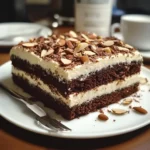
Ingredients
Coconut Cake Ingredients:
- All-Purpose Flour (3 cups): The foundation of our cake, all-purpose flour provides structure and a tender crumb. Ensure you measure it correctly by spooning it into your measuring cup and leveling it off, avoiding packing it down.
- Granulated Sugar (2 cups): Sugar not only sweetens the cake but also contributes to its moistness and tenderness. It also aids in browning and caramelization during baking.
- Baking Powder (3 ½ teaspoons): A leavening agent that helps the cake rise and become light and airy. Make sure your baking powder is fresh for optimal results.
- Baking Soda (1 teaspoon): Another leavening agent that reacts with acidic ingredients (like buttermilk or sour cream if used in variations) to create lift and a tender texture.
- Salt (1 teaspoon): Salt enhances the flavors of the other ingredients, balancing the sweetness and bringing out the coconut and chocolate notes.
- Unsalted Butter, softened (1 cup, 2 sticks): Butter adds richness, flavor, and moisture to the cake. Using unsalted butter allows you to control the salt level in the recipe. Make sure it’s softened to room temperature for easy creaming.
- Vegetable Oil (½ cup): Vegetable oil contributes to the cake’s moistness and keeps it tender for longer. It also helps create a fine crumb structure.
- Eggs (4 large): Eggs bind the ingredients together, add richness, and contribute to the cake’s structure and leavening. Use large eggs at room temperature for better emulsification.
- Buttermilk (1 cup): Buttermilk adds a tangy flavor and moisture to the cake, resulting in a tender and slightly chewy texture. If you don’t have buttermilk, you can make a substitute (see FAQ section).
- Vanilla Extract (2 teaspoons): Vanilla extract enhances the overall flavor of the cake, adding warmth and depth. Use pure vanilla extract for the best flavor.
- Coconut Extract (1 teaspoon): Coconut extract intensifies the coconut flavor, making it more prominent and delicious. A little goes a long way, so measure accurately.
- Sweetened Shredded Coconut (1 cup): The star ingredient! Sweetened shredded coconut adds both flavor and texture to the cake layers. You can toast some of this coconut for extra flavor depth in the batter or reserve it all for topping.
Chocolate Frosting Ingredients:
- Unsalted Butter, softened (1 cup, 2 sticks): The base of our creamy frosting. Softened butter whips up light and fluffy.
- Powdered Sugar (3-4 cups): Powdered sugar provides sweetness and structure to the frosting. Start with 3 cups and add more as needed to achieve the desired consistency.
- Unsweetened Cocoa Powder (¾ cup): Unsweetened cocoa powder gives the frosting its rich chocolate flavor. Use a good quality cocoa powder for the best taste. Dutch-processed cocoa will yield a darker, less bitter frosting.
- Milk or Heavy Cream (¼ – ½ cup): Milk or heavy cream is used to adjust the consistency of the frosting. Start with ¼ cup and add more gradually until you reach a smooth, spreadable texture. Heavy cream will make a richer, more decadent frosting.
- Vanilla Extract (1 teaspoon): Enhances the chocolate flavor and adds a touch of warmth to the frosting.
- Salt (Pinch): A pinch of salt balances the sweetness and enhances the chocolate flavor.
Instructions
Part 1: Baking the Coconut Cake Layers
- Preheat Oven and Prepare Pans: Preheat your oven to 350°F (175°C). Grease and flour three 9-inch round cake pans. You can also line the bottoms with parchment paper for easy removal. Alternatively, you can use two 9×13 inch pans or a sheet pan, adjusting baking time accordingly.
- Combine Dry Ingredients: In a large bowl, whisk together the all-purpose flour, granulated sugar, baking powder, baking soda, and salt. Ensure everything is evenly distributed.
- Cream Wet Ingredients: In a separate large bowl, cream together the softened unsalted butter and vegetable oil until light and fluffy. You can use an electric mixer for this step.
- Incorporate Eggs: Beat in the eggs one at a time, mixing well after each addition. Scrape down the sides of the bowl as needed to ensure everything is incorporated.
- Add Wet Extracts and Buttermilk: Stir in the vanilla extract and coconut extract. Gradually add the buttermilk, alternating with the dry ingredients, beginning and ending with the dry ingredients. Mix until just combined. Be careful not to overmix, as this can lead to a tough cake.
- Fold in Coconut: Gently fold in the sweetened shredded coconut until evenly distributed throughout the batter.
- Divide Batter and Bake: Divide the batter evenly among the prepared cake pans. Bake for 25-30 minutes, or until a wooden skewer inserted into the center comes out clean. The tops should be lightly golden brown, and the cakes should spring back lightly when touched.
- Cool Cakes: Let the cakes cool in the pans for 10-15 minutes before inverting them onto a wire rack to cool completely. Ensure the cakes are completely cool before frosting. This is crucial to prevent the frosting from melting.
Part 2: Preparing the Chocolate Frosting
- Cream Butter: In a large bowl, cream the softened unsalted butter until smooth and fluffy using an electric mixer.
- Gradually Add Powdered Sugar and Cocoa: Gradually add the powdered sugar, one cup at a time, alternating with the unsweetened cocoa powder. Beat on low speed until incorporated, then increase speed to medium and beat until light and fluffy.
- Add Milk/Cream and Vanilla: Gradually add the milk or heavy cream, starting with ¼ cup, and vanilla extract. Beat until the frosting is smooth and creamy. Add more milk or cream, a tablespoon at a time, if needed to reach your desired consistency. The frosting should be spreadable but not too thin.
- Season with Salt: Add a pinch of salt and mix well to enhance the chocolate flavor and balance the sweetness.
- Adjust Consistency: If the frosting is too thick, add a little more milk or cream. If it’s too thin, add a bit more powdered sugar.
Part 3: Assembling the Almond Joy Cake
- Level Cake Layers (Optional): If your cake layers are domed, use a serrated knife to gently level the tops for a flat and even surface. This is optional but creates a more professional look.
- Frost the First Layer: Place one cake layer on a serving plate or cake stand. Spread a generous layer of chocolate frosting evenly over the top.
- Add Second and Third Layers: Carefully place the second cake layer on top of the frosting, and then frost it with another layer of chocolate frosting. Repeat with the third cake layer and the remaining frosting to frost the top and sides of the entire cake. You can create swirls or a smooth finish, depending on your preference.
- Decorate with Toppings: Immediately before serving (or shortly before to prevent coconut from softening too much in the fridge), generously sprinkle the toasted shredded coconut over the top and sides of the frosted cake. Arrange whole almonds decoratively on top of the cake, mimicking the look of an Almond Joy candy bar. You can press some almonds gently into the sides of the cake as well.
- Add Optional Chocolate Touches: If desired, drizzle with melted chocolate or chocolate syrup, or add chocolate shavings for extra decoration and chocolate intensity.
- Chill (Optional): If you prefer a firmer frosting, you can chill the cake in the refrigerator for about 30 minutes before serving. However, it’s delicious at room temperature as well.
- Serve and Enjoy: Slice and serve your beautiful Almond Joy Cake!
Nutrition
- Serving Size: one normal portion
- Calories: 450-600
- Sugar: 35-50g
- Sodium: 200-300mg
- Fat: 25-35g
- Saturated Fat: 15-20g
- Carbohydrates: 50-70g
- Fiber: 1-2g
- Protein: 5-7g
- Cholesterol: 100-150mg