
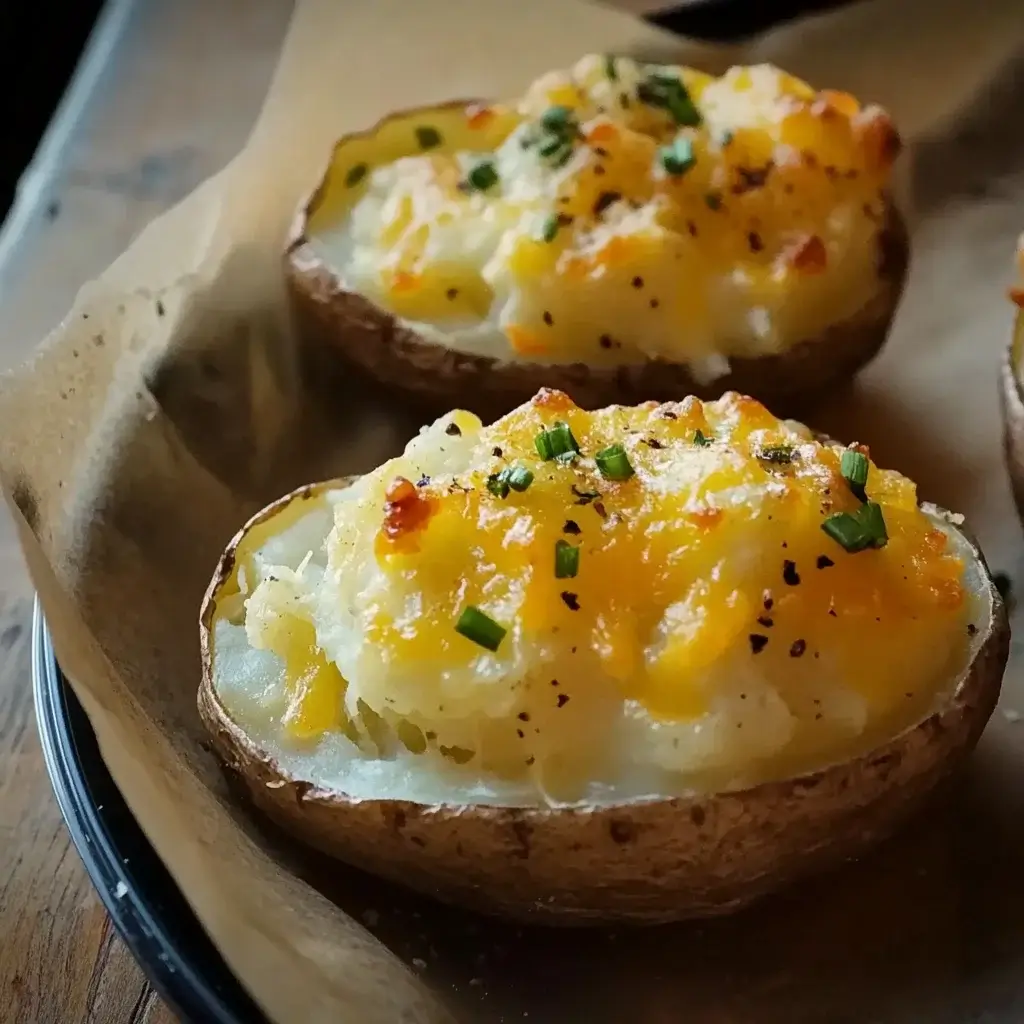
There are certain dishes that just scream “comfort food,” and for me, Twice-Baked Potatoes are right up there at the top of the list. Growing up, these were a special occasion treat, something my mom would make for holiday dinners or when we had company. I remember the anticipation building as the aroma of baking potatoes and melting cheese filled the kitchen. And the first bite? Pure bliss. The crispy skin giving way to a fluffy, creamy interior, loaded with the rich tang of cheddar and the fresh, delicate bite of chives – it’s a flavor combination that’s simply irresistible. Now, years later, I’ve perfected my own version of this classic, and it’s become a family favorite in my house too. Whether it’s a cozy weeknight dinner or a potluck gathering, these Twice-Baked Potatoes with Cheddar and Chives are always a hit. They’re surprisingly easy to make, endlessly customizable, and guaranteed to bring smiles to everyone around the table. Trust me, once you try this recipe, you’ll understand why they’re so beloved – it’s comfort food at its finest.
Ingredients
The magic of Twice-Baked Potatoes with Cheddar and Chives lies in the quality of the simple ingredients. Each component plays a vital role in creating that perfect balance of creamy texture, cheesy richness, and fresh, herbaceous flavor. Let’s delve into each ingredient and understand why they are essential for achieving potato perfection:
- Russet Potatoes: 4 large Russet potatoes. Russet potatoes are the undisputed champions for twice-baked potatoes, and for good reason. Their high starch content and low moisture level result in a fluffy, light, and airy interior when baked, which is exactly what you want for a twice-baked potato. Other potato varieties, like Yukon Gold or red potatoes, have a waxier texture and higher moisture content, which can make the filling denser and less fluffy. Russets also have a thicker skin that crisps up beautifully during baking and holds its shape well when scooped and stuffed. Choose large, firm Russet potatoes that are free from blemishes or soft spots. The size of the potato will determine the portion size of your twice-baked potatoes.
- Cheddar Cheese: 1 ½ cups shredded sharp cheddar cheese. Cheddar cheese is the quintessential cheese for twice-baked potatoes, offering a robust, tangy flavor that complements the creamy potato and fresh chives perfectly. Sharp cheddar is recommended for its pronounced flavor that stands up well to the other ingredients. Mild cheddar can also be used, but the flavor will be less intense. For an even richer flavor, you can use extra sharp cheddar or a blend of sharp and medium cheddar. Pre-shredded cheese is convenient, but freshly grated cheddar cheese melts more smoothly and has a better flavor due to the absence of cellulose and anti-caking agents. Consider using a block of high-quality cheddar cheese and grating it yourself for the best results. Reserve about ½ cup of the shredded cheddar for topping the potatoes before the second bake – this will create that irresistible cheesy crust.
- Fresh Chives: ¼ cup finely chopped fresh chives. Fresh chives provide a delicate oniony flavor and a vibrant pop of green color that brightens up the richness of the potatoes and cheese. Their mild, slightly garlicky taste is a perfect counterpoint to the savory filling. Dried chives can be used as a substitute in a pinch, but fresh chives offer a much superior flavor and aroma. Look for bright green chives that are firm and not wilted. Wash and dry the chives thoroughly before chopping them finely. Chives are best added fresh at the end of the filling preparation to preserve their delicate flavor and vibrant color.
- Butter: 4 tablespoons unsalted butter, divided. Butter adds richness, flavor, and creaminess to the potato filling. Unsalted butter is recommended to control the salt level in the dish, as cheddar cheese can already be quite salty. Divide the butter – 2 tablespoons will be melted and mixed into the potato filling, while the remaining 2 tablespoons will be melted and brushed over the potato skins before the second bake to help them crisp up beautifully. You can use salted butter if that’s all you have on hand, but you may need to reduce the amount of salt you add to the filling accordingly.
- Sour Cream or Cream Cheese: ½ cup sour cream or cream cheese (or a combination). Sour cream or cream cheese (or a combination of both) contributes to the creamy texture and tangy flavor of the potato filling. Sour cream adds a lighter tang, while cream cheese adds a richer, denser creaminess. Using a combination of both provides a wonderful balance of flavors and textures. Full-fat sour cream or cream cheese is recommended for the richest flavor and creamiest texture. Reduced-fat versions can be used, but they may result in a slightly less creamy filling. For a tangier flavor, opt for sour cream; for a richer and creamier filling, lean towards cream cheese.
- Milk or Cream: ¼ cup milk or heavy cream (or half-and-half). Milk or cream is used to thin out the potato filling to the desired consistency and add extra moisture and creaminess. Heavy cream will result in a richer and more decadent filling, while milk will create a slightly lighter version. Half-and-half is a good middle-ground option. Start with ¼ cup and add more as needed to achieve a smooth and creamy, but not runny, consistency. The amount of liquid needed can vary slightly depending on the moisture content of the potatoes.
- Garlic Powder: ½ teaspoon garlic powder. Garlic powder adds a subtle savory depth and aromatic warmth to the potato filling, enhancing the overall flavor profile without being overpowering. It blends seamlessly into the creamy filling, distributing the garlic flavor evenly. If you prefer a stronger garlic flavor, you can use 1-2 cloves of minced fresh garlic sautéed in a little butter until fragrant before adding it to the potato filling. However, garlic powder is a convenient and effective way to add a hint of garlic to this dish.
- Salt and Black Pepper: To taste. Salt and black pepper are essential for seasoning the potato filling and enhancing all the other flavors. Salt balances the richness and sweetness of the potatoes and cheese, while black pepper adds a subtle spice and warmth. Season generously with salt and pepper to taste. Remember that cheddar cheese and butter already contain salt, so season gradually and taste as you go. Freshly ground black pepper is always preferred for its more vibrant flavor, but pre-ground black pepper will also work.
Instructions
Making these irresistible Twice-Baked Potatoes with Cheddar and Chives is a straightforward process, broken down into two baking stages which give them their signature texture and flavor. Follow these step-by-step instructions for potato perfection:
- Preheat your oven to 400°F (200°C). Preheat your oven to the correct temperature. This ensures the potatoes bake evenly and the skins crisp up properly. Using an oven thermometer is recommended for accurate temperature.
- Prepare the potatoes for baking: Wash and scrub the Russet potatoes thoroughly under cold running water to remove any dirt or debris. Pat them completely dry with paper towels. Drying the potatoes helps the skins crisp up in the oven. Pierce each potato several times with a fork. This allows steam to escape during baking and prevents the potatoes from bursting.
- First bake: Place the prepared potatoes directly on the oven rack. Baking them directly on the rack promotes better air circulation and results in crispier skins. Bake for 45-60 minutes, or until the potatoes are tender and easily pierced with a fork. The baking time will vary depending on the size of the potatoes. You’ll know they are done when they feel soft when squeezed gently (using oven mitts!) and a fork inserted into the center goes in easily.
- Cool slightly and prepare for scooping: Once baked, remove the potatoes from the oven and let them cool slightly until they are cool enough to handle but still warm. This will make them easier to scoop without burning your hands. While the potatoes are cooling slightly, reduce the oven temperature to 375°F (190°C). This lower temperature is for the second bake and ensures the filling heats through without burning the cheese topping.
- Scoop out the potato pulp: Carefully cut each potato lengthwise using a sharp knife. Using a spoon, scoop out the potato pulp from each half, leaving a thin shell of potato skin intact (about ¼ inch thick). Be careful not to tear the potato skins as they will serve as the “boats” for the filling. Place the scooped-out potato pulp into a large mixing bowl. Set the potato skins aside on a baking sheet lined with parchment paper or foil. Lining the baking sheet makes for easier cleanup.
- Prepare the potato filling: To the bowl with the scooped-out potato pulp, add 2 tablespoons of unsalted butter (melted), shredded cheddar cheese (reserve ½ cup for topping), sour cream or cream cheese (or combination), milk or cream, garlic powder, salt, and black pepper. Use a potato masher or an electric mixer on low speed to mash and combine all the ingredients until smooth and creamy. Do not overmix, as this can make the potatoes gluey. Taste the filling and adjust seasonings as needed. You may want to add more salt, pepper, or garlic powder to taste.
- Stuff the potato skins: Spoon the creamy potato filling evenly into the prepared potato skins, mounding it slightly. Don’t overstuff the skins, but fill them generously.
- Brush with butter and top with cheese: Melt the remaining 2 tablespoons of unsalted butter and brush it evenly over the stuffed potato skins. Brushing with butter helps the skins crisp up further during the second bake and adds flavor. Sprinkle the reserved shredded cheddar cheese evenly over the top of each stuffed potato. The cheese topping will melt and create a golden brown, cheesy crust during the second bake.
- Second bake: Return the baking sheet with the stuffed potatoes to the preheated oven (375°F/190°C). Bake for 20-25 minutes, or until the potatoes are heated through, the cheese is melted and bubbly, and the potato skins are golden brown and crispy. The second bake is primarily to heat the filling through and melt the cheese topping.
- Garnish and serve: Remove the twice-baked potatoes from the oven and let them cool slightly for a few minutes before serving. Garnish generously with finely chopped fresh chives. The fresh chives add a burst of color and fresh flavor. Serve hot and enjoy!
Nutrition Facts
(Estimated per serving, based on 2 servings – 2 halves per serving)
- Servings: 2 (makes 4 potato halves)
- Calories per serving (2 halves): Approximately 600-750 calories (This is an estimate and can vary based on the size of the potatoes, amount of cheese, and other ingredients used. Using reduced-fat cheese and sour cream/cream cheese will lower the calorie count.)
Approximate Macronutrient Breakdown per Serving (2 halves):
- Protein: 20-25 grams
- Fat: 30-40 grams (This will be lower if using reduced-fat dairy and cheese)
- Carbohydrates: 60-70 grams (Primarily from potatoes)
Important Notes:
- These are estimates and may vary. For more precise nutritional information, use a nutrition calculator with the specific brands and ingredients you use.
- The calorie and fat content can be significantly reduced by using reduced-fat cheddar cheese, sour cream, or cream cheese, and by using milk instead of cream.
- This recipe provides a good source of carbohydrates and some protein.
- Potatoes are a good source of potassium and vitamin C.
- Consider portion sizes to manage calorie intake. One potato half can be considered a serving as a side dish.
Preparation Time
While Twice-Baked Potatoes require two baking stages, the hands-on preparation time is quite reasonable, making them a manageable dish for both weeknight meals and special occasions.
- Prep Time: 25-30 minutes (This includes washing and scrubbing potatoes, preheating the oven, baking the potatoes for the first bake, cooling slightly, scooping out the potato pulp, making the filling, and stuffing the potatoes.) The most time-consuming part of the prep is scooping out the potato pulp, but even that is relatively quick.
- Cook Time (First Bake): 45-60 minutes (Depending on the size of the potatoes.)
- Cook Time (Second Bake): 20-25 minutes
- Total Time: 1 hour 30 minutes – 1 hour 55 minutes (From start to finish, including prep and both baking times.) While the total time is a bit longer due to the two baking stages, much of this time is hands-off baking time. You can use this time to prepare other parts of your meal or relax while the potatoes bake.
How to Serve Twice-Baked Potatoes with Cheddar and Chives
Twice-Baked Potatoes with Cheddar and Chives are incredibly versatile and can be served in a variety of ways, making them suitable for different occasions and meal types. Here are some delicious serving suggestions:
As a Side Dish:
- Classic Main Course Pairings:
- Steak or Roast Beef: Twice-baked potatoes are a classic accompaniment to steak or roast beef, providing a hearty and comforting side.
- Roasted Chicken or Pork: They pair beautifully with roasted chicken or pork, complementing the savory flavors of the meat.
- Grilled Salmon or Fish: For a slightly lighter meal, serve them alongside grilled salmon or other fish.
- Meatloaf: A comforting meatloaf and twice-baked potatoes are a match made in comfort food heaven.
- BBQ Ribs or Pulled Pork: They are a fantastic side for BBQ ribs or pulled pork, offering a creamy and cheesy contrast to the smoky flavors.
- Vegetarian Main Course Companions:
- Lentil Loaf or Vegetarian Meatloaf: Twice-baked potatoes are a substantial and satisfying side for vegetarian main courses like lentil loaf or vegetarian meatloaf.
- Vegetarian Chili or Stew: Serve them alongside a hearty vegetarian chili or stew for a complete and comforting vegetarian meal.
- Large Salad: For a lighter vegetarian option, pair a twice-baked potato with a large, vibrant salad.
As a Main Course (Larger Portions):
- Loaded Baked Potato Meal: For a casual and satisfying meal, serve larger portions of twice-baked potatoes as the main course. Offer a variety of toppings to allow everyone to customize their potatoes:
- Protein Toppings: Cooked and crumbled bacon, shredded cooked chicken or beef, chili, black beans, chickpeas.
- Vegetable Toppings: Steamed or sautéed broccoli, sautéed mushrooms, caramelized onions, salsa, diced tomatoes, corn.
- Cheese Toppings: Different types of shredded cheese (Monterey Jack, pepper jack, Colby), crumbled feta or goat cheese.
- Sauce Toppings: Sour cream, Greek yogurt, salsa, guacamole, hot sauce, ranch dressing.
Topping Variations:
- Bacon: Crispy crumbled bacon is a classic and irresistible topping for twice-baked potatoes. Add it before the second bake or sprinkle it on top just before serving.
- Broccoli and Cheese: Mix cooked broccoli florets into the potato filling and top with extra cheddar cheese for a broccoli and cheese version.
- Sour Cream and Onion: Top with a dollop of sour cream and caramelized onions for a sour cream and onion flavor profile.
- Jalapeño Popper: Add diced jalapeños and cream cheese to the filling and top with more cheddar and a sprinkle of breadcrumbs for a spicy jalapeño popper twist.
- Pizza Style: Top with pizza sauce, mozzarella cheese, pepperoni, and your favorite pizza toppings for a fun pizza-inspired twice-baked potato.
Serving Temperature:
- Twice-baked potatoes are best served hot and fresh from the oven for optimal texture and flavor. However, they can also be served warm or at room temperature, especially if they are part of a buffet or potluck.
Additional Tips for Perfect Twice-Baked Potatoes
To ensure your Twice-Baked Potatoes with Cheddar and Chives are truly exceptional, consider these helpful tips and tricks:
- Choose the Right Potatoes: As mentioned earlier, Russet potatoes are the best choice for twice-baked potatoes due to their high starch content and fluffy texture. Select large, firm Russet potatoes that are similar in size for even baking. Avoid potatoes with green spots or sprouts.
- Crispy Skins are Key: Achieving crispy potato skins is essential for the best twice-baked potato experience. Ensure you thoroughly dry the potatoes after washing them. Baking them directly on the oven rack promotes better air circulation and crispier skins. Brushing the skins with melted butter before the second bake further enhances crispiness. You can also lightly brush the skins with olive oil before the first bake.
- Don’t Overmix the Filling: When mashing the potato filling, be careful not to overmix. Overmixing can release too much starch and result in a gluey or gummy texture. Mash just until the filling is smooth and creamy, but still light and airy.
- Make-Ahead Magic: Twice-baked potatoes are a fantastic make-ahead dish, perfect for entertaining or busy weeknights. You can prepare the potatoes through step 7 (stuffing the potato skins) up to 2 days in advance. Store the stuffed potatoes, covered, in the refrigerator. When ready to bake, simply brush with butter, top with cheese, and bake as directed, adding a few extra minutes to the baking time if starting from cold.
- Customize Your Cheese and Flavors: While cheddar and chives are a classic combination, feel free to experiment with different cheeses and flavor combinations. Try using Gruyere, Monterey Jack, pepper jack, or a blend of cheeses. Add other herbs like rosemary, thyme, or dill to the filling. Incorporate sautéed onions, mushrooms, or roasted garlic for added flavor depth. Don’t be afraid to get creative and tailor the recipe to your taste preferences.
Frequently Asked Questions (FAQ) about Twice-Baked Potatoes
Here are some frequently asked questions about making Twice-Baked Potatoes, addressing common queries and providing helpful advice for success:
Q1: Can I freeze twice-baked potatoes?
A: Yes, twice-baked potatoes freeze remarkably well, making them a great make-ahead freezer meal. Prepare the potatoes through step 7 (stuffing the potato skins). Let them cool completely. Wrap each potato half individually in plastic wrap, then place them in a freezer-safe bag or container. Freeze for up to 2-3 months. To reheat from frozen, bake directly from frozen at 350°F (175°C) for 30-40 minutes, or until heated through and bubbly. You can add the cheese topping during the last 15-20 minutes of baking if desired.
Q2: Can I make twice-baked potatoes in advance and reheat them?
A: Yes, you can make twice-baked potatoes ahead of time and reheat them. Prepare them fully, including the second bake. Let them cool slightly. Store them, covered, in the refrigerator for up to 2-3 days. To reheat, bake at 350°F (175°C) for 15-20 minutes, or until heated through. You can also reheat them in the microwave, but the skins may not be as crispy.
Q3: What if my potato filling is too dry or too wet?
A: If your potato filling is too dry, add a little more milk or cream, 1 tablespoon at a time, until you reach the desired creamy consistency. If your filling is too wet, you can add a bit more shredded cheese or mashed potato pulp to thicken it up. You can also bake the filled potato skins for a few extra minutes in the second bake to help evaporate some of the excess moisture.
Q4: Can I use a different type of potato besides Russet?
A: While Russet potatoes are highly recommended for twice-baked potatoes, you can use other types of potatoes in a pinch, such as Yukon Gold potatoes. However, keep in mind that Yukon Gold potatoes have a waxier texture and higher moisture content, which will result in a denser, less fluffy filling. The skins of Yukon Gold potatoes also tend to be thinner and may not crisp up as well as Russet potato skins. If using Yukon Gold, be mindful of the texture difference.
Q5: How can I make twice-baked potatoes healthier?
A: You can make twice-baked potatoes healthier by making a few simple substitutions:
- Use reduced-fat cheddar cheese, sour cream, or cream cheese.
- Substitute Greek yogurt for some or all of the sour cream or cream cheese. Greek yogurt adds protein and tang with fewer calories and fat.
- Use milk instead of heavy cream.
- Load up on vegetables in the filling or as toppings. Add sautéed spinach, broccoli, mushrooms, or other vegetables to boost the nutrient content.
- Control portion sizes. Enjoy in moderation as part of a balanced meal.

Twice-Baked Potatoes with Cheddar and Chives recipe
Ingredients
- Russet Potatoes: 4 large Russet potatoes. Russet potatoes are the undisputed champions for twice-baked potatoes, and for good reason. Their high starch content and low moisture level result in a fluffy, light, and airy interior when baked, which is exactly what you want for a twice-baked potato. Other potato varieties, like Yukon Gold or red potatoes, have a waxier texture and higher moisture content, which can make the filling denser and less fluffy. Russets also have a thicker skin that crisps up beautifully during baking and holds its shape well when scooped and stuffed. Choose large, firm Russet potatoes that are free from blemishes or soft spots. The size of the potato will determine the portion size of your twice-baked potatoes.
- Cheddar Cheese: 1 ½ cups shredded sharp cheddar cheese. Cheddar cheese is the quintessential cheese for twice-baked potatoes, offering a robust, tangy flavor that complements the creamy potato and fresh chives perfectly. Sharp cheddar is recommended for its pronounced flavor that stands up well to the other ingredients. Mild cheddar can also be used, but the flavor will be less intense. For an even richer flavor, you can use extra sharp cheddar or a blend of sharp and medium cheddar. Pre-shredded cheese is convenient, but freshly grated cheddar cheese melts more smoothly and has a better flavor due to the absence of cellulose and anti-caking agents. Consider using a block of high-quality cheddar cheese and grating it yourself for the best results. Reserve about ½ cup of the shredded cheddar for topping the potatoes before the second bake – this will create that irresistible cheesy crust.
- Fresh Chives: ¼ cup finely chopped fresh chives. Fresh chives provide a delicate oniony flavor and a vibrant pop of green color that brightens up the richness of the potatoes and cheese. Their mild, slightly garlicky taste is a perfect counterpoint to the savory filling. Dried chives can be used as a substitute in a pinch, but fresh chives offer a much superior flavor and aroma. Look for bright green chives that are firm and not wilted. Wash and dry the chives thoroughly before chopping them finely. Chives are best added fresh at the end of the filling preparation to preserve their delicate flavor and vibrant color.
- Butter: 4 tablespoons unsalted butter, divided. Butter adds richness, flavor, and creaminess to the potato filling. Unsalted butter is recommended to control the salt level in the dish, as cheddar cheese can already be quite salty. Divide the butter – 2 tablespoons will be melted and mixed into the potato filling, while the remaining 2 tablespoons will be melted and brushed over the potato skins before the second bake to help them crisp up beautifully. You can use salted butter if that’s all you have on hand, but you may need to reduce the amount of salt you add to the filling accordingly.
- Sour Cream or Cream Cheese: ½ cup sour cream or cream cheese (or a combination). Sour cream or cream cheese (or a combination of both) contributes to the creamy texture and tangy flavor of the potato filling. Sour cream adds a lighter tang, while cream cheese adds a richer, denser creaminess. Using a combination of both provides a wonderful balance of flavors and textures. Full-fat sour cream or cream cheese is recommended for the richest flavor and creamiest texture. Reduced-fat versions can be used, but they may result in a slightly less creamy filling. For a tangier flavor, opt for sour cream; for a richer and creamier filling, lean towards cream cheese.
- Milk or Cream: ¼ cup milk or heavy cream (or half-and-half). Milk or cream is used to thin out the potato filling to the desired consistency and add extra moisture and creaminess. Heavy cream will result in a richer and more decadent filling, while milk will create a slightly lighter version. Half-and-half is a good middle-ground option. Start with ¼ cup and add more as needed to achieve a smooth and creamy, but not runny, consistency. The amount of liquid needed can vary slightly depending on the moisture content of the potatoes.
- Garlic Powder: ½ teaspoon garlic powder. Garlic powder adds a subtle savory depth and aromatic warmth to the potato filling, enhancing the overall flavor profile without being overpowering. It blends seamlessly into the creamy filling, distributing the garlic flavor evenly. If you prefer a stronger garlic flavor, you can use 1-2 cloves of minced fresh garlic sautéed in a little butter until fragrant before adding it to the potato filling. However, garlic powder is a convenient and effective way to add a hint of garlic to this dish.
- Salt and Black Pepper: To taste. Salt and black pepper are essential for seasoning the potato filling and enhancing all the other flavors. Salt balances the richness and sweetness of the potatoes and cheese, while black pepper adds a subtle spice and warmth. Season generously with salt and pepper to taste. Remember that cheddar cheese and butter already contain salt, so season gradually and taste as you go. Freshly ground black pepper is always preferred for its more vibrant flavor, but pre-ground black pepper will also work.
Instructions
- Preheat your oven to 400°F (200°C). Preheat your oven to the correct temperature. This ensures the potatoes bake evenly and the skins crisp up properly. Using an oven thermometer is recommended for accurate temperature.
- Prepare the potatoes for baking: Wash and scrub the Russet potatoes thoroughly under cold running water to remove any dirt or debris. Pat them completely dry with paper towels. Drying the potatoes helps the skins crisp up in the oven. Pierce each potato several times with a fork. This allows steam to escape during baking and prevents the potatoes from bursting.
- First bake: Place the prepared potatoes directly on the oven rack. Baking them directly on the rack promotes better air circulation and results in crispier skins. Bake for 45-60 minutes, or until the potatoes are tender and easily pierced with a fork. The baking time will vary depending on the size of the potatoes. You’ll know they are done when they feel soft when squeezed gently (using oven mitts!) and a fork inserted into the center goes in easily.
- Cool slightly and prepare for scooping: Once baked, remove the potatoes from the oven and let them cool slightly until they are cool enough to handle but still warm. This will make them easier to scoop without burning your hands. While the potatoes are cooling slightly, reduce the oven temperature to 375°F (190°C). This lower temperature is for the second bake and ensures the filling heats through without burning the cheese topping.
- Scoop out the potato pulp: Carefully cut each potato lengthwise using a sharp knife. Using a spoon, scoop out the potato pulp from each half, leaving a thin shell of potato skin intact (about ¼ inch thick). Be careful not to tear the potato skins as they will serve as the “boats” for the filling. Place the scooped-out potato pulp into a large mixing bowl. Set the potato skins aside on a baking sheet lined with parchment paper or foil. Lining the baking sheet makes for easier cleanup.
- Prepare the potato filling: To the bowl with the scooped-out potato pulp, add 2 tablespoons of unsalted butter (melted), shredded cheddar cheese (reserve ½ cup for topping), sour cream or cream cheese (or combination), milk or cream, garlic powder, salt, and black pepper. Use a potato masher or an electric mixer on low speed to mash and combine all the ingredients until smooth and creamy. Do not overmix, as this can make the potatoes gluey. Taste the filling and adjust seasonings as needed. You may want to add more salt, pepper, or garlic powder to taste.
- Stuff the potato skins: Spoon the creamy potato filling evenly into the prepared potato skins, mounding it slightly. Don’t overstuff the skins, but fill them generously.
- Brush with butter and top with cheese: Melt the remaining 2 tablespoons of unsalted butter and brush it evenly over the stuffed potato skins. Brushing with butter helps the skins crisp up further during the second bake and adds flavor. Sprinkle the reserved shredded cheddar cheese evenly over the top of each stuffed potato. The cheese topping will melt and create a golden brown, cheesy crust during the second bake.
- Second bake: Return the baking sheet with the stuffed potatoes to the preheated oven (375°F/190°C). Bake for 20-25 minutes, or until the potatoes are heated through, the cheese is melted and bubbly, and the potato skins are golden brown and crispy. The second bake is primarily to heat the filling through and melt the cheese topping.
- Garnish and serve: Remove the twice-baked potatoes from the oven and let them cool slightly for a few minutes before serving. Garnish generously with finely chopped fresh chives. The fresh chives add a burst of color and fresh flavor. Serve hot and enjoy!
Nutrition
- Serving Size: one normal portion
- Calories: 600-750
- Fat: 30-40 grams
- Carbohydrates: 60-70 grams
- Protein: 20-25 grams