

Let’s be honest, turkey burgers sometimes get a bad rap. Dry, bland, and unsatisfying are words that unfortunately come to mind for some. But I’m here to tell you that a perfectly cooked, incredibly juicy, and flavorful turkey burger is absolutely achievable, especially when you master the stovetop method. For years, grilling was my go-to for burgers, but on busy weeknights or when the weather isn’t cooperating, the stovetop has become my absolute savior. And you know what? I often prefer them cooked this way! There’s a beautiful sear you can achieve in a good skillet, and the control you have over the cooking process is unmatched. My family, initially skeptical of turkey burgers in general, now enthusiastically requests them, especially when they know they’re getting my stovetop version. Forget dry and tasteless – we’re talking about burgers that are bursting with flavor, wonderfully moist, and cooked to golden-brown perfection right on your kitchen stove. Ready to ditch the grill and discover the joy of stovetop turkey burgers? Let’s dive in!
Ingredients for Irresistibly Delicious Stovetop Turkey Burgers
The foundation of any great turkey burger starts with quality ingredients. While ground turkey is the star, the supporting cast of binders and seasonings is crucial for creating a burger that’s not only healthy but also packed with flavor and perfect texture. Here’s a comprehensive list of what you’ll need to make the best stovetop turkey burgers:
- 1 ½ pounds Ground Turkey (85% lean): Choosing the right ground turkey is important. While extra-lean turkey might seem healthier, it tends to result in drier burgers. Opting for 85% lean ground turkey provides a good balance of flavor and moisture.
- Why 85% Lean? This fat percentage helps keep the burgers juicy during cooking without being overly greasy. If you prefer leaner, you can compensate with moisture-adding ingredients (see below).
- Substitution: You can use 93% lean ground turkey, but be extra careful not to overcook and consider adding more moisture-enhancing ingredients. Ground chicken can also be used as a substitute.
- ½ cup Breadcrumbs (Panko or Regular): Breadcrumbs act as a binder, helping to hold the turkey burgers together and prevent them from becoming too dense. Panko breadcrumbs offer a lighter texture, while regular breadcrumbs work just as well.
- Why Breadcrumbs? They absorb excess moisture and provide structure, preventing the burgers from crumbling.
- Substitution: Oat flour, crushed crackers (like Ritz or saltines), or even finely ground almond flour (for a gluten-free option) can be used as substitutes.
- 1 Large Egg: The egg is another essential binder, adding moisture and helping to create a cohesive patty.
- Why Egg? The proteins in the egg coagulate during cooking, binding the ingredients together.
- Substitution: For egg-free options, try 2-3 tablespoons of unsweetened applesauce or mashed avocado.
- ¼ cup Finely Diced Onion (Yellow or White): Onion adds moisture and savory flavor to the burgers. Dicing it finely ensures it cooks through evenly and doesn’t create large chunks in the burger.
- Why Onion? Adds aromatic depth and moisture.
- Substitution: Shallots or scallions can be used for a milder onion flavor. You can also sauté the onion beforehand for a sweeter, more mellow taste.
- 2 Cloves Garlic, Minced: Garlic is a flavor powerhouse, adding pungent and savory notes that complement the turkey beautifully. Freshly minced garlic is best for flavor.
- Why Garlic? Essential for savory depth and aroma.
- Substitution: Garlic powder can be used in a pinch (about ½ teaspoon), but fresh garlic is always preferred.
- 2 Tablespoons Fresh Parsley, Chopped (Optional but Recommended): Fresh parsley adds a touch of freshness and herbaceousness, brightening up the flavor profile of the burgers.
- Why Parsley? Adds freshness and visual appeal.
- Substitution: Other fresh herbs like cilantro, chives, or dill can be used depending on your flavor preferences. Dried parsley can be used (about 1 teaspoon), but fresh is always better.
- 1 Tablespoon Worcestershire Sauce: Worcestershire sauce adds umami depth and a subtle tanginess that enhances the overall flavor of the burger.
- Why Worcestershire? Adds umami richness and complexity.
- Substitution: Soy sauce, tamari (for gluten-free), or even a dash of balsamic vinegar can be used as substitutes, though Worcestershire provides a unique flavor.
- 1 teaspoon Dijon Mustard: Dijon mustard adds a subtle tang and helps to tenderize the turkey, contributing to a more flavorful and juicy burger.
- Why Dijon Mustard? Adds tanginess and tenderizing properties.
- Substitution: Yellow mustard or even a touch of horseradish can be used for a different flavor profile.
- 1 teaspoon Salt: Salt is crucial for seasoning and enhancing the flavors of all the ingredients. Use kosher salt or sea salt for best results.
- Why Salt? Essential for flavor enhancement and seasoning.
- Important Note: Season generously! Turkey can be bland on its own, so don’t be shy with the salt.
- ½ teaspoon Black Pepper: Freshly ground black pepper adds a touch of spice and complements the other seasonings.
- Why Black Pepper? Adds warmth and subtle spice.
- Substitution: White pepper or a pinch of red pepper flakes can be used for different spice notes.
- 1-2 Tablespoons Olive Oil or Cooking Oil: For cooking the burgers in the skillet. Choose an oil with a high smoke point, such as olive oil, canola oil, or avocado oil.
- Why Oil? Prevents sticking and promotes even browning and searing.
- Oil Choice: Olive oil adds a bit of flavor, while neutral oils like canola or avocado oil are flavorless.
- Optional Add-ins (for extra flavor and moisture):
- Shredded Zucchini or Carrots (¼ cup): Adds moisture and subtle sweetness. Squeeze out excess moisture after shredding.
- Finely Diced Bell Pepper (¼ cup): Adds sweetness and texture.
- Hot Sauce (to taste): For a spicy kick.
- Smoked Paprika (½ teaspoon): Adds smoky depth.
- Dried Herbs (½ teaspoon, like oregano, thyme, or Italian seasoning): Enhances the overall flavor profile.
Having all your ingredients prepped and measured out before you start mixing the patties will make the cooking process much smoother and more enjoyable. Now, let’s move on to the step-by-step instructions for cooking these delicious stovetop turkey burgers!
Step-by-Step Instructions for Cooking Turkey Burgers on the Stove
Cooking turkey burgers on the stove is quick, easy, and yields fantastic results when you follow these simple steps. Here’s your guide to achieving perfectly cooked, juicy turkey burgers every time:
- Prepare the Burger Mixture: In a large mixing bowl, gently combine the ground turkey, breadcrumbs, egg, diced onion, minced garlic, chopped parsley (if using), Worcestershire sauce, Dijon mustard, salt, and black pepper.
- Gentle Mixing is Key: Avoid overmixing the turkey mixture. Overmixing can lead to tough burgers. Mix just until all ingredients are evenly combined. Use your hands or a spatula for gentle mixing.
- Form the Patties: Divide the turkey mixture into 4 equal portions. Gently shape each portion into a patty, about ¾ inch thick. Make a slight indentation in the center of each patty with your thumb. This helps prevent the burgers from puffing up in the middle while cooking.
- Patty Thickness: ¾ inch thickness is ideal for stovetop cooking, ensuring they cook through without drying out too quickly.
- Indentation Trick: The thumbprint indentation is a simple but effective technique for even cooking.
- Uniform Size: Try to make the patties as uniform in size and thickness as possible for even cooking.
- Preheat the Skillet: Place a large skillet (cast iron or heavy-bottomed skillet works best) over medium-high heat. Add 1-2 tablespoons of olive oil or cooking oil to the skillet and let it heat up until the oil shimmers. The skillet should be hot before you add the burgers to ensure a good sear.
- Skillet Choice: Cast iron skillets retain heat exceptionally well and are excellent for searing. Non-stick skillets can also be used, but may not achieve the same level of browning.
- Heat Level: Medium-high heat is crucial for searing the outside of the burgers and locking in the juices. If the heat is too low, the burgers will steam instead of sear.
- Oil Temperature: The oil is hot enough when it shimmers or a drop of water flicked into the pan sizzles immediately.
- Cook the Burgers: Carefully place the turkey patties in the hot skillet, leaving some space between them if possible to avoid overcrowding the pan (cook in batches if necessary). Sear the burgers for 4-5 minutes per side, or until they are nicely browned and release easily from the skillet.
- Don’t Overcrowd the Pan: Overcrowding the pan will lower the skillet temperature and cause the burgers to steam instead of sear. Cook in batches if needed to maintain high heat.
- Searing Time: The searing time is crucial for developing flavor and a nice crust. Don’t flip them too early! Let them cook undisturbed for 4-5 minutes per side.
- Releasing Easily: When the burgers are properly seared, they will release easily from the skillet without sticking. If they are sticking, they are not seared enough yet.
- Reduce Heat and Cook Through: After searing both sides, reduce the heat to medium and continue cooking for another 5-7 minutes, or until the burgers are cooked through and the internal temperature reaches 165°F (74°C). You can gently press down on the burgers with a spatula to ensure even cooking.
- Reduce Heat for Even Cooking: Reducing the heat after searing allows the inside of the burgers to cook through without burning the outside.
- Internal Temperature is Key: Turkey burgers must be cooked to an internal temperature of 165°F (74°C) to ensure food safety. Use an instant-read thermometer to check the temperature at the thickest part of the burger.
- Doneness Check: If you don’t have a thermometer, you can check for doneness by piercing the burger with a fork. The juices should run clear, not pink. However, a thermometer is the most accurate method.
- Rest (Optional but Recommended): Once cooked through, remove the turkey burgers from the skillet and place them on a plate or cutting board. Let them rest for a few minutes (2-3 minutes) before serving. This allows the juices to redistribute, resulting in a more tender and flavorful burger.
- Why Rest? Resting allows the muscle fibers to relax and reabsorb juices that were pushed to the center during cooking. This results in a juicier burger.
- Resting Time: Even a short resting time of 2-3 minutes can make a difference.
- Serve and Enjoy! Serve your perfectly cooked stovetop turkey burgers immediately on your favorite buns with your desired toppings.
Following these detailed instructions will guide you to making delicious and juicy turkey burgers right on your stovetop. Get ready to enjoy a healthier and equally satisfying burger experience!
Nutritional Information for Stovetop Turkey Burgers
Understanding the nutritional content of your stovetop turkey burgers can help you make informed dietary choices. Keep in mind that these are estimations and can vary slightly depending on the specific ingredients used and portion sizes.
Servings
This recipe yields 4 turkey burgers. Nutritional information is typically provided per burger serving.
Calories per Serving (Estimated)
One stovetop turkey burger patty (without bun or toppings) is estimated to contain approximately 300-350 calories.
Approximate Nutritional Breakdown per Serving (Estimated):
- Calories: 300-350
- Protein: 30-35 grams
- Fat: 15-20 grams (varies with lean percentage of turkey)
- Saturated Fat: 4-6 grams (varies with lean percentage of turkey)
- Cholesterol: 150-180 mg
- Sodium: 400-500 mg (varies with added salt and Worcestershire sauce)
- Carbohydrates: 10-15 grams (primarily from breadcrumbs and onion)
- Fiber: 1-2 grams
- Sugar: 2-3 grams (naturally occurring in onion and Worcestershire sauce)
Important Notes:
- These values are estimates and can fluctuate based on the specific ingredients used, particularly the lean percentage of ground turkey. Using leaner ground turkey will reduce the calorie and fat content.
- Serving sizes are based on one burger patty. Adding buns, cheese, and various toppings will significantly increase the calorie and nutritional values.
- This information is for general guidance only and should not be considered definitive nutritional advice. For precise nutritional information, you can use online nutrition calculators and input the specific ingredients you used.
Turkey burgers are generally considered a healthier alternative to beef burgers due to their lower fat content, especially saturated fat. They are a good source of lean protein and can be part of a balanced diet when enjoyed with mindful toppings and sides.
Prep Time, Cook Time, and Total Time for Stovetop Turkey Burgers
Planning your cooking time is essential for a smooth and efficient meal preparation. Here’s a breakdown of the time involved in making stovetop turkey burgers:
- Prep Time: This includes gathering ingredients, chopping vegetables, mixing the burger mixture, and forming the patties. Expect to spend approximately 20-25 minutes actively preparing the burgers.
- Cook Time: This is the time spent cooking the burgers in the skillet on the stovetop. The cooking time per batch is approximately 10-12 minutes (4-5 minutes searing per side, plus 5-7 minutes to cook through).
- Resting Time (Optional): Allowing the burgers to rest for a few minutes after cooking adds a minimal amount of time, around 2-3 minutes.
Total Time (Approximate):
From start to finish, making stovetop turkey burgers will take approximately 35-40 minutes.
Time Breakdown Summary:
- Active Prep Time: 20-25 minutes
- Cook Time: 10-12 minutes
- Resting Time (Optional): 2-3 minutes
- Total Time: 35-40 minutes
Tips for Time Management:
- Prep Ahead: You can chop the vegetables and measure out the seasonings while the ground turkey thaws or before you start mixing the patties to save time.
- Efficient Cooking: Ensure your skillet is preheated properly to maximize searing efficiency.
- Simultaneous Prep: While the burgers are cooking, you can prepare your buns, toppings, and side dishes to make the most of your time.
- Quick Meal: Stovetop turkey burgers are a relatively quick meal option, perfect for weeknights when you want a healthy and satisfying dinner without spending hours in the kitchen.
How to Serve Stovetop Turkey Burgers: Delicious Serving Suggestions
Stovetop turkey burgers are incredibly versatile and can be enjoyed in countless delicious ways. Get creative and explore these serving suggestions to elevate your burger experience:
- Classic Burger Style (on Buns):
- Traditional Buns: Serve on toasted sesame seed buns, brioche buns, or potato buns for a classic burger experience.
- Lettuce Wraps: For a low-carb option, skip the buns and wrap your burger in large lettuce leaves (like butter lettuce or romaine).
- Toppings Galore: Offer a variety of classic and gourmet toppings:
- Cheese: Cheddar, American, Swiss, Monterey Jack, provolone, pepper jack.
- Lettuce: Romaine, iceberg, butter lettuce.
- Tomato: Sliced tomatoes or sun-dried tomatoes.
- Onion: Sliced red onion, caramelized onions, or crispy fried onions.
- Pickles: Dill pickles, sweet pickles, or pickled onions.
- Sauces: Ketchup, mustard (yellow, Dijon, honey mustard), mayonnaise, BBQ sauce, sriracha mayo, aioli, burger sauce.
- Avocado or Guacamole: Adds creamy richness and healthy fats.
- Bacon: Crispy bacon strips for extra flavor and crunch.
- Fried Egg: For a decadent breakfast-for-dinner burger.
- Mushrooms: Sautéed mushrooms for an earthy flavor.
- Burger Bowls or Salads (Bun-less Options):
- Burger Bowls: Create a deconstructed burger bowl by placing the turkey burger patty on a bed of your favorite greens (spinach, mixed greens, romaine) and topping it with your desired burger toppings and a dressing.
- Burger Salads: Crumble the cooked turkey burger patty over a salad with lettuce, tomatoes, cucumbers, onions, and a vinaigrette or creamy dressing.
- Creative Burger Variations:
- Mediterranean Turkey Burger: Top with feta cheese, Kalamata olives, sun-dried tomatoes, spinach, and a tzatziki sauce.
- Southwestern Turkey Burger: Top with pepper jack cheese, avocado, salsa, pickled jalapeños, and a chipotle mayo.
- Asian-Inspired Turkey Burger: Top with provolone cheese, coleslaw, and a sriracha mayo.
- Mushroom Swiss Turkey Burger: Top with Swiss cheese, sautéed mushrooms and onions, and a Dijon mustard aioli.
- BBQ Turkey Burger: Brush with BBQ sauce during the last few minutes of cooking and top with cheddar cheese, bacon, and coleslaw.
- Side Dish Pairings:
- Classic Sides: French fries, sweet potato fries, onion rings, potato salad, coleslaw, macaroni salad.
- Healthier Sides: Roasted vegetables (broccoli, asparagus, Brussels sprouts), side salad, quinoa salad, corn on the cob, fruit salad.
- Soup or Chili: Serve alongside a bowl of tomato soup, vegetable soup, or chili for a heartier meal.
No matter how you choose to serve them, stovetop turkey burgers are a delicious and satisfying meal. Experiment with different toppings and sides to find your perfect burger combination!
Expert Tips for Perfect Stovetop Turkey Burgers Every Time
To ensure your stovetop turkey burgers are always juicy, flavorful, and perfectly cooked, here are five expert tips to keep in mind:
- Don’t Overmix the Patty Mixture: Overmixing ground turkey can lead to tough and dry burgers. Mix the ingredients gently just until they are combined. Use your hands or a spatula and avoid prolonged mixing. Think of it like making meatloaf – gentle is better!
- Make a Thumbprint Indentation: Create a shallow indentation in the center of each patty before cooking. This simple trick helps prevent the burgers from puffing up in the middle and cooking unevenly. The indentation helps the patty cook flatter and more evenly.
- Use a Hot Skillet and Don’t Overcrowd: Ensure your skillet is properly preheated to medium-high heat before adding the burgers. This is crucial for achieving a good sear and locking in juices. Avoid overcrowding the pan, as this will lower the skillet temperature and cause the burgers to steam instead of sear. Cook in batches if necessary to maintain high heat.
- Resist the Urge to Press Down While Cooking: Avoid pressing down on the burgers with a spatula while they are cooking. This forces out the juices and can result in drier burgers. Let them sear undisturbed for the recommended time on each side. Only flip once they release easily from the skillet.
- Use a Meat Thermometer for Perfect Doneness: The most accurate way to ensure your turkey burgers are cooked through and still juicy is to use an instant-read meat thermometer. Turkey burgers must reach an internal temperature of 165°F (74°C) for food safety. Insert the thermometer into the thickest part of the burger to check the temperature. Don’t guess – be sure!
By following these expert tips, you’ll be well on your way to consistently cooking perfect stovetop turkey burgers that are juicy, flavorful, and satisfying. Enjoy the process and the delicious results!
Frequently Asked Questions About Stovetop Turkey Burgers
Got burning questions about cooking turkey burgers on the stove? Here are answers to some frequently asked questions to help you become a stovetop turkey burger pro:
Q1: How do I prevent turkey burgers from being dry?
A: Dry turkey burgers are a common concern, but easily avoidable! Here’s how to keep them juicy:
- Use 85% Lean Ground Turkey: Don’t go too lean! A little fat helps retain moisture.
- Add Moisture-Enhancing Ingredients: Breadcrumbs, egg, diced onion, and optional add-ins like shredded zucchini all help add moisture.
- Don’t Overcook: Cook to an internal temperature of 165°F (74°C) and no higher. Overcooking is the biggest culprit for dry burgers. Use a meat thermometer!
- Don’t Overmix: Gentle mixing prevents tough, dry burgers.
- Rest the Burgers: A brief resting period after cooking allows juices to redistribute, making them more tender and moist.
Q2: Can I cook frozen turkey burgers on the stove?
A: Yes, you can cook frozen turkey burgers on the stove, but it will take longer and might not be as juicy as cooking fresh patties.
- Cooking Time: Frozen burgers will require significantly longer cooking time, about 15-20 minutes total, flipping occasionally.
- Heat Level: Cook over medium heat to ensure they cook through without burning the outside.
- Doneness Check: Always ensure the internal temperature reaches 165°F (74°C).
- Thawing is Recommended: For best results (juicier burgers), thawing the turkey burgers in the refrigerator before cooking is always recommended.
Q3: What kind of skillet is best for stovetop turkey burgers?
A: Several types of skillets work well for stovetop turkey burgers:
- Cast Iron Skillet: Excellent heat retention and distribution, perfect for searing and browning. Cast iron imparts a wonderful crust.
- Heavy-Bottomed Stainless Steel Skillet: Heats evenly and sears well. Durable and easy to clean.
- Non-Stick Skillet: Convenient for easy release and less sticking, especially if using leaner turkey. May not achieve the same level of browning as cast iron or stainless steel.
- Grill Pan: A grill pan can create grill marks and a slightly different cooking effect, though it might not sear as evenly as a flat skillet.
Q4: Can I add cheese directly into the turkey burger patty?
A: Yes, you can definitely add cheese directly into the turkey burger patty for an extra cheesy experience!
- Cheese Type: Use cheeses that melt well, like cheddar, mozzarella, pepper jack, or provolone.
- Cheese Incorporation: Form the patties as usual, then gently press an indentation in the center, place a cube or shredded cheese in the indentation, and gently reshape the patty to enclose the cheese.
- Cooking: Cook as directed, being mindful that the cheese inside will melt and become very hot.
Q5: Can I use different seasonings or flavors in my turkey burgers?
A: Absolutely! This recipe is a great base, and you can customize the seasonings to your liking. Get creative with flavors!
- Spice it Up: Add red pepper flakes, cayenne pepper, or hot sauce for heat.
- Italian Flair: Use Italian seasoning, oregano, basil, and Parmesan cheese.
- Southwestern Twist: Add chili powder, cumin, paprika, and cilantro.
- Asian Inspired: Use ginger, garlic powder, soy sauce, and sesame oil.
- Herby and Fresh: Experiment with different fresh herbs like dill, chives, rosemary, or thyme.
Don’t be afraid to experiment and find your favorite flavor combinations for stovetop turkey burgers! Happy cooking!
Print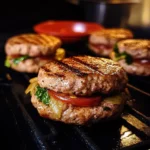
Turkey Burgers on The Stove recipe
Ingredients
- 1 ½ pounds Ground Turkey (85% lean): Choosing the right ground turkey is important. While extra-lean turkey might seem healthier, it tends to result in drier burgers. Opting for 85% lean ground turkey provides a good balance of flavor and moisture.
- Why 85% Lean? This fat percentage helps keep the burgers juicy during cooking without being overly greasy. If you prefer leaner, you can compensate with moisture-adding ingredients (see below).
- Substitution: You can use 93% lean ground turkey, but be extra careful not to overcook and consider adding more moisture-enhancing ingredients. Ground chicken can also be used as a substitute.
- ½ cup Breadcrumbs (Panko or Regular): Breadcrumbs act as a binder, helping to hold the turkey burgers together and prevent them from becoming too dense. Panko breadcrumbs offer a lighter texture, while regular breadcrumbs work just as well.
- Why Breadcrumbs? They absorb excess moisture and provide structure, preventing the burgers from crumbling.
- Substitution: Oat flour, crushed crackers (like Ritz or saltines), or even finely ground almond flour (for a gluten-free option) can be used as substitutes.
- 1 Large Egg: The egg is another essential binder, adding moisture and helping to create a cohesive patty.
- Why Egg? The proteins in the egg coagulate during cooking, binding the ingredients together.
- Substitution: For egg-free options, try 2-3 tablespoons of unsweetened applesauce or mashed avocado.
- ¼ cup Finely Diced Onion (Yellow or White): Onion adds moisture and savory flavor to the burgers. Dicing it finely ensures it cooks through evenly and doesn’t create large chunks in the burger.
- Why Onion? Adds aromatic depth and moisture.
- Substitution: Shallots or scallions can be used for a milder onion flavor. You can also sauté the onion beforehand for a sweeter, more mellow taste.
- 2 Cloves Garlic, Minced: Garlic is a flavor powerhouse, adding pungent and savory notes that complement the turkey beautifully. Freshly minced garlic is best for flavor.
- Why Garlic? Essential for savory depth and aroma.
- Substitution: Garlic powder can be used in a pinch (about ½ teaspoon), but fresh garlic is always preferred.
- 2 Tablespoons Fresh Parsley, Chopped (Optional but Recommended): Fresh parsley adds a touch of freshness and herbaceousness, brightening up the flavor profile of the burgers.
- Why Parsley? Adds freshness and visual appeal.
- Substitution: Other fresh herbs like cilantro, chives, or dill can be used depending on your flavor preferences. Dried parsley can be used (about 1 teaspoon), but fresh is always better.
- 1 Tablespoon Worcestershire Sauce: Worcestershire sauce adds umami depth and a subtle tanginess that enhances the overall flavor of the burger.
- Why Worcestershire? Adds umami richness and complexity.
- Substitution: Soy sauce, tamari (for gluten-free), or even a dash of balsamic vinegar can be used as substitutes, though Worcestershire provides a unique flavor.
- 1 teaspoon Dijon Mustard: Dijon mustard adds a subtle tang and helps to tenderize the turkey, contributing to a more flavorful and juicy burger.
- Why Dijon Mustard? Adds tanginess and tenderizing properties.
- Substitution: Yellow mustard or even a touch of horseradish can be used for a different flavor profile.
- 1 teaspoon Salt: Salt is crucial for seasoning and enhancing the flavors of all the ingredients. Use kosher salt or sea salt for best results.
- Why Salt? Essential for flavor enhancement and seasoning.
- Important Note: Season generously! Turkey can be bland on its own, so don’t be shy with the salt.
- ½ teaspoon Black Pepper: Freshly ground black pepper adds a touch of spice and complements the other seasonings.
- Why Black Pepper? Adds warmth and subtle spice.
- Substitution: White pepper or a pinch of red pepper flakes can be used for different spice notes.
- 1-2 Tablespoons Olive Oil or Cooking Oil: For cooking the burgers in the skillet. Choose an oil with a high smoke point, such as olive oil, canola oil, or avocado oil.
- Why Oil? Prevents sticking and promotes even browning and searing.
- Oil Choice: Olive oil adds a bit of flavor, while neutral oils like canola or avocado oil are flavorless.
- Optional Add-ins (for extra flavor and moisture):
- Shredded Zucchini or Carrots (¼ cup): Adds moisture and subtle sweetness. Squeeze out excess moisture after shredding.
- Finely Diced Bell Pepper (¼ cup): Adds sweetness and texture.
- Hot Sauce (to taste): For a spicy kick.
- Smoked Paprika (½ teaspoon): Adds smoky depth.
- Dried Herbs (½ teaspoon, like oregano, thyme, or Italian seasoning): Enhances the overall flavor profile.
Instructions
- Prepare the Burger Mixture: In a large mixing bowl, gently combine the ground turkey, breadcrumbs, egg, diced onion, minced garlic, chopped parsley (if using), Worcestershire sauce, Dijon mustard, salt, and black pepper.
- Gentle Mixing is Key: Avoid overmixing the turkey mixture. Overmixing can lead to tough burgers. Mix just until all ingredients are evenly combined. Use your hands or a spatula for gentle mixing.
- Form the Patties: Divide the turkey mixture into 4 equal portions. Gently shape each portion into a patty, about ¾ inch thick. Make a slight indentation in the center of each patty with your thumb. This helps prevent the burgers from puffing up in the middle while cooking.
- Patty Thickness: ¾ inch thickness is ideal for stovetop cooking, ensuring they cook through without drying out too quickly.
- Indentation Trick: The thumbprint indentation is a simple but effective technique for even cooking.
- Uniform Size: Try to make the patties as uniform in size and thickness as possible for even cooking.
- Preheat the Skillet: Place a large skillet (cast iron or heavy-bottomed skillet works best) over medium-high heat. Add 1-2 tablespoons of olive oil or cooking oil to the skillet and let it heat up until the oil shimmers. The skillet should be hot before you add the burgers to ensure a good sear.
- Skillet Choice: Cast iron skillets retain heat exceptionally well and are excellent for searing. Non-stick skillets can also be used, but may not achieve the same level of browning.
- Heat Level: Medium-high heat is crucial for searing the outside of the burgers and locking in the juices. If the heat is too low, the burgers will steam instead of sear.
- Oil Temperature: The oil is hot enough when it shimmers or a drop of water flicked into the pan sizzles immediately.
- Cook the Burgers: Carefully place the turkey patties in the hot skillet, leaving some space between them if possible to avoid overcrowding the pan (cook in batches if necessary). Sear the burgers for 4-5 minutes per side, or until they are nicely browned and release easily from the skillet.
- Don’t Overcrowd the Pan: Overcrowding the pan will lower the skillet temperature and cause the burgers to steam instead of sear. Cook in batches if needed to maintain high heat.
- Searing Time: The searing time is crucial for developing flavor and a nice crust. Don’t flip them too early! Let them cook undisturbed for 4-5 minutes per side.
- Releasing Easily: When the burgers are properly seared, they will release easily from the skillet without sticking. If they are sticking, they are not seared enough yet.
- Reduce Heat and Cook Through: After searing both sides, reduce the heat to medium and continue cooking for another 5-7 minutes, or until the burgers are cooked through and the internal temperature reaches 165°F (74°C). You can gently press down on the burgers with a spatula to ensure even cooking.
- Reduce Heat for Even Cooking: Reducing the heat after searing allows the inside of the burgers to cook through without burning the outside.
- Internal Temperature is Key: Turkey burgers must be cooked to an internal temperature of 165°F (74°C) to ensure food safety. Use an instant-read thermometer to check the temperature at the thickest part of the burger.
- Doneness Check: If you don’t have a thermometer, you can check for doneness by piercing the burger with a fork. The juices should run clear, not pink. However, a thermometer is the most accurate method.
- Rest (Optional but Recommended): Once cooked through, remove the turkey burgers from the skillet and place them on a plate or cutting board. Let them rest for a few minutes (2-3 minutes) before serving. This allows the juices to redistribute, resulting in a more tender and flavorful burger.
- Why Rest? Resting allows the muscle fibers to relax and reabsorb juices that were pushed to the center during cooking. This results in a juicier burger.
- Resting Time: Even a short resting time of 2-3 minutes can make a difference.
- Serve and Enjoy! Serve your perfectly cooked stovetop turkey burgers immediately on your favorite buns with your desired toppings.
Nutrition
- Serving Size: one normal portion
- Calories: 300-350
- Sugar: 2-3 grams
- Sodium: 400-500 mg
- Fat: 15-20 grams
- Saturated Fat: 4-6 grams
- Carbohydrates: 10-15 grams
- Fiber: 1-2 grams
- Protein: 30-35 grams
- Cholesterol: 150-180 mg