
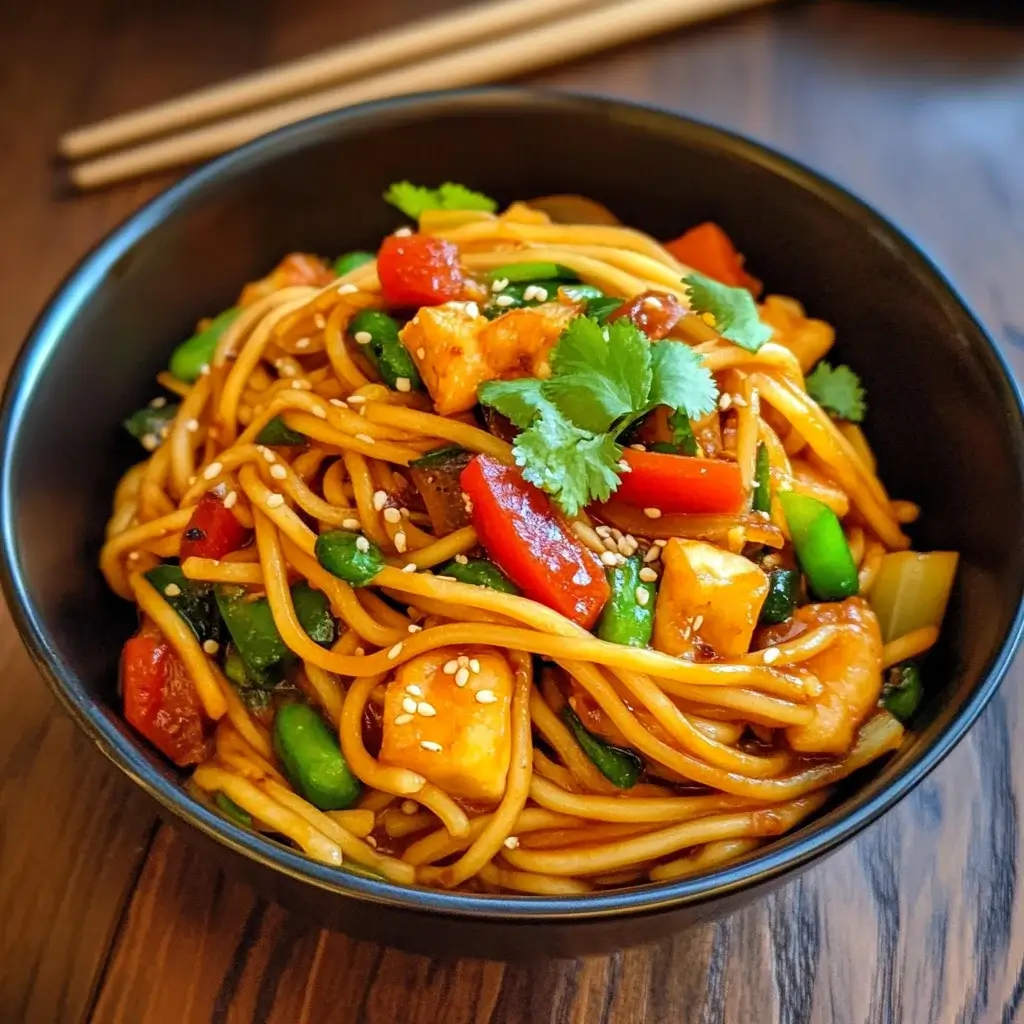
Let me tell you, my weeknights just got a whole lot more exciting! This Spicy Szechuan Noodle Stir Fry recipe has completely revolutionized our dinner routine. Gone are the days of bland and boring meals – this dish explodes with flavor! From the moment the Szechuan peppercorns hit the hot oil, releasing that incredible citrusy aroma, I knew we were in for a treat. The combination of chewy noodles, crisp vegetables, and that signature fiery Szechuan sauce is simply irresistible. My family, who are usually divided on spice levels, were all completely hooked. Even my spice-sensitive kiddo enjoyed it with a dollop of yogurt to cool things down. What I love most about this recipe, besides the incredible taste, is how quick and easy it is to make. It’s perfect for those evenings when time is short but you crave something satisfying and packed with flavor. If you’re looking to spice up your dinner repertoire and transport your taste buds to the heart of Szechuan cuisine, you absolutely must try this Spicy Szechuan Noodle Stir Fry. It’s a guaranteed winner!
Ingredients for an Authentic Spicy Szechuan Noodle Stir Fry
Crafting an authentic and flavorful Spicy Szechuan Noodle Stir Fry hinges on selecting the right ingredients and understanding their role in creating that signature Szechuan taste. Let’s delve into each component, ensuring you have everything you need for a culinary adventure:
For the Noodles:
- 1 pound Dried Noodles (Lo Mein, Chow Mein, or Udon Noodles): The foundation of our stir fry, noodles provide the satisfying chewiness and heartiness of the dish. Lo Mein noodles, typically egg noodles, are a classic choice, offering a rich flavor and excellent texture. Chow Mein noodles are thinner and often crisped up in stir-fries, but work beautifully here as well if you prefer a slightly lighter texture. Udon noodles, thick and chewy wheat noodles, are another fantastic option, providing a substantial bite and soaking up the flavorful sauce wonderfully. Choose dried noodles for the best texture and flavor, and ensure you cook them according to package directions until al dente – slightly firm to the bite, as they will continue to cook in the stir fry. If you are looking for gluten-free options, consider rice noodles or gluten-free udon noodles, but be mindful of cooking times as they can vary.
For the Stir Fry:
- 2 tablespoons Vegetable Oil (or Peanut Oil for authentic flavor): Oil is crucial for stir-frying, providing heat transfer and preventing ingredients from sticking to the wok or pan. Vegetable oil is a neutral choice, while peanut oil imparts a subtle nutty flavor that is characteristic of Asian cuisine and particularly complements Szechuan flavors. Ensure your oil has a high smoke point to withstand the high heat of stir-frying without burning. Other suitable oils include canola oil or avocado oil.
- 1 pound Protein (Tofu, Chicken, Shrimp, Beef, or Pork, optional for vegetarian): Protein adds substance and flavor to the stir fry, making it a complete and satisfying meal. Firm or extra-firm tofu, pressed to remove excess water and cubed, is a fantastic vegetarian option, offering a blank canvas to absorb the Szechuan sauce. For non-vegetarian options, consider thinly sliced chicken breast or thighs, shrimp (peeled and deveined), thinly sliced beef steak (like flank steak or sirloin), or pork tenderloin. Pre-marinating your protein (see marinade ingredients below) will enhance its flavor and tenderness. For a purely vegetarian dish, you can also skip the protein and increase the amount of vegetables or add mushrooms for extra texture and umami.
- 1 large Onion, thinly sliced: Onion forms the aromatic base of the stir fry, adding sweetness and depth of flavor. Yellow or white onions work well. Thinly slicing ensures they cook quickly and evenly in the stir fry.
- 2-3 cloves Garlic, minced: Garlic is a fundamental flavor component in Szechuan cuisine, contributing pungency and aroma. Freshly minced garlic is always preferred for its vibrant flavor.
- 1 inch Ginger, minced or grated: Ginger adds warmth, spice, and a slightly citrusy note that complements the Szechuan flavors. Fresh ginger is essential for this recipe; avoid using powdered ginger as it lacks the same complexity.
- 1 Red Bell Pepper, thinly sliced: Red bell pepper provides sweetness, color, and a satisfying crunch to the stir fry. You can also use other colors of bell peppers (yellow, orange) or a mix for visual appeal and slightly varying flavors.
- 1 Green Bell Pepper, thinly sliced: Green bell pepper adds a slightly more vegetal and less sweet flavor compared to red bell pepper, contributing to the complexity of the vegetable mix.
- 1 cup Broccoli Florets: Broccoli adds a hearty cruciferous element and textural contrast to the stir fry. Cut the florets into bite-sized pieces for even cooking.
- ½ cup Carrots, julienned or thinly sliced: Carrots provide sweetness, color, and a satisfying crunch. Julienne or thin slices ensure they cook quickly and evenly.
- Optional Vegetables: Feel free to customize your stir fry with other vegetables you enjoy. Snap peas, snow peas, baby corn, mushrooms (shiitake, cremini, or oyster), bok choy, or napa cabbage are all excellent additions.
For the Spicy Szechuan Sauce:
- 3 tablespoons Soy Sauce (or Tamari for gluten-free): Soy sauce provides the salty, umami base for the sauce. Regular soy sauce works well, or you can use low-sodium soy sauce to control the salt level. Tamari is a gluten-free alternative with a richer, slightly less salty flavor.
- 2 tablespoons Rice Vinegar: Rice vinegar adds acidity and tanginess, balancing the richness of the soy sauce and the spiciness of the dish. Unseasoned rice vinegar is preferred; avoid using seasoned rice vinegar as it contains added sugar and salt that can alter the sauce’s flavor profile.
- 2 tablespoons Sesame Oil: Sesame oil contributes a distinctive nutty aroma and flavor that is essential to Asian cuisine. Toasted sesame oil is recommended for its more intense flavor. Use it sparingly as it can be quite potent.
- 1 tablespoon Cornstarch (or Arrowroot for gluten-free): Cornstarch is a thickening agent that helps to create a glossy, clingy sauce that coats the noodles and vegetables. Arrowroot starch is a gluten-free alternative with similar thickening properties.
- 1 tablespoon Sugar (white or brown): Sugar balances the savory, salty, and spicy elements of the sauce, adding a touch of sweetness. White sugar provides a clean sweetness, while brown sugar adds a hint of molasses flavor.
- 1-2 tablespoons Szechuan Chili Bean Paste (Doubanjiang): This is the key ingredient for authentic Szechuan flavor and spiciness. Szechuan chili bean paste (Doubanjiang) is a fermented soybean paste with chili peppers, imparting a complex, savory, spicy, and slightly fermented flavor. Start with 1 tablespoon and add more to taste, depending on your spice preference. Look for authentic Doubanjiang at Asian grocery stores; Lee Kum Kee brand is a widely available and reputable option.
- 1-2 teaspoons Szechuan Peppercorns, toasted and ground: Szechuan peppercorns are another essential element for authentic Szechuan flavor. They are not actually peppers but dried berries that create a unique “málà” sensation – a tingling, numbing spice that is characteristic of Szechuan cuisine. Toasting the peppercorns in a dry pan for a few minutes before grinding enhances their aroma and flavor. Grind them coarsely or finely, depending on your preference. Start with 1 teaspoon and add more to taste.
- Optional: Red Pepper Flakes (for extra heat): If you desire even more heat, you can add a pinch of red pepper flakes to the sauce or directly to the stir fry.
Optional Marinade for Protein (if using):
- 1 tablespoon Soy Sauce:
- 1 teaspoon Cornstarch:
- 1 teaspoon Sesame Oil:
- ¼ teaspoon White Pepper (or Black Pepper):
By gathering these high-quality ingredients and understanding their roles, you are well-prepared to create a truly delicious and authentic Spicy Szechuan Noodle Stir Fry that will tantalize your taste buds.
Step-by-Step Instructions for Cooking Spicy Szechuan Noodle Stir Fry
Crafting a flavorful Spicy Szechuan Noodle Stir Fry is a rewarding culinary experience. Follow these detailed, step-by-step instructions to ensure a delicious and authentic result every time:
1. Prepare the Noodles:
- Cook the noodles according to package directions. Whether you’re using lo mein, chow mein, udon, or rice noodles, follow the instructions on the packaging to cook them until al dente – slightly firm to the bite. Overcooking will result in mushy noodles in the stir fry.
- Once cooked, drain the noodles thoroughly in a colander. Rinse them briefly with cold water to stop the cooking process and prevent them from sticking together (especially important for egg noodles and rice noodles).
- Toss the drained noodles with a little sesame oil to prevent sticking and set aside.
2. Prepare the Protein (if using):
- If using protein (tofu, chicken, beef, shrimp, pork): Cut your chosen protein into bite-sized pieces. For tofu, press it firmly to remove excess water and then cube it. Thinly slice chicken, beef, or pork against the grain for tenderness. Peel and devein shrimp.
- Marinate the Protein (Optional but Recommended): In a bowl, combine the marinade ingredients: 1 tablespoon soy sauce, 1 teaspoon cornstarch, 1 teaspoon sesame oil, and ¼ teaspoon white pepper (or black pepper). Add the protein to the marinade and toss to coat evenly. Let it marinate for at least 15 minutes, or up to 30 minutes in the refrigerator. Marinating enhances the flavor and tenderness of the protein.
3. Prepare the Vegetables:
- Wash and prepare all your vegetables. Thinly slice the onion, red bell pepper, and green bell pepper. Mince the garlic and ginger. Cut broccoli florets into bite-sized pieces. Julienne or thinly slice carrots. Prepare any other vegetables you are using (snap peas, snow peas, mushrooms, etc.). Having all vegetables prepped and ready to go before you start stir-frying is crucial for a smooth and efficient cooking process.
4. Make the Spicy Szechuan Sauce:
- In a small bowl, whisk together all the sauce ingredients: 3 tablespoons soy sauce, 2 tablespoons rice vinegar, 2 tablespoons sesame oil, 1 tablespoon cornstarch, 1 tablespoon sugar, 1-2 tablespoons Szechuan chili bean paste (Doubanjiang), and 1-2 teaspoons toasted and ground Szechuan peppercorns (and optional red pepper flakes if using). Whisk until the cornstarch is fully dissolved and the sauce is smooth. Set aside.
5. Stir Fry the Protein (if using):
- Heat a wok or large skillet over high heat until it is very hot. Add 1 tablespoon of vegetable oil (or peanut oil) and swirl to coat the bottom of the wok or pan.
- If using protein, add the marinated protein to the hot wok or pan in a single layer (avoid overcrowding). Stir-fry for 2-3 minutes, or until the protein is cooked through and lightly browned. Remove the cooked protein from the wok or pan and set aside. Cooking protein in batches if necessary to avoid overcrowding and ensure proper browning.
6. Stir Fry the Vegetables:
- Add another tablespoon of vegetable oil to the wok or pan. Add the sliced onion and stir-fry for 1-2 minutes, until softened and fragrant.
- Add the minced garlic and ginger and stir-fry for another 30 seconds, until fragrant (be careful not to burn the garlic).
- Add the bell peppers, broccoli florets, and carrots (and any other harder vegetables you are using). Stir-fry for 3-5 minutes, or until the vegetables are crisp-tender – cooked through but still retaining some crunch.
7. Combine Noodles, Protein, Vegetables, and Sauce:
- Add the cooked noodles to the wok or pan with the vegetables. Toss to combine.
- Pour the prepared Szechuan sauce over the noodles and vegetables. Stir-fry everything together for 2-3 minutes, or until the sauce has thickened and evenly coated the noodles and vegetables. Ensure the sauce is heated through and glossy.
- If using protein, return the cooked protein to the wok or pan and toss to combine, heating it through.
8. Serve Immediately:
- Remove the Spicy Szechuan Noodle Stir Fry from the heat and serve immediately. Garnish with optional toppings like chopped scallions, sesame seeds, or extra chili flakes for added visual appeal and flavor. Serve hot and enjoy!
Following these step-by-step instructions will guide you through creating a flavorful and authentic Spicy Szechuan Noodle Stir Fry that is sure to impress. Enjoy the vibrant flavors and textures of this classic dish!
Nutrition Facts for Spicy Szechuan Noodle Stir Fry
Understanding the nutritional content of your meals is important. Here’s a breakdown of the approximate nutrition facts for a serving of Spicy Szechuan Noodle Stir Fry. Please note that these are estimates and can vary based on specific ingredients, protein choice, and portion sizes.
Servings: 4-6
Approximate Nutrition Facts per Serving (based on 1/5 of the stir fry, using chicken as protein and lo mein noodles):
- Calories: 550-650 kcal
- Protein: 30-40g (can vary based on protein choice and amount)
- Fat: 20-30g
- Saturated Fat: 4-6g
- Unsaturated Fat: 15-25g
- Cholesterol: 100-150mg (can vary based on protein choice)
- Sodium: 800-1200mg (can vary depending on soy sauce and chili bean paste used)
- Carbohydrates: 60-80g
- Fiber: 5-8g
- Sugar: 10-15g
- Vitamin A: 50-70% DV (Daily Value)
- Vitamin C: 80-100% DV
- Iron: 15-20% DV
Key Nutritional Highlights:
- Good Source of Protein: Depending on the protein you choose (chicken, beef, tofu, etc.), this stir fry is a good source of protein, essential for muscle building, repair, and overall body function.
- Rich in Vitamins and Minerals: The abundance of vegetables provides a wealth of vitamins and minerals, particularly vitamins A and C, as well as fiber and antioxidants.
- Source of Complex Carbohydrates: Noodles provide complex carbohydrates, which are a primary source of energy and fiber. Choosing whole wheat noodles or adding more vegetables can further increase the fiber content.
- Moderate Fat Content: While containing fat from oil and protein, the stir fry can be relatively moderate in fat, especially if using leaner protein options and controlling the amount of oil used. Healthy fats from sesame oil are beneficial.
- Sodium Content: Be mindful of the sodium content, primarily from soy sauce and chili bean paste. Using low-sodium soy sauce and controlling the amount of chili bean paste can help reduce sodium intake.
Tips to Make it Healthier:
- Choose Lean Protein: Opt for lean protein sources like chicken breast, shrimp, or tofu to reduce fat and calorie content.
- Increase Vegetables: Load up on vegetables! Adding more vegetables will increase fiber, vitamins, and minerals without significantly increasing calories. Focus on non-starchy vegetables like broccoli, bell peppers, carrots, and leafy greens.
- Use Whole Wheat Noodles: If possible, choose whole wheat noodles for a higher fiber content and more sustained energy release.
- Reduce Oil: Use oil sparingly when stir-frying. Ensure your wok or pan is hot enough to prevent sticking with minimal oil.
- Control Sauce Portions: Be mindful of the amount of sauce you use, as it can contribute to sodium and sugar intake. Use low-sodium soy sauce and reduce added sugar if desired.
- Serve with Brown Rice (Optional): If serving with rice, choose brown rice over white rice for higher fiber and nutrient content. However, the stir fry is already substantial with noodles, so rice may be optional.
Remember that these are approximate values, and the actual nutrition facts may vary. You can use online nutrition calculators for more precise values based on the specific brands and quantities of ingredients you use. Enjoy this flavorful and relatively nutritious Spicy Szechuan Noodle Stir Fry in moderation as part of a balanced diet!
Preparation Time for Spicy Szechuan Noodle Stir Fry
Planning your cooking time is essential for a smooth and efficient meal preparation. Here’s a breakdown of the preparation time for Spicy Szechuan Noodle Stir Fry:
Total Time: Approximately 45-60 minutes
Active Preparation Time: Approximately 30-40 minutes
Inactive Time (Marinating – Optional): Approximately 15-20 minutes (can overlap with other prep)
Detailed Breakdown:
- Noodle Preparation:
- Cooking Noodles: 10-15 minutes (mostly inactive while noodles cook)
- Draining and Rinsing: 2 minutes
- Tossing with Sesame Oil: 1 minute
- Total Noodle Time: Approximately 13-18 minutes (5 minutes active + 8-13 minutes inactive)
- Protein Preparation (if using):
- Cutting Protein: 5-10 minutes
- Marinating Protein (Optional): 15-20 minutes (inactive, can overlap with vegetable prep)
- Total Protein Time: Approximately 20-30 minutes (10-15 minutes active + 15-20 minutes inactive if marinating)
- Vegetable Preparation:
- Washing and Chopping Vegetables: 15-20 minutes (active)
- Total Vegetable Time: 15-20 minutes (active)
- Sauce Preparation:
- Mixing Sauce Ingredients: 5 minutes (active)
- Total Sauce Time: 5 minutes (active)
- Stir Frying:
- Stir Frying Protein (if using): 5-7 minutes (active)
- Stir Frying Vegetables: 5-7 minutes (active)
- Combining Noodles, Protein, Vegetables, and Sauce: 5 minutes (active)
- Total Stir Fry Time: 15-19 minutes (active)
Summary of Time Allocation:
- Active Preparation: 30-40 minutes (Vegetable prep, protein prep, sauce prep, stir frying)
- Inactive Time: 15-20 minutes (Protein marinating, noodle cooking – some overlap possible)
- Total Time: Approximately 45-60 minutes
Tips to Speed Up Preparation:
- Use Pre-cut Vegetables: Purchase pre-cut vegetables like broccoli florets, sliced bell peppers, and julienned carrots to save time on chopping.
- Marinate Protein While Prepping Vegetables: Marinate the protein while you are washing and chopping the vegetables to maximize efficiency.
- Cook Noodles While Prepping Vegetables: Start cooking the noodles while you are preparing the vegetables. This allows for multitasking and efficient use of time.
- Prepare Sauce in Advance: You can make the Szechuan sauce a day or two ahead of time and store it in the refrigerator. This will save you a few minutes on cooking day.
- Use a Wok or Large Skillet: A wok or large skillet with high sides is essential for stir-frying, allowing you to cook ingredients quickly and efficiently at high heat.
By understanding the preparation time breakdown and utilizing these time-saving tips, you can efficiently prepare and enjoy a delicious Spicy Szechuan Noodle Stir Fry, even on busy weeknights.
How to Serve Spicy Szechuan Noodle Stir Fry
Spicy Szechuan Noodle Stir Fry is a complete and satisfying meal on its own, but offering complementary sides and serving suggestions can elevate the dining experience. Here are some delicious ways to serve it:
As a Main Course (Single Dish Meal):
- Serve Hot and Fresh: The best way to enjoy Szechuan Noodle Stir Fry is to serve it hot and fresh immediately after cooking. The noodles and vegetables will have the best texture and the flavors will be most vibrant.
- Garnish Generously: Garnish with chopped scallions (green onions), toasted sesame seeds, and a sprinkle of red pepper flakes (if desired for extra heat) for visual appeal and added flavor.
- Individual Bowls or Family Style: Serve in individual bowls for a casual meal or family style in a large serving dish for sharing.
With Complementary Side Dishes:
- Spring Rolls or Egg Rolls: Crispy spring rolls or egg rolls provide a delightful textural contrast to the stir fry and complement the Asian flavors. Choose vegetarian or meat-filled options.
- Dumplings or Potstickers: Steamed or pan-fried dumplings or potstickers (gyoza) offer another delicious savory element and can be a fun appetizer or side.
- Cucumber Salad: A refreshing cucumber salad with a light vinaigrette or sesame dressing provides a cool and crisp counterpoint to the spicy and rich stir fry.
- Edamame: Steamed edamame (soybeans in pods), lightly salted, is a simple and healthy side dish that adds protein and fiber.
- Seaweed Salad: A light and briny seaweed salad offers a refreshing and palate-cleansing side that complements the richness of the stir fry.
- Miso Soup: A warm bowl of miso soup provides a comforting and umami-rich starter or side dish.
Serving Styles and Occasions:
- Weeknight Dinner: Perfect for a quick and flavorful weeknight dinner. Its speed of preparation makes it ideal for busy evenings.
- Casual Weekend Meal: Great for a relaxed weekend lunch or dinner. Easy to prepare and satisfying for a casual gathering.
- Potlucks or Gatherings: Szechuan Noodle Stir Fry can be made in larger quantities and is a crowd-pleasing dish for potlucks, parties, or casual gatherings. Keep it warm in a slow cooker or chafing dish if serving buffet style.
- Leftovers for Lunch: Leftovers are delicious and can be enjoyed cold or reheated for lunch the next day.
Drink Pairings:
- Cold Beer: A crisp and refreshing lager or pale ale pairs well with the spiciness and richness of the stir fry.
- White Wine (Off-Dry): An off-dry white wine like Riesling or Gewürztraminer can complement the spice and sweetness of the Szechuan sauce.
- Iced Tea or Lemonade: For non-alcoholic options, iced tea or lemonade are refreshing choices that balance the spiciness.
- Sparkling Water: Simple sparkling water or flavored sparkling water can cleanse the palate between bites and provide a refreshing contrast.
By considering these serving suggestions and side dish pairings, you can create a complete and enjoyable dining experience centered around your flavorful Spicy Szechuan Noodle Stir Fry, suitable for any occasion from a quick weeknight meal to a casual gathering.
Additional Tips for the Best Spicy Szechuan Noodle Stir Fry
To take your Spicy Szechuan Noodle Stir Fry from delicious to truly exceptional, here are five essential tips that will elevate your cooking and ensure a restaurant-quality dish every time:
1. High Heat is Key for Stir Frying: Stir frying is a high-heat, quick-cooking technique. Ensure your wok or skillet is preheated to high heat before adding oil and ingredients. High heat is crucial for achieving that signature wok hei – a slightly smoky, charred flavor that is characteristic of authentic stir fries. It also ensures vegetables remain crisp-tender and protein browns properly. Work in batches if necessary to maintain high heat and avoid overcrowding the pan, which can lower the temperature and lead to steaming instead of stir-frying.
2. Toast Your Szechuan Peppercorns for Maximum Flavor: Don’t skip toasting the Szechuan peppercorns! Toasting them in a dry pan over medium heat for a few minutes before grinding enhances their aroma and flavor profile dramatically. Toast until fragrant and slightly smoking, being careful not to burn them. Toasted Szechuan peppercorns release their essential oils, resulting in a more complex and potent “málà” sensation that is essential for authentic Szechuan flavor.
3. Use Authentic Szechuan Chili Bean Paste (Doubanjiang): For a truly authentic Szechuan flavor, using genuine Szechuan chili bean paste (Doubanjiang) is paramount. This fermented soybean paste with chili peppers is the heart of Szechuan cuisine and provides a depth of flavor that cannot be replicated with other chili pastes or sauces. Look for Doubanjiang at Asian grocery stores; Lee Kum Kee brand is a reliable and widely available option. Avoid substituting with generic chili garlic sauce or other chili pastes, as they lack the unique fermented and complex flavor of Doubanjiang.
4. Prepare All Ingredients Before You Start Stir Frying (Mise en Place): Stir frying is a fast-paced cooking process. Having all your ingredients prepped and ready to go – vegetables chopped, protein marinated, sauce mixed, noodles cooked – is absolutely essential for a successful stir fry. This culinary principle, known as “mise en place,” ensures that you can add ingredients to the wok in the correct order and timing without scrambling or burning anything. It makes the cooking process much smoother, more efficient, and less stressful, leading to a better overall result.
5. Taste and Adjust Seasoning at the End: Taste your stir fry at the end of cooking and adjust the seasoning to your preference. Szechuan cuisine is all about balance – savory, spicy, sweet, tangy, and numbing. You may need to add more soy sauce for saltiness, rice vinegar for tanginess, sugar for sweetness, chili bean paste or Szechuan peppercorns for spiciness and numbing sensation. Taste and adjust incrementally until you achieve your desired flavor balance. Remember that flavors will continue to meld and develop slightly after cooking.
By incorporating these five additional tips into your cooking process, you’ll be able to create a Spicy Szechuan Noodle Stir Fry that is bursting with authentic flavor, perfectly textured, and truly impressive – a dish that rivals your favorite restaurant takeout!
Frequently Asked Questions (FAQ) About Spicy Szechuan Noodle Stir Fry
Here are five frequently asked questions about making Spicy Szechuan Noodle Stir Fry, along with detailed answers to help you master this flavorful dish:
Q1: Can I make this Szechuan Noodle Stir Fry vegetarian or vegan?
A: Absolutely! This recipe is easily adaptable for vegetarian and vegan diets. Here’s how:
- Vegetarian: Simply omit the meat protein. Tofu is an excellent vegetarian protein option. Use firm or extra-firm tofu, pressed to remove excess water, and cubed. You can marinate the tofu as suggested for other proteins to enhance its flavor. You can also increase the amount of vegetables or add mushrooms (like shiitake, oyster, or cremini) for added heartiness and umami.
- Vegan: To make it vegan, ensure all ingredients are vegan-friendly. Most noodles (lo mein, chow mein, udon – check labels for egg in lo mein/chow mein), vegetables, soy sauce, rice vinegar, sesame oil, cornstarch, sugar, chili bean paste, and Szechuan peppercorns are vegan. Use tofu as your protein source. Double-check your chili bean paste to ensure it doesn’t contain any non-vegan ingredients. If using pre-made noodles, check the ingredient list to ensure they are vegan (some egg noodles are not). Rice noodles are naturally vegan and gluten-free.
Q2: How spicy is this stir fry? Can I adjust the spice level?
A: The spice level of this stir fry is moderate to spicy, primarily due to the Szechuan chili bean paste and Szechuan peppercorns. However, you can easily adjust the spice level to your preference:
- Reduce Chili Bean Paste: Start with 1 tablespoon of chili bean paste and add more gradually to taste. Chili bean paste contributes both heat and flavor, so reducing it will lessen the overall spiciness.
- Reduce Szechuan Peppercorns: Szechuan peppercorns contribute the unique numbing “málà” spice. Reduce the amount of peppercorns or use less ground peppercorns to lessen the numbing sensation and overall spiciness.
- Omit Red Pepper Flakes: If the recipe calls for optional red pepper flakes, omit them entirely for a milder dish.
- Add Chili Oil (for extra heat): If you want to increase the heat, you can add a drizzle of chili oil or a pinch of extra red pepper flakes at the end of cooking or as a topping.
- Serve with Yogurt or Sour Cream: Serve the stir fry with a dollop of plain yogurt or sour cream on the side. Dairy helps to cool down the palate and can mitigate the spiciness for those who are sensitive to heat.
Q3: Can I use different types of noodles for this stir fry?
A: Yes, you can definitely experiment with different types of noodles! While lo mein, chow mein, and udon are suggested, here are other noodle options that work well:
- Rice Noodles: Flat rice noodles (like wide rice noodles or pad see ew noodles) or thin rice vermicelli are excellent gluten-free options. They have a different texture than wheat noodles but absorb the sauce beautifully. Soak rice noodles according to package directions before stir-frying.
- Spaghetti or Linguine: In a pinch, you can even use spaghetti or linguine. Cook them al dente and toss with a little oil before adding to the stir fry. The texture will be different from Asian noodles, but they can work as a substitute.
- Soba Noodles (Buckwheat Noodles): Soba noodles have a nutty flavor and slightly firm texture that pairs well with Asian flavors. Cook them al dente and rinse before adding to the stir fry.
- Glass Noodles (Cellophane Noodles): Glass noodles are very thin, transparent noodles made from mung bean starch. They have a delicate texture and readily absorb flavors. Soak them in hot water until softened before adding to the stir fry.
Q4: Can I make this stir fry ahead of time? How do I store leftovers?
A: Szechuan Noodle Stir Fry is best enjoyed fresh, but you can prepare components ahead of time and store leftovers properly:
- Prepare Components Ahead: You can chop vegetables, marinate protein, and make the Szechuan sauce ahead of time (up to a day in advance) and store them separately in the refrigerator. This will significantly reduce cooking time on the day you plan to make the stir fry.
- Cook Noodles Just Before Stir Frying: It’s best to cook the noodles just before you plan to stir fry to prevent them from becoming mushy or sticking together. If you cook them in advance, rinse them with cold water and toss with a little oil, then reheat them briefly in boiling water before adding to the stir fry.
- Store Leftovers Properly: Store leftover stir fry in an airtight container in the refrigerator for up to 3-4 days.
- Reheating Leftovers: Reheat leftovers in a wok or skillet over medium heat, adding a splash of water or broth if needed to prevent drying out. You can also reheat in the microwave. Note that the texture of the noodles and vegetables may soften slightly upon reheating.
Q5: Where can I find Szechuan Chili Bean Paste (Doubanjiang) and Szechuan Peppercorns?
A: You can find these essential Szechuan ingredients at:
- Asian Grocery Stores: This is the best place to find authentic Doubanjiang and Szechuan peppercorns, along with a wider variety of Asian ingredients. Look for brands like Lee Kum Kee Doubanjiang (Toban Djan).
- Well-Stocked Supermarkets: Some well-stocked supermarkets, especially those with international food sections, may carry Doubanjiang and Szechuan peppercorns. Check the Asian food aisle or the international section.
- Online Retailers: Online retailers like Amazon and specialty food websites are great options for sourcing these ingredients if you can’t find them locally. Search for “Szechuan chili bean paste” (Doubanjiang) and “Szechuan peppercorns.”
- Spice Shops: Specialty spice shops may carry high-quality Szechuan peppercorns.
These FAQs should answer common questions and help you feel confident in making your own delicious and authentic Spicy Szechuan Noodle Stir Fry. Enjoy cooking and experimenting with this flavorful dish!
Print
Spicy Szechuan Noodle Stir Fry recipe
Ingredients
For the Noodles:
-
- 1 pound Dried Noodles (Lo Mein, Chow Mein, or Udon Noodles): The foundation of our stir fry, noodles provide the satisfying chewiness and heartiness of the dish. Lo Mein noodles, typically egg noodles, are a classic choice, offering a rich flavor and excellent texture. Chow Mein noodles are thinner and often crisped up in stir-fries, but work beautifully here as well if you prefer a slightly lighter texture. Udon noodles, thick and chewy wheat noodles, are another fantastic option, providing a substantial bite and soaking up the flavorful sauce wonderfully. Choose dried noodles for the best texture and flavor, and ensure you cook them according to package directions until al dente – slightly firm to the bite, as they will continue to cook in the stir fry. If you are looking for gluten-free options, consider rice noodles or gluten-free udon noodles, but be mindful of cooking times as they can vary.
For the Stir Fry:
-
- 2 tablespoons Vegetable Oil (or Peanut Oil for authentic flavor): Oil is crucial for stir-frying, providing heat transfer and preventing ingredients from sticking to the wok or pan. Vegetable oil is a neutral choice, while peanut oil imparts a subtle nutty flavor that is characteristic of Asian cuisine and particularly complements Szechuan flavors. Ensure your oil has a high smoke point to withstand the high heat of stir-frying without burning. Other suitable oils include canola oil or avocado oil.
-
- 1 pound Protein (Tofu, Chicken, Shrimp, Beef, or Pork, optional for vegetarian): Protein adds substance and flavor to the stir fry, making it a complete and satisfying meal. Firm or extra-firm tofu, pressed to remove excess water and cubed, is a fantastic vegetarian option, offering a blank canvas to absorb the Szechuan sauce. For non-vegetarian options, consider thinly sliced chicken breast or thighs, shrimp (peeled and deveined), thinly sliced beef steak (like flank steak or sirloin), or pork tenderloin. Pre-marinating your protein (see marinade ingredients below) will enhance its flavor and tenderness. For a purely vegetarian dish, you can also skip the protein and increase the amount of vegetables or add mushrooms for extra texture and umami.
-
- 1 large Onion, thinly sliced: Onion forms the aromatic base of the stir fry, adding sweetness and depth of flavor. Yellow or white onions work well. Thinly slicing ensures they cook quickly and evenly in the stir fry.
-
- 2–3 cloves Garlic, minced: Garlic is a fundamental flavor component in Szechuan cuisine, contributing pungency and aroma. Freshly minced garlic is always preferred for its vibrant flavor.
-
- 1 inch Ginger, minced or grated: Ginger adds warmth, spice, and a slightly citrusy note that complements the Szechuan flavors. Fresh ginger is essential for this recipe; avoid using powdered ginger as it lacks the same complexity.
-
- 1 Red Bell Pepper, thinly sliced: Red bell pepper provides sweetness, color, and a satisfying crunch to the stir fry. You can also use other colors of bell peppers (yellow, orange) or a mix for visual appeal and slightly varying flavors.
-
- 1 Green Bell Pepper, thinly sliced: Green bell pepper adds a slightly more vegetal and less sweet flavor compared to red bell pepper, contributing to the complexity of the vegetable mix.
-
- 1 cup Broccoli Florets: Broccoli adds a hearty cruciferous element and textural contrast to the stir fry. Cut the florets into bite-sized pieces for even cooking.
-
- ½ cup Carrots, julienned or thinly sliced: Carrots provide sweetness, color, and a satisfying crunch. Julienne or thin slices ensure they cook quickly and evenly.
-
- Optional Vegetables: Feel free to customize your stir fry with other vegetables you enjoy. Snap peas, snow peas, baby corn, mushrooms (shiitake, cremini, or oyster), bok choy, or napa cabbage are all excellent additions.
For the Spicy Szechuan Sauce:
-
- 3 tablespoons Soy Sauce (or Tamari for gluten-free): Soy sauce provides the salty, umami base for the sauce. Regular soy sauce works well, or you can use low-sodium soy sauce to control the salt level. Tamari is a gluten-free alternative with a richer, slightly less salty flavor.
-
- 2 tablespoons Rice Vinegar: Rice vinegar adds acidity and tanginess, balancing the richness of the soy sauce and the spiciness of the dish. Unseasoned rice vinegar is preferred; avoid using seasoned rice vinegar as it contains added sugar and salt that can alter the sauce’s flavor profile.
-
- 2 tablespoons Sesame Oil: Sesame oil contributes a distinctive nutty aroma and flavor that is essential to Asian cuisine. Toasted sesame oil is recommended for its more intense flavor. Use it sparingly as it can be quite potent.
-
- 1 tablespoon Cornstarch (or Arrowroot for gluten-free): Cornstarch is a thickening agent that helps to create a glossy, clingy sauce that coats the noodles and vegetables. Arrowroot starch is a gluten-free alternative with similar thickening properties.
-
- 1 tablespoon Sugar (white or brown): Sugar balances the savory, salty, and spicy elements of the sauce, adding a touch of sweetness. White sugar provides a clean sweetness, while brown sugar adds a hint of molasses flavor.
-
- 1–2 tablespoons Szechuan Chili Bean Paste (Doubanjiang): This is the key ingredient for authentic Szechuan flavor and spiciness. Szechuan chili bean paste (Doubanjiang) is a fermented soybean paste with chili peppers, imparting a complex, savory, spicy, and slightly fermented flavor. Start with 1 tablespoon and add more to taste, depending on your spice preference. Look for authentic Doubanjiang at Asian grocery stores; Lee Kum Kee brand is a widely available and reputable option.
-
- 1–2 teaspoons Szechuan Peppercorns, toasted and ground: Szechuan peppercorns are another essential element for authentic Szechuan flavor. They are not actually peppers but dried berries that create a unique “málà” sensation – a tingling, numbing spice that is characteristic of Szechuan cuisine. Toasting the peppercorns in a dry pan for a few minutes before grinding enhances their aroma and flavor. Grind them coarsely or finely, depending on your preference. Start with 1 teaspoon and add more to taste.
-
- Optional: Red Pepper Flakes (for extra heat): If you desire even more heat, you can add a pinch of red pepper flakes to the sauce or directly to the stir fry.
Optional Marinade for Protein (if using):
-
- 1 tablespoon Soy Sauce:
-
- 1 teaspoon Cornstarch:
-
- 1 teaspoon Sesame Oil:
-
- ¼ teaspoon White Pepper (or Black Pepper):
Instructions
1. Prepare the Noodles:
-
- Cook the noodles according to package directions. Whether you’re using lo mein, chow mein, udon, or rice noodles, follow the instructions on the packaging to cook them until al dente – slightly firm to the bite. Overcooking will result in mushy noodles in the stir fry.
-
- Once cooked, drain the noodles thoroughly in a colander. Rinse them briefly with cold water to stop the cooking process and prevent them from sticking together (especially important for egg noodles and rice noodles).
-
- Toss the drained noodles with a little sesame oil to prevent sticking and set aside.
2. Prepare the Protein (if using):
-
- If using protein (tofu, chicken, beef, shrimp, pork): Cut your chosen protein into bite-sized pieces. For tofu, press it firmly to remove excess water and then cube it. Thinly slice chicken, beef, or pork against the grain for tenderness. Peel and devein shrimp.
-
- Marinate the Protein (Optional but Recommended): In a bowl, combine the marinade ingredients: 1 tablespoon soy sauce, 1 teaspoon cornstarch, 1 teaspoon sesame oil, and ¼ teaspoon white pepper (or black pepper). Add the protein to the marinade and toss to coat evenly. Let it marinate for at least 15 minutes, or up to 30 minutes in the refrigerator. Marinating enhances the flavor and tenderness of the protein.
3. Prepare the Vegetables:
-
- Wash and prepare all your vegetables. Thinly slice the onion, red bell pepper, and green bell pepper. Mince the garlic and ginger. Cut broccoli florets into bite-sized pieces. Julienne or thinly slice carrots. Prepare any other vegetables you are using (snap peas, snow peas, mushrooms, etc.). Having all vegetables prepped and ready to go before you start stir-frying is crucial for a smooth and efficient cooking process.
4. Make the Spicy Szechuan Sauce:
-
- In a small bowl, whisk together all the sauce ingredients: 3 tablespoons soy sauce, 2 tablespoons rice vinegar, 2 tablespoons sesame oil, 1 tablespoon cornstarch, 1 tablespoon sugar, 1-2 tablespoons Szechuan chili bean paste (Doubanjiang), and 1-2 teaspoons toasted and ground Szechuan peppercorns (and optional red pepper flakes if using). Whisk until the cornstarch is fully dissolved and the sauce is smooth. Set aside.
5. Stir Fry the Protein (if using):
-
- Heat a wok or large skillet over high heat until it is very hot. Add 1 tablespoon of vegetable oil (or peanut oil) and swirl to coat the bottom of the wok or pan.
-
- If using protein, add the marinated protein to the hot wok or pan in a single layer (avoid overcrowding). Stir-fry for 2-3 minutes, or until the protein is cooked through and lightly browned. Remove the cooked protein from the wok or pan and set aside. Cooking protein in batches if necessary to avoid overcrowding and ensure proper browning.
6. Stir Fry the Vegetables:
-
- Add another tablespoon of vegetable oil to the wok or pan. Add the sliced onion and stir-fry for 1-2 minutes, until softened and fragrant.
-
- Add the minced garlic and ginger and stir-fry for another 30 seconds, until fragrant (be careful not to burn the garlic).
-
- Add the bell peppers, broccoli florets, and carrots (and any other harder vegetables you are using). Stir-fry for 3-5 minutes, or until the vegetables are crisp-tender – cooked through but still retaining some crunch.
7. Combine Noodles, Protein, Vegetables, and Sauce:
-
- Add the cooked noodles to the wok or pan with the vegetables. Toss to combine.
-
- Pour the prepared Szechuan sauce over the noodles and vegetables. Stir-fry everything together for 2-3 minutes, or until the sauce has thickened and evenly coated the noodles and vegetables. Ensure the sauce is heated through and glossy.
-
- If using protein, return the cooked protein to the wok or pan and toss to combine, heating it through.
8. Serve Immediately:
-
- Remove the Spicy Szechuan Noodle Stir Fry from the heat and serve immediately. Garnish with optional toppings like chopped scallions, sesame seeds, or extra chili flakes for added visual appeal and flavor. Serve hot and enjoy!
Nutrition
- Serving Size: one normal portion
- Calories: 550-650
- Sugar: 10-15g
- Sodium: 800-1200mg
- Fat: 20-30g
- Saturated Fat: 4-6g
- Unsaturated Fat: 15-25g
- Carbohydrates: 60-80g
- Fiber: 5-8g
- Protein: 30-40g
- Cholesterol: 100-150mg