


There are few culinary creations as effortlessly chic and intensely flavorful as a classic Olive Tapenade. I remember the first time I truly got tapenade. It was at a little bistro, served simply with crusty bread, and the explosion of briny, savory, and tangy notes was a revelation. Since then, making my own has become a bit of an obsession. It’s my go-to for impromptu gatherings – whip it up in minutes, and suddenly, a simple cheese board or a piece of grilled fish is elevated to something special. My family loves it as a vibrant spread in sandwiches, and I often find myself just sneaking spoonfuls straight from the jar. It’s amazing how a few simple ingredients can create such a complex and satisfying condiment.
What is Olive Tapenade? A Taste of Provence
Olive Tapenade is a rich, savory spread or condiment with deep roots in Mediterranean cuisine, particularly from Provence, France. The name “tapenade” actually comes from the Provençal word for capers, “tapenas.” While olives are undoubtedly the star, traditional tapenade is a harmonious blend of finely chopped or puréed olives, capers, and anchovies, all bound together with olive oil. Often, garlic, lemon juice, and herbs like thyme or rosemary are added to enhance its complex flavor profile.
The resulting paste is intensely flavorful:
- Salty and Briny: From the olives, capers, and (traditionally) anchovies.
- Umami-Rich: Especially when anchovies are included, lending a deep savory quality.
- Tangy: Lemon juice cuts through the richness and brightens the flavors.
- Herbaceous: If herbs are used, they add aromatic notes.
- Fruity and Peppery: From good quality olive oil.
While classic recipes are fairly defined, modern interpretations abound. Some omit anchovies for a vegetarian or vegan version, some use a mix of green and black olives, and others introduce ingredients like sun-dried tomatoes, artichoke hearts, or different spices. Regardless of the variation, the essence of tapenade remains: a powerfully flavored, versatile condiment that brings a taste of the Mediterranean sun to any dish.
Why You’ll Fall in Love with This Homemade Olive Tapenade Recipe
If you’ve only ever tried store-bought tapenade, you’re in for a treat. Making it fresh at home is a game-changer, and here’s why this recipe will become a staple:
- Incredibly Easy & Quick: Seriously, if you have a food processor, this comes together in under 10 minutes. Even chopping by hand doesn’t take long. It’s maximum flavor for minimal effort.
- Intensely Flavorful: Homemade tapenade boasts a freshness and vibrancy that pre-packaged versions often lack. You control the quality of ingredients, leading to a superior taste.
- Versatile Wonder: This isn’t just a dip. It’s a spread for sandwiches and crostini, a topping for grilled fish or chicken, a mix-in for pasta sauces, a flavor bomb for salad dressings, and so much more.
- Fully Customizable: Love garlic? Add more. Prefer it spicier? A pinch of red pepper flakes. Want it vegan? Skip the anchovies. You can tailor it perfectly to your taste preferences and dietary needs.
- Cost-Effective: Making your own tapenade is often more economical than buying gourmet versions, especially if you use olives from the deli bar or good quality jarred varieties.
- Impressive for Entertaining: It looks sophisticated and tastes complex, making it an ideal appetizer for guests. Serve it with some crusty bread or fresh vegetables, and watch it disappear.
- Healthy Fats & Antioxidants: Olives and olive oil are packed with healthy monounsaturated fats and antioxidants, making this a relatively guilt-free indulgence.
This homemade olive tapenade recipe is your secret weapon for adding instant gourmet flair to everyday meals and special occasions alike.
Complete Ingredients with Amounts
Here’s what you’ll need to craft this delicious and authentic-tasting olive tapenade:
- 1 ½ cups (about 225g) pitted Kalamata olives, drained (or a mix of your favorite olives)
- 2 tablespoons capers, drained (and rinsed if very salty)
- 2-3 anchovy fillets, packed in oil, drained (optional, but traditional for umami depth)
- 2 cloves garlic, roughly chopped
- 1 tablespoon fresh lemon juice
- 1 teaspoon Dijon mustard (optional, for a bit of tang and emulsification)
- ½ teaspoon fresh thyme leaves (or ¼ teaspoon dried thyme)
- ¼ cup extra virgin olive oil, plus more if needed
- Freshly ground black pepper, to taste (salt is often unnecessary due to salty ingredients)
A Closer Look at Key Ingredients:
- Olives: Kalamata olives are a popular choice for their rich, fruity flavor and deep purple color. However, you can use other varieties or a mix!
- Niçoise olives: Small, purplish-brown, with a nutty, mellow flavor – very traditional.
- Manzanilla olives (green): Mild, slightly smoky. Using green olives will give a different color and a sharper, brinier taste.
- Castelvetrano olives (green): Bright green, buttery, and mild.
- Mixed gourmet olives: Often available at deli counters, these can provide a complex flavor profile.
Ensure they are pitted! If you buy olives with pits, you’ll need to remove them, which can be done by gently crushing the olive with the side of a chef’s knife and pulling the pit out.
- Capers: These are the pickled flower buds of the caper bush. They provide a tangy, pungent, and salty burst of flavor that is essential to tapenade. Drain them well. If they are packed in a lot of salt, give them a quick rinse.
- Anchovy Fillets: These tiny, salt-cured fish fillets (usually sold in jars or tins packed in oil) are a traditional component that adds an incredible depth of savory, umami flavor. If you’re hesitant, start with just one or two. For a vegetarian/vegan version, simply omit them. You can add a tiny pinch of dulse flakes or a dash of vegan Worcestershire sauce for a subtle umami boost if desired, or just let the olives and capers shine.
- Garlic: Fresh garlic is best. Adjust the amount to your preference. Roasting the garlic beforehand can mellow its flavor if you find raw garlic too pungent.
- Lemon Juice: Freshly squeezed lemon juice brightens all the flavors and adds a necessary acidity to balance the saltiness and richness.
- Dijon Mustard: While not strictly traditional in all recipes, a small amount of Dijon mustard can add a subtle tang and helps to emulsify the tapenade, giving it a slightly creamier consistency.
- Herbs: Fresh thyme is classic and complements the olives beautifully. Rosemary is another excellent choice. You can also use a pinch of Herbes de Provence. If using dried herbs, use about half the amount of fresh.
- Extra Virgin Olive Oil: Use a good quality extra virgin olive oil, as its flavor will shine through. It helps bind the ingredients and adds richness and a smooth texture.
Step-by-Step Instructions
Making olive tapenade is incredibly simple, especially with a food processor.
- Prepare Ingredients:
- Ensure your olives are pitted. Drain them well.
- Drain the capers. If they are very salty, give them a quick rinse and pat dry.
- Drain the anchovy fillets (if using).
- Roughly chop the garlic cloves.
- Measure out the lemon juice, Dijon mustard (if using), and thyme.
- Combine in Food Processor:
- Add the pitted olives, drained capers, anchovy fillets (if using), chopped garlic, fresh lemon juice, Dijon mustard (if using), and thyme to the bowl of a food processor.
- Pulse for Texture:
- Pulse the mixture 8-10 times until the ingredients are roughly chopped and combined. Scrape down the sides of the bowl with a spatula.
- For a chunkier tapenade: Be careful not to over-process. You want some texture.
- For a smoother tapenade: Process for a bit longer.
- Add Olive Oil:
- With the food processor running on low, slowly drizzle in the extra virgin olive oil until the tapenade reaches your desired consistency. You may need a little more or less oil. It should be a spreadable paste, not too oily and not too dry.
- Season and Adjust:
- Taste the tapenade. Add freshly ground black pepper as needed. It’s unlikely you’ll need salt due to the olives, capers, and anchovies, but taste and add a tiny pinch if you feel it’s necessary.
- If it’s too thick, add a little more olive oil. If it’s too tart, a tiny pinch of sugar can balance it (though rarely needed). If not tangy enough, a little more lemon juice.
- Rest (Optional but Recommended):
- Transfer the tapenade to a clean jar or bowl. For the best flavor, cover and refrigerate for at least 30 minutes (or even better, a few hours or overnight) to allow the flavors to meld and deepen.
- Serve:
- Bring to room temperature before serving for optimal flavor.
No Food Processor? No Problem!
You can absolutely make tapenade by hand:
- Finely chop the olives, capers, anchovies (if using), and garlic with a sharp knife. Aim for a consistent, small dice.
- Transfer the chopped mixture to a bowl.
- Stir in the lemon juice, Dijon mustard (if using), and thyme.
- Gradually stir in the olive oil until you reach the desired consistency.
- Season with pepper to taste. The texture will be naturally chunkier, which many people prefer.
Nutrition Facts
- Servings: This recipe makes approximately 1.5 to 2 cups of tapenade.
- Serving Size for Nutrition Estimate: 1 tablespoon (approx. 15g)
- Calories per serving (1 tablespoon): Approximately 35-50 calories.
(Disclaimer: Nutritional information is an estimate and can vary significantly based on the specific types of olives used, amount of oil, and inclusion/exclusion of anchovies. For precise nutritional data, using a nutrition calculator with your exact ingredients is recommended.)
Tapenade is rich in healthy monounsaturated fats from olives and olive oil, and provides antioxidants. It’s relatively low in carbohydrates and, when made without anchovies, is suitable for vegan diets. It is, however, high in sodium due to the nature of its core ingredients (olives, capers, anchovies).
Preparation Time
- Preparation Time: 10-15 minutes (if using a food processor and pre-pitted olives)
- Resting Time (Optional): 30 minutes to overnight
- Total Time (excluding resting): 10-15 minutes
This is truly a quick condiment to whip up, making it perfect for last-minute appetizers or adding a burst of flavor to a meal.
How to Serve Your Delicious Olive Tapenade
Olive tapenade is incredibly versatile. Here are some fantastic ways to enjoy it:
- Classic Appetizer:
- Serve with slices of crusty baguette or toasted crostini.
- Pair with an assortment of crackers (plain, seeded, whole wheat).
- Offer alongside fresh vegetable crudités like carrot sticks, cucumber slices, bell pepper strips, and celery sticks.
- Include it as part of a Mediterranean mezze platter with hummus, feta cheese, stuffed grape leaves, and pita bread.
- Spreads & Fillings:
- Spread it on sandwiches or wraps for an intense flavor boost (fantastic with roasted vegetables, chicken, or tuna).
- Use it as a base on bruschetta, topped with fresh tomatoes or roasted red peppers.
- Stuff chicken breasts or pork tenderloin with tapenade before baking or grilling.
- Mix into deviled egg filling for a savory twist.
- With Main Courses:
- Spoon over grilled or baked fish (salmon, cod, halibut, sea bass).
- Serve as a condiment alongside grilled chicken, lamb chops, or steak.
- Dollop onto roasted vegetables (potatoes, zucchini, eggplant).
- In Pasta & Grains:
- Toss with hot pasta for a quick and flavorful sauce (add a splash of pasta water to loosen).
- Stir into cooked quinoa, couscous, or farro for a savory grain salad.
- Mix into orzo or rice pilaf.
- Other Creative Uses:
- Whisk a spoonful into vinaigrettes for salads.
- Spread on pizza dough instead of or along with tomato sauce.
- Fold into omelets or scrambled eggs.
- Serve with a cheese board – it pairs wonderfully with goat cheese, feta, and manchego.
The possibilities are nearly endless!
Additional Tips for the Perfect Tapenade (5 Tips)
- Quality Ingredients are Key: Since tapenade has few ingredients, the quality of each one really matters. Use good quality olives that you enjoy eating on their own, fresh garlic, fresh lemon juice, and a flavorful extra virgin olive oil.
- Don’t Over-Process (Unless You Want Pâté): For a classic tapenade texture, aim for a finely chopped or slightly coarse paste, not a completely smooth purée. Pulse in the food processor and check frequently. If you overdo it, it will still taste good, but the texture will be more like an olive pâté.
- Taste and Adjust Seasoning Carefully: Olives, capers, and anchovies are all naturally salty. Always taste before adding any extra salt. Freshly ground black pepper and lemon juice are your primary tools for balancing the flavors.
- Allow Flavors to Meld: While tapenade can be served immediately, it benefits significantly from a resting period. Even 30 minutes in the refrigerator will allow the flavors to marry and deepen. It’s even better made a day ahead.
- Experiment with Olive Blends: Don’t be afraid to mix different types of olives. A combination of Kalamata for richness, Niçoise for earthiness, and perhaps some green olives like Picholine or Manzanilla for a brighter, sharper note can create a wonderfully complex tapenade.
Storage and Make-Ahead
Olive tapenade is an excellent make-ahead condiment.
- Storage:
- Transfer the finished tapenade to an airtight container (a glass jar with a tight-fitting lid is ideal).
- To help preserve it and prevent drying, you can pour a thin layer of extra virgin olive oil over the surface of the tapenade before sealing the container.
- Store in the refrigerator.
- Shelf Life:
- Properly stored, homemade olive tapenade will last for up to 1-2 weeks in the refrigerator. If you’ve omitted anchovies, it might last a bit longer.
- Always use a clean spoon to serve to avoid introducing bacteria.
- Make-Ahead:
- Tapenade is perfect for making a day or two in advance of when you plan to serve it. This actually improves the flavor as the ingredients meld.
- Freezing:
- While you can freeze olive tapenade, the texture may change slightly upon thawing (it might become a bit more watery or the oil may separate).
- To freeze, place it in a freezer-safe airtight container, leaving a little headspace. It can be frozen for up to 2-3 months.
- Thaw overnight in the refrigerator. Stir well before serving and, if needed, add a touch more olive oil to restore consistency.
FAQ Section (5 Q/A)
Q1: Can I make olive tapenade without anchovies?
- A: Absolutely! While traditional tapenade includes anchovies for their umami depth, you can easily omit them for a vegetarian or vegan version. The tapenade will still be delicious, focusing more on the pure flavors of the olives, capers, and herbs. Some people add a pinch of seaweed flakes (like dulse) or a tiny drop of vegan Worcestershire sauce to mimic some of the savory depth, but it’s not essential.
Q2: What are the best olives to use for tapenade?
- A: Kalamata olives are a very popular choice due to their rich, fruity flavor and satisfying texture. Niçoise olives are also traditional and offer a more delicate, nutty taste. However, you can use almost any good-quality pitted olive you enjoy. Many people like a blend of black and green olives (like Castelvetrano or Manzanilla) for a more complex flavor and visual appeal. The key is to use olives you find flavorful.
Q3: Can I make tapenade without a food processor?
- A: Yes, definitely! Before food processors, tapenade was always made by hand. You’ll need a good sharp knife and a cutting board. Finely chop all the solid ingredients (olives, capers, garlic, anchovies if using) until they reach a small, relatively uniform consistency. Then, transfer to a bowl and stir in the liquid ingredients (olive oil, lemon juice, mustard if using) and herbs. The texture will be chunkier, which many people prefer as it feels more rustic.
Q4: My tapenade tastes too salty. How can I fix it?
- A: This can happen easily given the saltiness of olives, capers, and anchovies.
- Dilute: The easiest way is to make a larger batch by adding more unsalted olives and olive oil to the existing tapenade, effectively diluting the salt concentration.
- Add Acidity/Sweetness: A little extra lemon juice can sometimes help balance saltiness. In some cases, a tiny pinch of sugar or a small amount of a sweet ingredient like finely chopped sun-dried tomato (not oil-packed if you’re trying to reduce oiliness too) can counteract salt.
- Serve with bland accompaniments: Pair the salty tapenade with unsalted crackers, plain bread, or mild fresh vegetables.
- For future batches, rinse capers if they are packed in salt, use fewer anchovies, or choose lower-sodium olives if available. Always taste before adding any extra salt.
Q5: Is olive tapenade healthy?
- A: Olive tapenade can be a healthy addition to your diet in moderation. It’s rich in monounsaturated fats (from olives and olive oil), which are heart-healthy. Olives also contain antioxidants like oleuropein and vitamin E. Capers offer flavonoids like rutin and quercetin. However, it is typically high in sodium due to the preserved nature of olives, capers, and anchovies. So, while it offers beneficial nutrients, portion control is key, especially for individuals monitoring their sodium intake.
Concluding Thoughts: Elevate Your Everyday with Homemade Tapenade
Homemade olive tapenade is a shining example of how a few simple, high-quality ingredients can transform into something extraordinarily flavorful. It’s a taste of the Mediterranean sun, bottled (or rather, jarred) up and ready to bring a touch of rustic elegance to your table. Whether you’re slathering it on a piece of crusty bread, dolloping it onto grilled fish, or stirring it into pasta, its intense, briny, and savory character is undeniably captivating.
Forget the often underwhelming store-bought versions. Once you realize how quick and easy it is to make your own, and how much fresher and more vibrant it tastes, you’ll never look back. This recipe is a fantastic starting point, but don’t hesitate to experiment and make it your own. So, gather your olives, capers, and a good bottle of olive oil, and prepare to be amazed by the power of this simple, yet sophisticated, Provençal classic. Enjoy the process, and more importantly, enjoy every delicious bite!
Print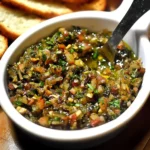
Olive Tapenade Recipe
Ingredients
-
- 1 ½ cups (about 225g) pitted Kalamata olives, drained (or a mix of your favorite olives)
-
- 2 tablespoons capers, drained (and rinsed if very salty)
-
- 2–3 anchovy fillets, packed in oil, drained (optional, but traditional for umami depth)
-
- 2 cloves garlic, roughly chopped
-
- 1 tablespoon fresh lemon juice
-
- 1 teaspoon Dijon mustard (optional, for a bit of tang and emulsification)
-
- ½ teaspoon fresh thyme leaves (or ¼ teaspoon dried thyme)
-
- ¼ cup extra virgin olive oil, plus more if needed
-
- Freshly ground black pepper, to taste (salt is often unnecessary due to salty ingredients)
Instructions
-
- Prepare Ingredients:
-
- Ensure your olives are pitted. Drain them well.
-
- Drain the capers. If they are very salty, give them a quick rinse and pat dry.
-
- Drain the anchovy fillets (if using).
-
- Roughly chop the garlic cloves.
-
- Measure out the lemon juice, Dijon mustard (if using), and thyme.
-
- Prepare Ingredients:
-
- Combine in Food Processor:
-
- Add the pitted olives, drained capers, anchovy fillets (if using), chopped garlic, fresh lemon juice, Dijon mustard (if using), and thyme to the bowl of a food processor.
-
- Combine in Food Processor:
-
- Pulse for Texture:
-
- Pulse the mixture 8-10 times until the ingredients are roughly chopped and combined. Scrape down the sides of the bowl with a spatula.
-
- For a chunkier tapenade: Be careful not to over-process. You want some texture.
-
- For a smoother tapenade: Process for a bit longer.
-
- Pulse for Texture:
-
- Add Olive Oil:
-
- With the food processor running on low, slowly drizzle in the extra virgin olive oil until the tapenade reaches your desired consistency. You may need a little more or less oil. It should be a spreadable paste, not too oily and not too dry.
-
- Add Olive Oil:
-
- Season and Adjust:
-
- Taste the tapenade. Add freshly ground black pepper as needed. It’s unlikely you’ll need salt due to the olives, capers, and anchovies, but taste and add a tiny pinch if you feel it’s necessary.
-
- If it’s too thick, add a little more olive oil. If it’s too tart, a tiny pinch of sugar can balance it (though rarely needed). If not tangy enough, a little more lemon juice.
-
- Season and Adjust:
-
- Rest (Optional but Recommended):
-
- Transfer the tapenade to a clean jar or bowl. For the best flavor, cover and refrigerate for at least 30 minutes (or even better, a few hours or overnight) to allow the flavors to meld and deepen.
-
- Rest (Optional but Recommended):
-
- Serve:
-
- Bring to room temperature before serving for optimal flavor.
-
- Serve:
Nutrition
- Serving Size: one normal portion
- Calories: 35-50