

Growing up in a family with gluten sensitivities meant many traditional comfort foods were off-limits. Cornish pasties, with their savory fillings encased in a golden, flaky crust, were one such forbidden delight that I often dreamt of. Years later, armed with a passion for gluten-free baking and a determined spirit, I embarked on a mission to recreate this iconic dish for everyone to enjoy, regardless of dietary restrictions. After countless trials and tweaks, I finally cracked the code, and let me tell you, the result was nothing short of magical. These gluten-free Cornish pasties are not just “good for gluten-free” – they are genuinely delicious, boasting a perfectly tender and flaky crust that cradles a hearty, flavorful filling of beef, potatoes, and swede. My family, now seasoned gluten-free connoisseurs, devoured them with gusto, declaring them even better than any traditional pasty they remembered. This recipe is a testament to the fact that gluten-free baking can be just as satisfying and delicious as its conventional counterpart, bringing back the joy of classic comfort food to those who once thought it was out of reach.
Ingredients
Crafting delicious gluten-free Cornish pasties begins with carefully selecting the right ingredients, especially for the pastry. Gluten-free baking requires a different approach than traditional wheat-based baking, and understanding each ingredient’s role is key to achieving that perfect flaky crust and flavorful filling.
For the Gluten-Free Pasty Dough:
- 300g Gluten-Free All-Purpose Flour Blend (with xanthan gum): This is the foundation of our gluten-free pastry. It’s crucial to use a blend specifically designed for gluten-free baking, and one that already contains xanthan gum. Xanthan gum acts as a binder, mimicking the role of gluten in providing structure and elasticity. Different brands of gluten-free flour blends can vary, so if your blend doesn’t contain xanthan gum, you will need to add it separately (see tip below). Look for blends that are a mix of rice flour, tapioca starch, potato starch, and possibly corn starch for a balanced texture.
- 150g Cold Unsalted Butter (cut into small cubes): Cold butter is essential for creating flaky pastry, whether gluten-free or traditional. The cold butter creates layers of fat within the dough, which melt during baking and create steam, resulting in a light and flaky texture. Ensure the butter is very cold right up until you start working it into the flour.
- 75g Cold Vegetable Shortening (cut into small cubes): Vegetable shortening, also cold, adds to the flakiness and tenderness of the pastry. It has a higher fat content than butter and a different melting point, contributing to a slightly different texture. You can use all butter if preferred, but shortening often enhances the flakiness in gluten-free pastry. Make sure it is also very cold.
- 1 teaspoon Salt: Salt enhances the flavors of both the pastry and the filling. It is essential for a well-balanced taste.
- 120-150ml Ice Water: Ice water is crucial for bringing the dough together. The cold temperature keeps the butter and shortening solid, preventing the gluten-free flour from developing “gluten” (which we don’t want in this case as we are working with gluten-free flours, but we still want to avoid overworking and toughening the dough). Add the water gradually, as the amount needed can vary depending on the humidity and the specific flour blend.
- 1 teaspoon Xanthan Gum (if not already in your flour blend): If your gluten-free flour blend does not already contain xanthan gum, you must add it. Xanthan gum is a vital ingredient in gluten-free baking, acting as a binder and stabilizer. It helps to give the dough structure and prevents it from being crumbly.
For the Traditional Cornish Pasty Filling:
- 300g Beef Skirt Steak or Braising Steak (cut into small ½ inch cubes): Traditionally, Cornish pasties use beef skirt or braising steak. These cuts are flavorful and become wonderfully tender when cooked inside the pasty. Cut the beef into small cubes to ensure it cooks through during baking. Avoid very lean cuts as a little fat is essential for flavor and moisture.
- 300g Potatoes (peeled and diced into ½ inch cubes): Potatoes are a staple in Cornish pasties, providing bulk and a creamy texture when cooked. Use a floury potato variety like Maris Piper or King Edward, which will become fluffy and absorb the flavors of the filling. Dice them into similar sized cubes as the beef for even cooking.
- 150g Swede (Rutabaga) (peeled and diced into ½ inch cubes): Swede (rutabaga) is a traditional and essential ingredient in authentic Cornish pasties. It adds a slightly sweet and earthy flavor that complements the beef and potatoes beautifully. Do not substitute it with other root vegetables if you want to achieve the authentic Cornish pasty taste. Dice it into similar sized cubes as the other vegetables.
- 1 Medium Onion (roughly chopped): Onion adds savory depth and aroma to the filling. Roughly chopping it ensures it cooks down and softens during baking, releasing its flavor throughout the pasty.
- 2 tablespoons Fresh Parsley (chopped): Fresh parsley adds a touch of freshness and herbaceousness to the filling, balancing the richness of the beef and root vegetables.
- 1 ½ teaspoons Salt (or to taste): Salt is essential for seasoning the filling. Adjust to your taste, remembering that the pastry is also seasoned.
- ½ teaspoon Black Pepper (freshly ground, or to taste): Freshly ground black pepper adds a warm and slightly spicy note to the filling. Adjust to your preference.
- 2 tablespoons Beef Dripping or Butter (optional, for extra richness): Traditionally, Cornish pasties are made with a little beef dripping for extra richness and flavor. If you don’t have beef dripping, butter is a good substitute. This is optional but recommended for a more authentic and richer flavor.
For Egg Wash (Optional, for golden color):
- 1 Egg (beaten with 1 tablespoon milk or water): An egg wash is optional but highly recommended to give the pasties a beautiful golden-brown color and a glossy finish when baked. Beating the egg with a little milk or water makes it easier to brush and creates a smoother, shinier finish.
Instructions
Follow these detailed, step-by-step instructions to create perfect gluten-free Cornish pasties, from making the delicate pastry to assembling and baking these savory delights.
Step 1: Prepare the Gluten-Free Pasty Dough (30 minutes + chilling time)
- Combine Dry Ingredients: In a large bowl, whisk together the gluten-free all-purpose flour blend (with xanthan gum), and salt. If your flour blend doesn’t contain xanthan gum, whisk in 1 teaspoon of xanthan gum at this stage. This ensures the dry ingredients are evenly distributed.
- Add Cold Butter and Shortening: Add the cubed cold butter and cold vegetable shortening to the flour mixture.
- Cut in the Fat: Using your fingertips or a pastry blender, quickly work the butter and shortening into the flour until the mixture resembles coarse breadcrumbs. You should still see small pieces of butter and shortening – this is crucial for flakiness. Work quickly to keep the fat cold. Avoid overworking the mixture.
- Add Ice Water Gradually: Start adding ice water, one tablespoon at a time, mixing gently with a knife or spatula after each addition. Mix until the dough just comes together into a shaggy mass. Be careful not to add too much water – you want a dough that is moist but not sticky. You might not need all the water, or you might need a little more depending on your flour blend and the humidity.
- Form Dough into Discs: Gently bring the dough together with your hands and divide it in half. Shape each half into a disc, about 1 inch thick. Wrap each disc tightly in plastic wrap.
- Chill the Dough: Refrigerate the dough discs for at least 1 hour, or preferably 2 hours, to allow the gluten-free flour to fully hydrate and the fat to firm up. This chilling time is crucial for making the dough easier to handle and for achieving a flaky texture. You can chill the dough for up to 24 hours if needed.
Step 2: Prepare the Cornish Pasty Filling (20 minutes)
- Combine Filling Ingredients: In a large bowl, combine the cubed beef skirt steak, diced potatoes, diced swede, chopped onion, chopped fresh parsley, salt, and black pepper. If using beef dripping or butter, add it to the bowl as well.
- Mix Filling Thoroughly: Mix all the filling ingredients together thoroughly to ensure they are evenly distributed and seasoned. This also helps to combine the flavors.
Step 3: Assemble the Gluten-Free Cornish Pasties (30 minutes)
- Preheat Oven and Prepare Baking Sheets: Preheat your oven to 400°F (200°C). Line two large baking sheets with parchment paper.
- Roll Out Dough: Remove one disc of chilled dough from the refrigerator. On a lightly floured gluten-free surface (use a little of your gluten-free flour blend), roll out the dough disc into a circle about 12 inches in diameter and about ⅛ inch thick. Gluten-free dough can be more delicate than wheat-based dough, so roll gently and evenly. If the dough sticks, lightly dust with more gluten-free flour.
- Cut Out Circles: Using a plate or bowl (about 7-8 inches in diameter) as a guide, cut out circles from the rolled dough. You should get about 2-3 circles from each dough disc, depending on the size you choose. Re-roll scraps once to get a couple more circles, but try to minimize re-rolling as it can make the pastry tougher.
- Fill the Pasties: Place a generous mound of the prepared filling (about 1/6th of the total filling) onto one half of each dough circle, leaving a border of about 1 inch around the edge. Do not overfill the pasties, as this can make them difficult to seal and they might burst during baking.
- Fold and Seal: Fold the other half of the dough circle over the filling to create a semi-circle shape. Crimp the edges tightly to seal the pasty. You can use your fingers to press the edges together, then use a fork to crimp them for a decorative and secure seal. Traditionally, Cornish pasties are crimped along the top edge, but you can crimp along the curved edge if you find it easier with gluten-free dough. Ensure the seal is tight to prevent the filling from leaking out during baking.
- Repeat with Remaining Dough and Filling: Repeat steps 2-5 with the remaining dough and filling to make a total of 6 Cornish pasties.
- Arrange on Baking Sheets: Place the assembled pasties on the prepared baking sheets, leaving some space between them.
Step 4: Bake the Gluten-Free Cornish Pasties (45-50 minutes)
- Egg Wash (Optional): If using egg wash, brush the tops of the pasties evenly with the beaten egg wash. This will give them a golden-brown and glossy finish.
- Bake: Bake in the preheated oven for 45-50 minutes, or until the pasties are golden brown and the pastry is cooked through. The baking time may vary slightly depending on your oven, so check for doneness. The filling should be cooked through and the beef tender.
- Rest Before Serving: Remove the baked pasties from the oven and let them cool on the baking sheets for about 10-15 minutes before serving. This allows the filling to settle slightly and the pastry to cool down enough to handle.
Step 5: Serve and Enjoy!
Serve the gluten-free Cornish pasties warm. They are delicious on their own or with a side of gravy or chutney.
Nutrition Facts
(Estimated Nutrition Facts per Pasty – assuming 6 pasties per recipe and average ingredient amounts. Nutritional values are approximate and can vary based on specific ingredients and portion sizes.)
Serving Size: 1 Cornish Pasty
Servings Per Recipe: 6
Approximate Nutritional Information per Serving:
- Calories: 500-600 kcal
- Protein: 20-25g
- Fat: 30-35g (varies depending on pastry and beef fat content)
- Saturated Fat: 15-20g
- Unsaturated Fat: 10-15g
- Carbohydrates: 40-50g
- Sugars: 5-7g (naturally occurring in vegetables)
- Fiber: 5-7g
- Sodium: 700-900mg (varies depending on seasoning and ingredients)
Important Note: This nutritional information is an estimate. Actual values may vary based on the specific gluten-free flour blend, ingredients used, portion sizes, and baking methods. For more accurate nutritional information, you can use a nutrition calculator and input the exact ingredients and amounts you use. Remember that gluten-free products can sometimes be higher in fat and sugar to compensate for the lack of gluten, so always check ingredient labels if you are concerned about specific nutritional values.
Preparation Time
- Prep Time: 1 hour (includes dough making and filling preparation)
- Chilling Time: Minimum 1 hour, ideally 2 hours (for dough)
- Cook Time: 45-50 minutes (baking time)
- Resting Time: 10-15 minutes (after baking)
- Total Time (excluding chilling): Approximately 1 hour 45 minutes – 2 hours
- Total Time (including optimal chilling): Approximately 3 hours 45 minutes – 4 hours
How to Serve
Gluten-free Cornish pasties are a complete meal in themselves, but they can be enjoyed in various ways and with different accompaniments. Here are some serving suggestions to enhance your Cornish pasty experience:
Traditional Serving:
- Warm and Plain: The most traditional way to serve Cornish pasties is warm, straight from the oven, and enjoyed on their own. Their hearty filling and flavorful pastry make them satisfying and delicious without any additions.
- With Gravy: A classic accompaniment is a simple beef gravy or onion gravy. The gravy adds extra moisture and richness, complementing the savory filling of the pasty.
Modern Serving Ideas:
- With Chutney or Relish: A tangy chutney, such as apple chutney or onion marmalade, or a piccalilli relish can provide a delicious contrast to the richness of the pasty.
- With Salad: A fresh green salad with a light vinaigrette can balance the heartiness of the pasty and add a refreshing element to the meal.
- With Baked Beans: Baked beans are a comforting and classic side dish that pairs well with savory pasties.
- As Part of a Ploughman’s Lunch: Include a Cornish pasty as part of a gluten-free ploughman’s lunch, alongside cheese, pickles, salad, and crusty gluten-free bread.
Serving Occasions:
- Lunch or Light Dinner: Cornish pasties are perfect for a satisfying lunch or a cozy light dinner.
- Picnics and Packed Lunches: They are ideal for picnics as they are portable and hold their shape well. Once cooled, they are delicious cold as well.
- Casual Gatherings: Serve them at casual gatherings, parties, or buffets as a crowd-pleasing savory option.
- Comfort Food Meal: Enjoy them as a comforting and warming meal during colder months.
Additional Tips
Here are 5 essential tips to ensure your gluten-free Cornish pasties are a success, especially when working with gluten-free dough:
- Keep Ingredients Cold: Cold ingredients are absolutely crucial for flaky gluten-free pastry. Ensure your butter, shortening, and water are all very cold. If you find your dough is becoming too warm while you are working with it, return it to the refrigerator for a few minutes to firm up. This prevents the fat from melting into the flour and ensures distinct layers for flakiness.
- Don’t Overwork the Dough: Gluten-free dough doesn’t develop gluten, but overworking it can still make it tough. Mix the dough just until it comes together, and handle it gently when rolling and shaping the pasties. Over-mixing can lead to a denser, less tender pastry.
- Chill the Dough Properly: The chilling time is not just for convenience; it’s essential for hydrating the gluten-free flour and firming up the fat. Don’t skip the chilling step, and aim for at least 2 hours, or even longer, for best results. Well-chilled dough is much easier to roll and handle.
- Use a Good Quality Gluten-Free Flour Blend: The success of gluten-free baking heavily relies on the quality of the flour blend. Choose a reputable gluten-free all-purpose flour blend that is specifically designed for baking and contains xanthan gum (or add xanthan gum separately). Experiment with different brands to find one you prefer, as they can vary in taste and texture.
- Blind Bake for Extra Crispness (Optional): For an extra crispy bottom crust, you can partially blind bake the pasty bases before adding the filling. After cutting out the dough circles and placing them on baking sheets, prick the bases with a fork and bake for 10 minutes before filling. This step is optional but can help prevent a soggy bottom, especially if your filling is quite moist.
FAQ Section
Q1: Can I make these pasties ahead of time?
A: Yes, you can prepare the gluten-free pasty dough up to 2 days in advance and store it in the refrigerator, wrapped tightly in plastic wrap. You can also assemble the pasties ahead of time and store them unbaked in the refrigerator for up to 24 hours. Bake them just before serving. Baked pasties are best enjoyed fresh but can be reheated gently in the oven or microwave, although the pastry may lose some of its crispness.
Q2: Can I freeze gluten-free Cornish pasties?
A: Yes, you can freeze both unbaked and baked gluten-free Cornish pasties. To freeze unbaked pasties, assemble them completely, place them on a baking sheet lined with parchment paper, and freeze until solid. Then, transfer them to a freezer-safe bag or container. Bake from frozen, adding about 15-20 minutes to the baking time. To freeze baked pasties, let them cool completely, then wrap them individually in plastic wrap and place them in a freezer-safe bag or container. Reheat from frozen or thawed in the oven or microwave.
Q3: I can’t find swede (rutabaga). Can I substitute it with another vegetable?
A: While swede (rutabaga) is a traditional and essential ingredient for authentic Cornish pasties, if you absolutely cannot find it, you could try substituting it with parsnip or turnip. However, be aware that the flavor will be slightly different. Parsnip will be sweeter, and turnip will be more peppery. Swede provides a unique slightly sweet and earthy flavor that is characteristic of Cornish pasties.
Q4: My gluten-free pastry is cracking when I roll it. What am I doing wrong?
A: Gluten-free pastry can be more prone to cracking than wheat-based pastry. Ensure your dough is well-chilled, as cold dough is less likely to crack. Roll it out gently and evenly, and don’t roll it too thin. If it starts to crack, you can gently patch it up with your fingers or a small piece of dough. Also, make sure you are using a good quality gluten-free flour blend and that it contains xanthan gum.
Q5: Can I make vegetarian or vegan gluten-free Cornish pasties?
A: Yes, you can easily adapt this recipe to be vegetarian or vegan. For vegetarian pasties, replace the beef with a hearty vegetable like mushrooms, lentils, or vegetarian mince. For vegan pasties, ensure your vegetable shortening is vegan-friendly. You can replace butter with vegan butter or solid coconut oil. For the filling, use vegan butter or oil instead of beef dripping. You can also omit the egg wash or use a plant-based milk wash (like soy milk or oat milk) with a pinch of sugar for browning.
Print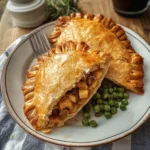
Gluten-Free Cornish Pasty Recipe
Ingredients
For the Gluten-Free Pasty Dough:
-
- 300g Gluten-Free All-Purpose Flour Blend (with xanthan gum): This is the foundation of our gluten-free pastry. It’s crucial to use a blend specifically designed for gluten-free baking, and one that already contains xanthan gum. Xanthan gum acts as a binder, mimicking the role of gluten in providing structure and elasticity. Different brands of gluten-free flour blends can vary, so if your blend doesn’t contain xanthan gum, you will need to add it separately (see tip below). Look for blends that are a mix of rice flour, tapioca starch, potato starch, and possibly corn starch for a balanced texture.
-
- 150g Cold Unsalted Butter (cut into small cubes): Cold butter is essential for creating flaky pastry, whether gluten-free or traditional. The cold butter creates layers of fat within the dough, which melt during baking and create steam, resulting in a light and flaky texture. Ensure the butter is very cold right up until you start working it into the flour.
-
- 75g Cold Vegetable Shortening (cut into small cubes): Vegetable shortening, also cold, adds to the flakiness and tenderness of the pastry. It has a higher fat content than butter and a different melting point, contributing to a slightly different texture. You can use all butter if preferred, but shortening often enhances the flakiness in gluten-free pastry. Make sure it is also very cold.
-
- 1 teaspoon Salt: Salt enhances the flavors of both the pastry and the filling. It is essential for a well-balanced taste.
-
- 120–150ml Ice Water: Ice water is crucial for bringing the dough together. The cold temperature keeps the butter and shortening solid, preventing the gluten-free flour from developing “gluten” (which we don’t want in this case as we are working with gluten-free flours, but we still want to avoid overworking and toughening the dough). Add the water gradually, as the amount needed can vary depending on the humidity and the specific flour blend.
-
- 1 teaspoon Xanthan Gum (if not already in your flour blend): If your gluten-free flour blend does not already contain xanthan gum, you must add it. Xanthan gum is a vital ingredient in gluten-free baking, acting as a binder and stabilizer. It helps to give the dough structure and prevents it from being crumbly.
For the Traditional Cornish Pasty Filling:
-
- 300g Beef Skirt Steak or Braising Steak (cut into small ½ inch cubes): Traditionally, Cornish pasties use beef skirt or braising steak. These cuts are flavorful and become wonderfully tender when cooked inside the pasty. Cut the beef into small cubes to ensure it cooks through during baking. Avoid very lean cuts as a little fat is essential for flavor and moisture.
-
- 300g Potatoes (peeled and diced into ½ inch cubes): Potatoes are a staple in Cornish pasties, providing bulk and a creamy texture when cooked. Use a floury potato variety like Maris Piper or King Edward, which will become fluffy and absorb the flavors of the filling. Dice them into similar sized cubes as the beef for even cooking.
-
- 150g Swede (Rutabaga) (peeled and diced into ½ inch cubes): Swede (rutabaga) is a traditional and essential ingredient in authentic Cornish pasties. It adds a slightly sweet and earthy flavor that complements the beef and potatoes beautifully. Do not substitute it with other root vegetables if you want to achieve the authentic Cornish pasty taste. Dice it into similar sized cubes as the other vegetables.
-
- 1 Medium Onion (roughly chopped): Onion adds savory depth and aroma to the filling. Roughly chopping it ensures it cooks down and softens during baking, releasing its flavor throughout the pasty.
-
- 2 tablespoons Fresh Parsley (chopped): Fresh parsley adds a touch of freshness and herbaceousness to the filling, balancing the richness of the beef and root vegetables.
-
- 1 ½ teaspoons Salt (or to taste): Salt is essential for seasoning the filling. Adjust to your taste, remembering that the pastry is also seasoned.
-
- ½ teaspoon Black Pepper (freshly ground, or to taste): Freshly ground black pepper adds a warm and slightly spicy note to the filling. Adjust to your preference.
-
- 2 tablespoons Beef Dripping or Butter (optional, for extra richness): Traditionally, Cornish pasties are made with a little beef dripping for extra richness and flavor. If you don’t have beef dripping, butter is a good substitute. This is optional but recommended for a more authentic and richer flavor.
For Egg Wash (Optional, for golden color):
-
- 1 Egg (beaten with 1 tablespoon milk or water): An egg wash is optional but highly recommended to give the pasties a beautiful golden-brown color and a glossy finish when baked. Beating the egg with a little milk or water makes it easier to brush and creates a smoother, shinier finish.
Instructions
Step 1: Prepare the Gluten-Free Pasty Dough (30 minutes + chilling time)
-
- Combine Dry Ingredients: In a large bowl, whisk together the gluten-free all-purpose flour blend (with xanthan gum), and salt. If your flour blend doesn’t contain xanthan gum, whisk in 1 teaspoon of xanthan gum at this stage. This ensures the dry ingredients are evenly distributed.
-
- Add Cold Butter and Shortening: Add the cubed cold butter and cold vegetable shortening to the flour mixture.
-
- Cut in the Fat: Using your fingertips or a pastry blender, quickly work the butter and shortening into the flour until the mixture resembles coarse breadcrumbs. You should still see small pieces of butter and shortening – this is crucial for flakiness. Work quickly to keep the fat cold. Avoid overworking the mixture.
-
- Add Ice Water Gradually: Start adding ice water, one tablespoon at a time, mixing gently with a knife or spatula after each addition. Mix until the dough just comes together into a shaggy mass. Be careful not to add too much water – you want a dough that is moist but not sticky. You might not need all the water, or you might need a little more depending on your flour blend and the humidity.
-
- Form Dough into Discs: Gently bring the dough together with your hands and divide it in half. Shape each half into a disc, about 1 inch thick. Wrap each disc tightly in plastic wrap.
-
- Chill the Dough: Refrigerate the dough discs for at least 1 hour, or preferably 2 hours, to allow the gluten-free flour to fully hydrate and the fat to firm up. This chilling time is crucial for making the dough easier to handle and for achieving a flaky texture. You can chill the dough for up to 24 hours if needed.
Step 2: Prepare the Cornish Pasty Filling (20 minutes)
-
- Combine Filling Ingredients: In a large bowl, combine the cubed beef skirt steak, diced potatoes, diced swede, chopped onion, chopped fresh parsley, salt, and black pepper. If using beef dripping or butter, add it to the bowl as well.
-
- Mix Filling Thoroughly: Mix all the filling ingredients together thoroughly to ensure they are evenly distributed and seasoned. This also helps to combine the flavors.
Step 3: Assemble the Gluten-Free Cornish Pasties (30 minutes)
-
- Preheat Oven and Prepare Baking Sheets: Preheat your oven to 400°F (200°C). Line two large baking sheets with parchment paper.
-
- Roll Out Dough: Remove one disc of chilled dough from the refrigerator. On a lightly floured gluten-free surface (use a little of your gluten-free flour blend), roll out the dough disc into a circle about 12 inches in diameter and about ⅛ inch thick. Gluten-free dough can be more delicate than wheat-based dough, so roll gently and evenly. If the dough sticks, lightly dust with more gluten-free flour.
-
- Cut Out Circles: Using a plate or bowl (about 7-8 inches in diameter) as a guide, cut out circles from the rolled dough. You should get about 2-3 circles from each dough disc, depending on the size you choose. Re-roll scraps once to get a couple more circles, but try to minimize re-rolling as it can make the pastry tougher.
-
- Fill the Pasties: Place a generous mound of the prepared filling (about 1/6th of the total filling) onto one half of each dough circle, leaving a border of about 1 inch around the edge. Do not overfill the pasties, as this can make them difficult to seal and they might burst during baking.
-
- Fold and Seal: Fold the other half of the dough circle over the filling to create a semi-circle shape. Crimp the edges tightly to seal the pasty. You can use your fingers to press the edges together, then use a fork to crimp them for a decorative and secure seal. Traditionally, Cornish pasties are crimped along the top edge, but you can crimp along the curved edge if you find it easier with gluten-free dough. Ensure the seal is tight to prevent the filling from leaking out during baking.
-
- Repeat with Remaining Dough and Filling: Repeat steps 2-5 with the remaining dough and filling to make a total of 6 Cornish pasties.
-
- Arrange on Baking Sheets: Place the assembled pasties on the prepared baking sheets, leaving some space between them.
Step 4: Bake the Gluten-Free Cornish Pasties (45-50 minutes)
-
- Egg Wash (Optional): If using egg wash, brush the tops of the pasties evenly with the beaten egg wash. This will give them a golden-brown and glossy finish.
-
- Bake: Bake in the preheated oven for 45-50 minutes, or until the pasties are golden brown and the pastry is cooked through. The baking time may vary slightly depending on your oven, so check for doneness. The filling should be cooked through and the beef tender.
-
- Rest Before Serving: Remove the baked pasties from the oven and let them cool on the baking sheets for about 10-15 minutes before serving. This allows the filling to settle slightly and the pastry to cool down enough to handle.
Step 5: Serve and Enjoy!
Serve the gluten-free Cornish pasties
Nutrition
- Serving Size: one normal portion
- Calories: 500-600
- Sugar: 5-7g
- Sodium: 700-900mg
- Fat: 30-35g
- Saturated Fat: 15-20g
- Unsaturated Fat: 10-15g
- Carbohydrates: 40-50g
- Fiber: 5-7g
- Protein: 20-25g