
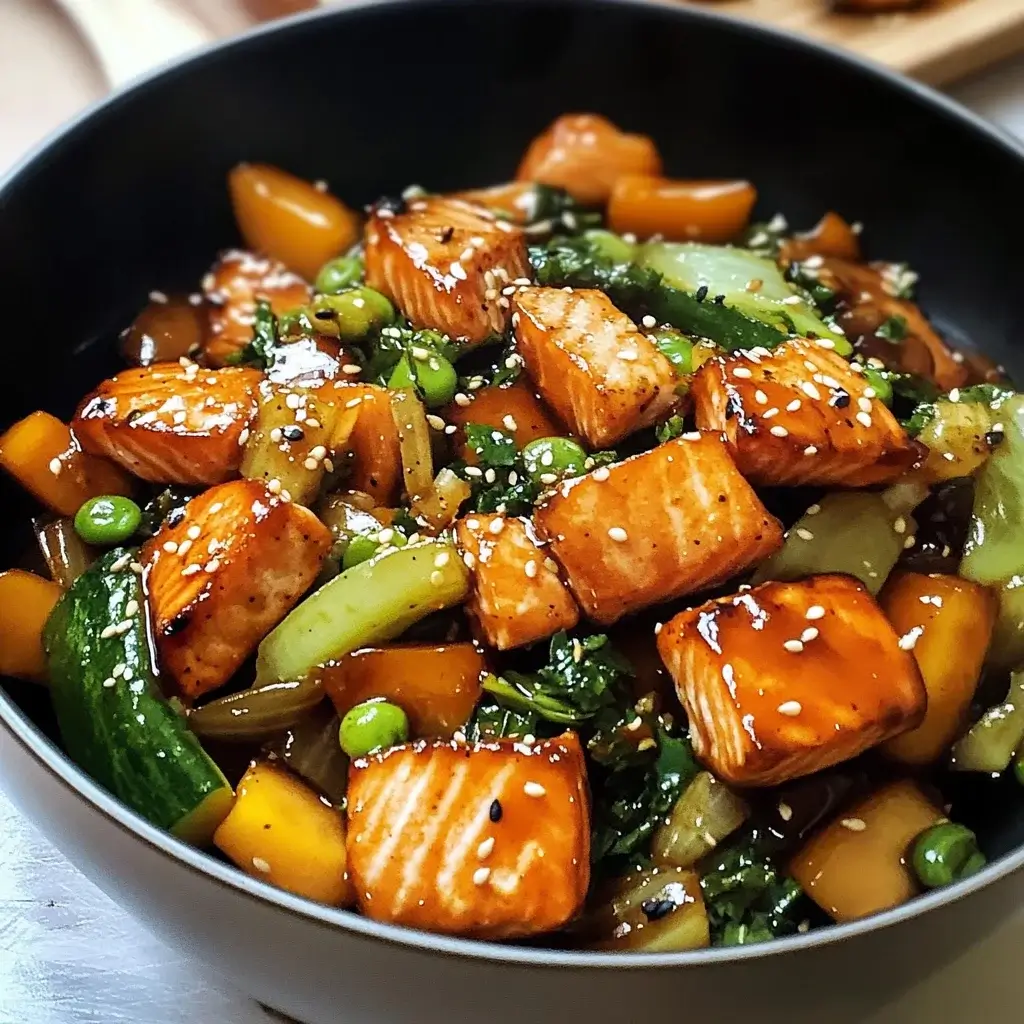
This Caramelized Salmon Stir-Fry has genuinely revolutionized my weeknight dinner game, and I’m not exaggerating! The first time I whisked together the sweet and savory sauce and watched it bubble and coat those gorgeous pink salmon cubes, I knew I was onto a winner. My partner, who can be a bit iffy with fish, absolutely adores this dish – he says the way the salmon gets those crispy, caramelized edges while staying incredibly moist inside is pure magic. Even my usually vegetable-averse teenager happily devours the colorful medley of crisp-tender veggies, all thanks to that irresistible sauce. It’s fast, it’s bursting with flavor, it looks incredible on the plate, and it makes me feel like a kitchen superstar with minimal effort. It’s now a staple in our rotation, and I’m so excited to share this gem with you!
Why This Caramelized Salmon Stir-Fry Will Be Your New Favorite
In the quest for meals that are both healthy and incredibly delicious, this Caramelized Salmon Stir-Fry stands out as a true champion. It’s a symphony of textures and flavors that will tantalize your taste buds and leave you feeling satisfied.
- Flavor Explosion: The star is the perfect balance of sweet (from honey or brown sugar) and savory (from soy sauce and aromatics) that creates an addictive caramelization on the salmon and glazes the vegetables beautifully.
- Nutrient Powerhouse: Salmon is packed with Omega-3 fatty acids, high-quality protein, and essential vitamins. Combined with a vibrant array of fresh vegetables, this stir-fry is a nutritional powerhouse.
- Speed and Simplicity: Despite its gourmet appeal, this dish comes together surprisingly quickly – often in under 30 minutes from prep to plate, making it ideal for busy weeknights.
- Visually Stunning: The glistening caramelized salmon, combined with the bright colors of the stir-fried vegetables, makes for a dish that’s as beautiful to look at as it is to eat.
- Highly Customizable: Don’t have broccoli? Swap it for snap peas. Want more heat? Add some chili flakes. This recipe is wonderfully adaptable to your preferences and what’s fresh in your fridge.
- Crowd-Pleaser: Whether you’re cooking for family, friends, or just yourself, this dish has a universal appeal that’s hard to resist.
It’s the kind of recipe that, once you try it, you’ll find yourself craving again and again. It’s sophisticated enough for a special occasion but easy enough for a regular Tuesday night.
Ingredients for Caramelized Salmon Stir-Fry
This recipe uses fresh ingredients and pantry staples to create a vibrant and deeply flavorful meal. Ensure you have everything prepped before you start cooking for a smooth stir-fry experience.
For the Caramelized Salmon:
- Salmon Fillets: 1.5 pounds (680g) skinless salmon fillets, patted very dry and cut into 1-inch cubes
- Cornstarch: 2 tablespoons (for coating salmon, helps with crisping)
- Salt: ½ teaspoon
- Black Pepper: ¼ teaspoon
- Vegetable Oil or Avocado Oil: 2 tablespoons (for searing salmon)
For the Stir-Fry Vegetables:
- Broccoli Florets: 1 large head (about 3-4 cups), cut into bite-sized florets
- Bell Peppers: 2 medium (any color combination – red, yellow, orange work well), cored, seeded, and sliced
- Carrots: 2 medium, peeled and thinly sliced on the diagonal or julienned
- Snap Peas or Snow Peas: 1 cup (optional, for extra crunch and green)
- Red Onion: ½ medium, thinly sliced (optional, for a bit of sharpness)
- Garlic: 4 cloves, minced
- Ginger: 1-inch piece fresh ginger, grated or minced
- Vegetable Oil or Avocado Oil: 1 tablespoon (for stir-frying vegetables)
For the Caramelizing Stir-Fry Sauce:
- Low-Sodium Soy Sauce: ½ cup (120ml) (or Tamari for gluten-free)
- Honey: ¼ cup (60ml) (or brown sugar, or maple syrup – adjust sweetness to taste)
- Rice Vinegar: 2 tablespoons
- Toasted Sesame Oil: 1 tablespoon
- Sriracha or Chili Garlic Sauce: 1-2 teaspoons (optional, for a touch of heat)
- Cornstarch: 1 tablespoon (mixed with 2 tablespoons cold water to make a slurry)
For Garnish (Optional):
- Toasted Sesame Seeds: 1-2 teaspoons
- Chopped Green Onions: 2-3, green parts only
Step-by-Step Instructions to a Perfect Stir-Fry
Follow these detailed steps to achieve perfectly caramelized salmon and crisp-tender vegetables every time. Remember, stir-frying is quick, so “mise en place” (having all ingredients prepped and ready) is crucial!
1. Prepare the Salmon:
- Ensure your salmon is patted very dry with paper towels – this is key for getting a good sear and helping the cornstarch adhere.
- In a medium bowl, gently toss the salmon cubes with 2 tablespoons of cornstarch, ½ teaspoon of salt, and ¼ teaspoon of black pepper until evenly coated. The cornstarch helps create a slightly crispy exterior and protects the salmon from overcooking.
2. Cook the Salmon:
- Heat 2 tablespoons of vegetable oil in a large non-stick skillet or wok over medium-high heat. The oil should be shimmering.
- Carefully add the coated salmon cubes in a single layer, ensuring not to overcrowd the pan (cook in two batches if necessary).
- Sear the salmon for 2-3 minutes per side, until golden brown and cooked through. The internal temperature should reach 145°F (63°C). Be gentle when flipping to keep the cubes intact.
- Once cooked, remove the salmon from the skillet and set aside on a clean plate.
3. Prepare the Stir-Fry Sauce:
- In a small bowl, whisk together all the sauce ingredients: low-sodium soy sauce, honey (or your chosen sweetener), rice vinegar, toasted sesame oil, and Sriracha (if using). Set aside.
- In a separate tiny bowl or cup, mix the 1 tablespoon of cornstarch with 2 tablespoons of cold water until smooth to create a slurry. Keep this separate for now.
4. Stir-Fry the Vegetables:
- Wipe out the skillet used for the salmon if there are too many burnt bits, or use a clean large wok or skillet. Add 1 tablespoon of vegetable oil and heat over medium-high heat.
- Add the minced garlic and grated ginger to the hot oil. Stir-fry for about 30 seconds until fragrant, being careful not to burn them.
- Add the broccoli florets and sliced carrots to the skillet. Stir-fry for 3-4 minutes. These vegetables take a bit longer to cook.
- Add the sliced bell peppers, snap peas/snow peas (if using), and sliced red onion (if using). Continue to stir-fry for another 3-5 minutes, until all vegetables are tender-crisp. You want them to retain some crunch. If the pan gets too dry, you can add a tablespoon or two of water or vegetable broth to help steam the vegetables slightly.
5. Combine and Caramelize:
- Pour the prepared stir-fry sauce mixture over the vegetables in the skillet. Bring it to a simmer, stirring to coat all the vegetables.
- Give the cornstarch slurry a quick stir (it settles quickly) and pour it into the simmering sauce. Stir continuously for 1-2 minutes until the sauce thickens and becomes glossy.
- Gently return the cooked salmon cubes to the skillet. Toss carefully to coat the salmon with the thickened, caramelized sauce. Cook for just another minute or two, allowing the salmon to heat through and the sauce to cling to it beautifully. Be gentle to avoid breaking up the salmon pieces.
6. Serve:
- Remove the skillet from the heat.
- Serve the Caramelized Salmon Stir-Fry immediately over steamed rice, quinoa, or noodles.
- Garnish with toasted sesame seeds and chopped green onions, if desired, for extra flavor and visual appeal.
Nutrition Facts (Approximate)
Please note that these nutritional values are estimates and can vary based on specific ingredient brands, exact portion sizes, and any modifications made to the recipe.
- Servings: This recipe typically yields 4 generous servings.
- Calories per serving: Approximately 550-650 calories (this will vary significantly based on serving size and whether served with rice/noodles).
This dish is rich in protein and healthy fats from the salmon, and packed with vitamins and fiber from the diverse range of vegetables. The caramelization comes from natural sugars or honey, so it’s a more wholesome sweetness.
Preparation and Cook Time
Efficient planning makes this delicious meal a breeze:
- Preparation Time: 20-25 minutes (This includes cubing the salmon, chopping all vegetables, and mixing the sauce. “Mise en place” is your friend!)
- Cook Time: 15-20 minutes (Searing salmon and stir-frying is a quick process.)
- Total Time: Approximately 35-45 minutes
This makes it an excellent candidate for a fulfilling yet relatively quick weeknight dinner.
How to Serve Your Exquisite Caramelized Salmon Stir-Fry
This versatile stir-fry can be presented in various delightful ways to suit different preferences and occasions:
- Over a Bed of Grains:
- Steamed Jasmine Rice: The classic choice, its fragrant aroma complements the savory-sweet sauce perfectly.
- Brown Rice: A healthier, fiber-rich option that adds a nutty undertone.
- Quinoa: For a protein-packed, gluten-free base.
- Forbidden Rice (Black Rice): Offers a striking visual contrast and a nutty, slightly sweet flavor.
- With Noodles:
- Soba Noodles (Buckwheat): Their earthy flavor pairs beautifully with the salmon.
- Udon Noodles: Thick, chewy noodles that soak up the delicious sauce.
- Rice Noodles (Vermicelli or Pad Thai style): A lighter, gluten-free noodle option.
- Egg Noodles or Lo Mein Noodles: For a heartier, more “take-out” style experience.
- Low-Carb Companions:
- Cauliflower Rice: A fantastic low-carb, grain-free alternative that mimics the texture of rice.
- Zucchini Noodles (Zoodles): Light, fresh, and quick to prepare.
- Spaghetti Squash: Its strands offer a unique noodle-like texture.
- Simply on its own: The dish is substantial enough to be enjoyed as a light, protein-and-veggie-packed meal.
- Elevate with Garnishes:
- A generous sprinkle of toasted sesame seeds for nutty crunch.
- Freshly chopped green onions (scallions) for a mild, sharp bite.
- A few sprigs of fresh cilantro for a bright, herbaceous note.
- A wedge of lime on the side for a zesty squeeze.
- Extra Sriracha or red pepper flakes for those who love more heat.
- As Part of a Bento Box or Meal Prep:
- Portion into meal prep containers with your chosen base for easy and delicious lunches throughout the week (best consumed within 2-3 days).
No matter how you serve it, this Caramelized Salmon Stir-Fry is bound to impress with its vibrant colors, enticing aroma, and irresistible taste.
Additional Tips for Stir-Fry Supremacy
Achieve stir-fry perfection with these five invaluable tips:
- Don’t Overcook the Salmon: This is paramount. Salmon cooks quickly, especially when cut into cubes. Sear it until it’s just cooked through and has a nice golden crust. It will cook a tiny bit more when added back to the sauce. Overcooked salmon becomes dry and less flavorful. Aim for flaky and moist.
- Hot Pan, Don’t Crowd: For both the salmon and the vegetables, a hot pan (wok or large skillet) is essential for achieving a good sear and preventing steaming. Cook in batches if necessary, especially the salmon, to maintain high heat and ensure each piece gets that lovely caramelized exterior.
- Uniform Vegetable Cuts: Try to cut your vegetables into relatively uniform sizes. This ensures they cook evenly, so you don’t end up with some pieces overcooked and mushy while others are still raw. Broccoli florets should be bite-sized, carrots thinly sliced, etc.
- Control the Caramelization: The honey or sugar in the sauce is what creates that beautiful caramelization. Keep an eye on it once the sauce is added, as sugars can burn quickly. Stir frequently and adjust the heat if necessary to achieve a rich, glossy glaze without scorching.
- Taste and Adjust Sauce Before Adding Salmon Back: Once your sauce has thickened, give it a quick taste. This is your chance to adjust the flavor profile. Need more sweetness? A touch more honey. More tang? A splash of rice vinegar. More umami? A tiny bit more soy sauce. Perfecting the sauce before reintroducing the delicate salmon is key.
Frequently Asked Questions (FAQ)
Here are answers to some common questions about making this Caramelized Salmon Stir-Fry:
- Q: Can I use frozen salmon for this recipe?
A: Yes, absolutely. Frozen salmon fillets work perfectly well. Ensure they are thoroughly thawed in the refrigerator overnight before use. Once thawed, pat them very dry with paper towels, as excess moisture will prevent proper searing and caramelization. - Q: What are some good vegetable substitutions or additions?
A: This stir-fry is very forgiving! Feel free to substitute or add vegetables based on your preference or what you have on hand. Some great options include:- Asparagus spears (cut into 1-2 inch pieces)
- Bok choy (chopped)
- Mushrooms (shiitake, cremini, or button, sliced)
- Zucchini or yellow squash (sliced or cubed)
- Edamame (shelled)
- Water chestnuts (for extra crunch)
Adjust cooking times accordingly for different vegetables.
- Q: How can I make this recipe gluten-free?
A: It’s very easy to make this gluten-free. The main ingredient to swap is soy sauce; use Tamari, which is typically brewed without wheat, or a specifically labeled gluten-free soy sauce. Also, ensure your cornstarch is certified gluten-free if you have celiac disease or severe gluten sensitivity. - Q: How do I store and reheat leftovers?
A: Store leftovers in an airtight container in the refrigerator for up to 2-3 days. To reheat, gently warm in a skillet over medium-low heat, adding a splash of water or broth if the sauce has thickened too much. You can also microwave it, but be very careful not to overcook the salmon, which can make it dry. Reheating in a skillet is generally preferred for best texture. - Q: Can I make the sauce spicier or less sweet?
A: Definitely!- For more spice: Increase the amount of Sriracha or chili garlic sauce. You can also add a pinch of red pepper flakes along with the garlic and ginger.
- For less sweetness: Reduce the amount of honey, brown sugar, or maple syrup. Start with half the amount and add more to taste if needed. You might also want to slightly increase the soy sauce or rice vinegar to maintain a balanced flavor profile.
This Caramelized Salmon Stir-Fry is a true culinary delight, marrying health, speed, and extraordinary flavor. It’s a recipe that proves delicious food doesn’t have to be complicated or time-consuming. Enjoy the process of creating this vibrant dish and the well-deserved compliments that are sure to follow!
Print
Caramelized Salmon Stir Fry recipe
Ingredients
For the Caramelized Salmon:
-
- Salmon Fillets: 1.5 pounds (680g) skinless salmon fillets, patted very dry and cut into 1-inch cubes
-
- Cornstarch: 2 tablespoons (for coating salmon, helps with crisping)
-
- Salt: ½ teaspoon
-
- Black Pepper: ¼ teaspoon
-
- Vegetable Oil or Avocado Oil: 2 tablespoons (for searing salmon)
For the Stir-Fry Vegetables:
-
- Broccoli Florets: 1 large head (about 3-4 cups), cut into bite-sized florets
-
- Bell Peppers: 2 medium (any color combination – red, yellow, orange work well), cored, seeded, and sliced
-
- Carrots: 2 medium, peeled and thinly sliced on the diagonal or julienned
-
- Snap Peas or Snow Peas: 1 cup (optional, for extra crunch and green)
-
- Red Onion: ½ medium, thinly sliced (optional, for a bit of sharpness)
-
- Garlic: 4 cloves, minced
-
- Ginger: 1-inch piece fresh ginger, grated or minced
-
- Vegetable Oil or Avocado Oil: 1 tablespoon (for stir-frying vegetables)
For the Caramelizing Stir-Fry Sauce:
-
- Low-Sodium Soy Sauce: ½ cup (120ml) (or Tamari for gluten-free)
-
- Honey: ¼ cup (60ml) (or brown sugar, or maple syrup – adjust sweetness to taste)
-
- Rice Vinegar: 2 tablespoons
-
- Toasted Sesame Oil: 1 tablespoon
-
- Sriracha or Chili Garlic Sauce: 1-2 teaspoons (optional, for a touch of heat)
-
- Cornstarch: 1 tablespoon (mixed with 2 tablespoons cold water to make a slurry)
For Garnish (Optional):
-
- Toasted Sesame Seeds: 1-2 teaspoons
-
- Chopped Green Onions: 2-3, green parts only
Instructions
1. Prepare the Salmon:
-
- Ensure your salmon is patted very dry with paper towels – this is key for getting a good sear and helping the cornstarch adhere.
-
- In a medium bowl, gently toss the salmon cubes with 2 tablespoons of cornstarch, ½ teaspoon of salt, and ¼ teaspoon of black pepper until evenly coated. The cornstarch helps create a slightly crispy exterior and protects the salmon from overcooking.
2. Cook the Salmon:
-
- Heat 2 tablespoons of vegetable oil in a large non-stick skillet or wok over medium-high heat. The oil should be shimmering.
-
- Carefully add the coated salmon cubes in a single layer, ensuring not to overcrowd the pan (cook in two batches if necessary).
-
- Sear the salmon for 2-3 minutes per side, until golden brown and cooked through. The internal temperature should reach 145°F (63°C). Be gentle when flipping to keep the cubes intact.
-
- Once cooked, remove the salmon from the skillet and set aside on a clean plate.
3. Prepare the Stir-Fry Sauce:
-
- In a small bowl, whisk together all the sauce ingredients: low-sodium soy sauce, honey (or your chosen sweetener), rice vinegar, toasted sesame oil, and Sriracha (if using). Set aside.
-
- In a separate tiny bowl or cup, mix the 1 tablespoon of cornstarch with 2 tablespoons of cold water until smooth to create a slurry. Keep this separate for now.
4. Stir-Fry the Vegetables:
-
- Wipe out the skillet used for the salmon if there are too many burnt bits, or use a clean large wok or skillet. Add 1 tablespoon of vegetable oil and heat over medium-high heat.
-
- Add the minced garlic and grated ginger to the hot oil. Stir-fry for about 30 seconds until fragrant, being careful not to burn them.
-
- Add the broccoli florets and sliced carrots to the skillet. Stir-fry for 3-4 minutes. These vegetables take a bit longer to cook.
-
- Add the sliced bell peppers, snap peas/snow peas (if using), and sliced red onion (if using). Continue to stir-fry for another 3-5 minutes, until all vegetables are tender-crisp. You want them to retain some crunch. If the pan gets too dry, you can add a tablespoon or two of water or vegetable broth to help steam the vegetables slightly.
5. Combine and Caramelize:
-
- Pour the prepared stir-fry sauce mixture over the vegetables in the skillet. Bring it to a simmer, stirring to coat all the vegetables.
-
- Give the cornstarch slurry a quick stir (it settles quickly) and pour it into the simmering sauce. Stir continuously for 1-2 minutes until the sauce thickens and becomes glossy.
-
- Gently return the cooked salmon cubes to the skillet. Toss carefully to coat the salmon with the thickened, caramelized sauce. Cook for just another minute or two, allowing the salmon to heat through and the sauce to cling to it beautifully. Be gentle to avoid breaking up the salmon pieces.
6. Serve:
-
- Remove the skillet from the heat.
-
- Serve the Caramelized Salmon Stir-Fry immediately over steamed rice, quinoa, or noodles.
-
- Garnish with toasted sesame seeds and chopped green onions, if desired, for extra flavor and visual appeal.
Nutrition
- Serving Size: one normal portion
- Calories: 550-650